What the Sandton brief asked for
The client was a corporate merch supplier in Sandton handling staff apparel for banks, property groups, consultants and event teams. Their work needed to look neat at close range and hold up across repeat orders, with each shirt, hoodie and tote coming out the same from one run to the next. The team was already busy, but they were losing time on alignment checks, uneven pretreat application and reprints when garments shifted during loading.
The brief was simple on paper: make production more repeatable, reduce operator guesswork, and keep turnaround tight for orders that often landed with short lead times. They also wanted a setup that could be managed by different operators on different shifts, since jobs were being pushed through while the office was still full and load-shedding sometimes cut into the day.
- Location: Sandton, Gauteng
- Client type: corporate merch supplier
- Work focus: staff apparel, promo garments and repeat corporate orders
- Main pain points: alignment variation, pretreat inconsistency, reprints and slow changeovers
Workshop realities we had to work around
Most of the pressure came from the production floor itself. The shop had mixed garment sizes, from small ladies cuts through to 5XL tees, and they needed a platen setup that would cope with frequent size changes without losing registration. They also had to work around Gauteng humidity swings, which can affect garment handling and drying times, especially on early summer mornings when the air is heavy and the room does not clear as fast as expected.
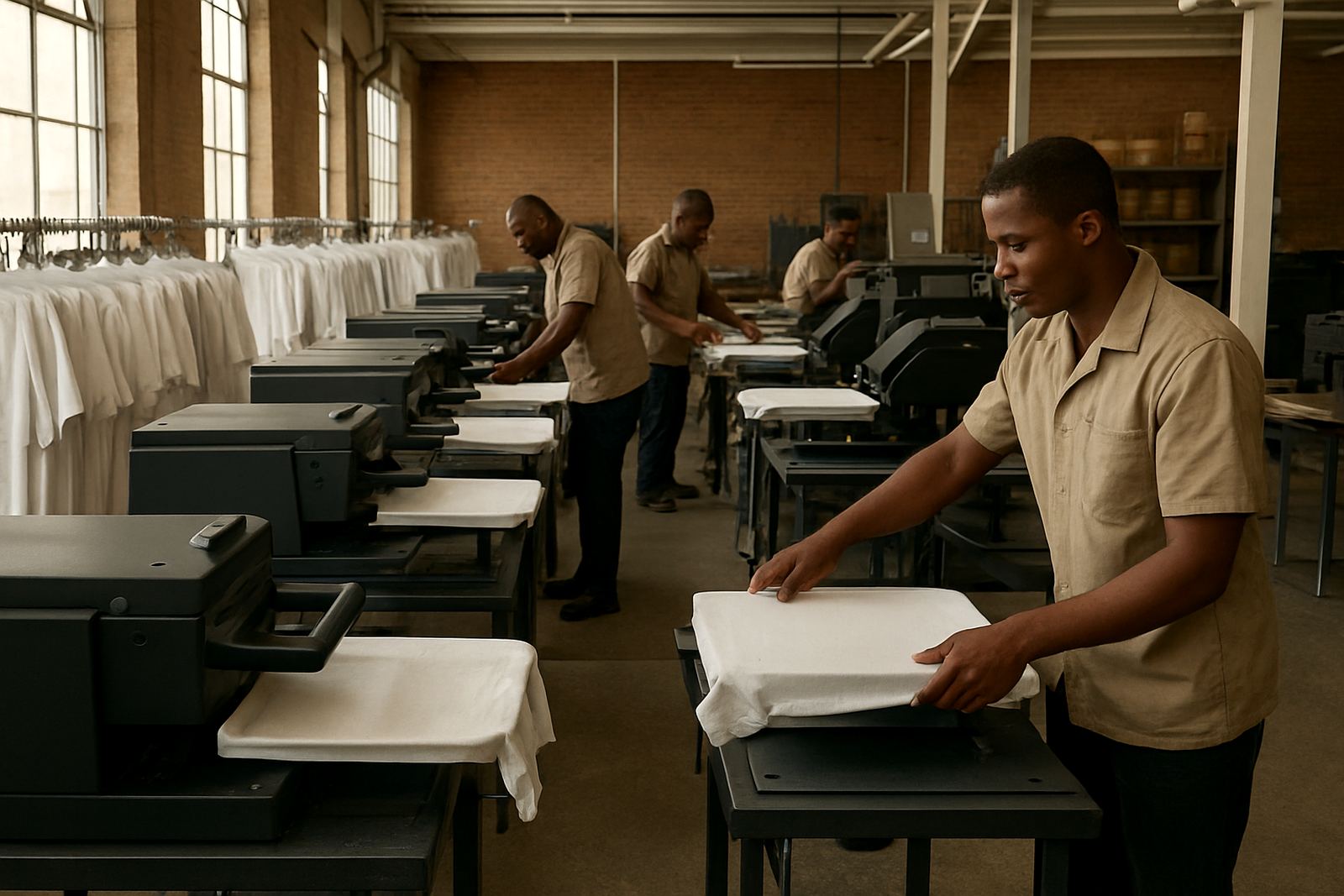
Another issue was municipal and building constraints. The unit had limited floor space, shared access routes and only so much room for staging garments before print. That meant we could not suggest a complicated workflow that needed extra tables everywhere. The solution had to fit the space, keep the walkway clear, and allow one operator to move from prep to press without dragging garments across the floor or stacking them too high. Small detail, but it matters when you are doing 200 plus pieces in a week.
- Mixed garment sizes and fabric types
- Limited floor space in a shared commercial unit
- Humidity variation affecting pretreat and curing
- Need for a clear, repeatable operator path
Platen, hoop and pretreat package supplied
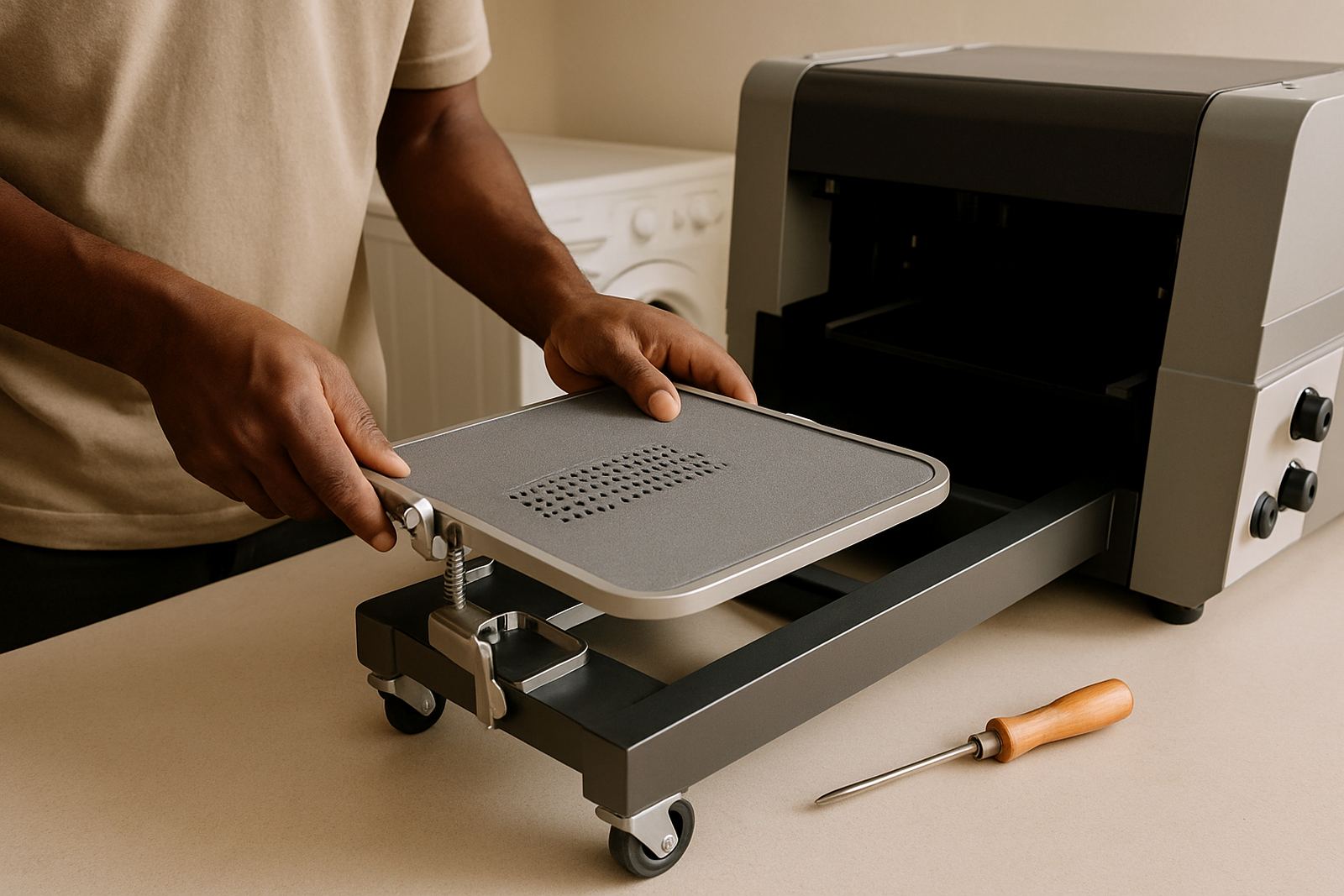
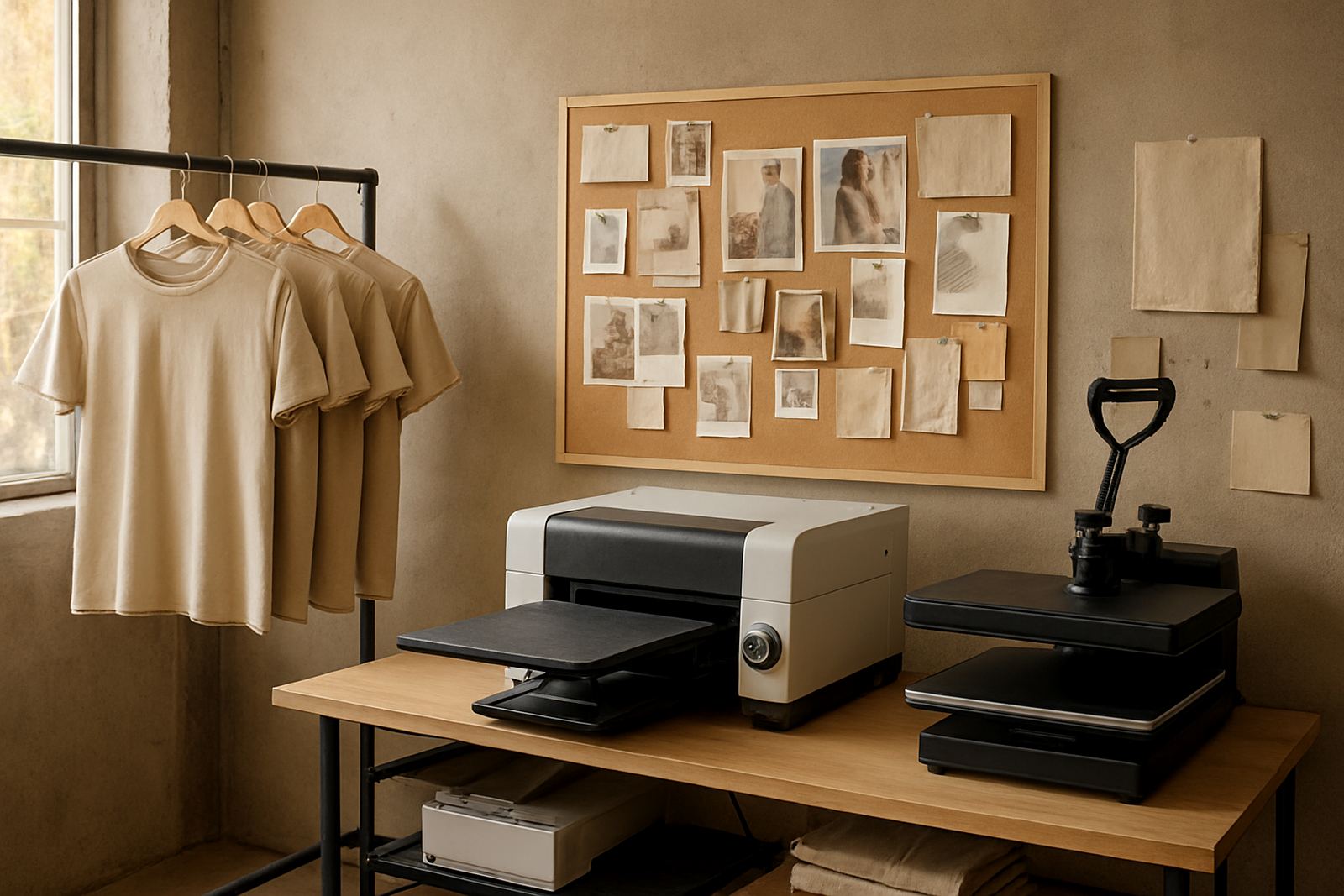
We supplied a set of direct-to-garment platens matched to their most common garments, plus hoops for tighter placement on smaller items and a pretreatment kit that gave them better control over coating weight. The aim was not to flood the shop with extras, but to give them the right tools for the jobs they actually run every week.
The platen mix covered standard tees, youth sizes, hoodies and a couple of wider options for larger prints. We also mapped out which jobs should use a hoop and which should stay on a platen, so the team was not guessing mid shift. That reduced handling errors and helped the print image sit square on the garment, especially on collar-heavy or seam-heavy pieces where the fabric likes to pull one way.
- DTG platens for standard, youth and larger garment sizes
- Hoops for small-format placement and stable loading
- Pretreatment kit for controlled spray application
- Setup matched to repeat corporate apparel runs
Setup, alignment and workflow changes
We did the platen installation and set the loading positions so the operator could place garments quickly without having to recheck every piece. From there we adjusted the pretreat workflow, covering spray distance, pass count and dry-down timing. The goal was consistency, not speed at any cost. A job that moves fast but prints badly is still a problem.
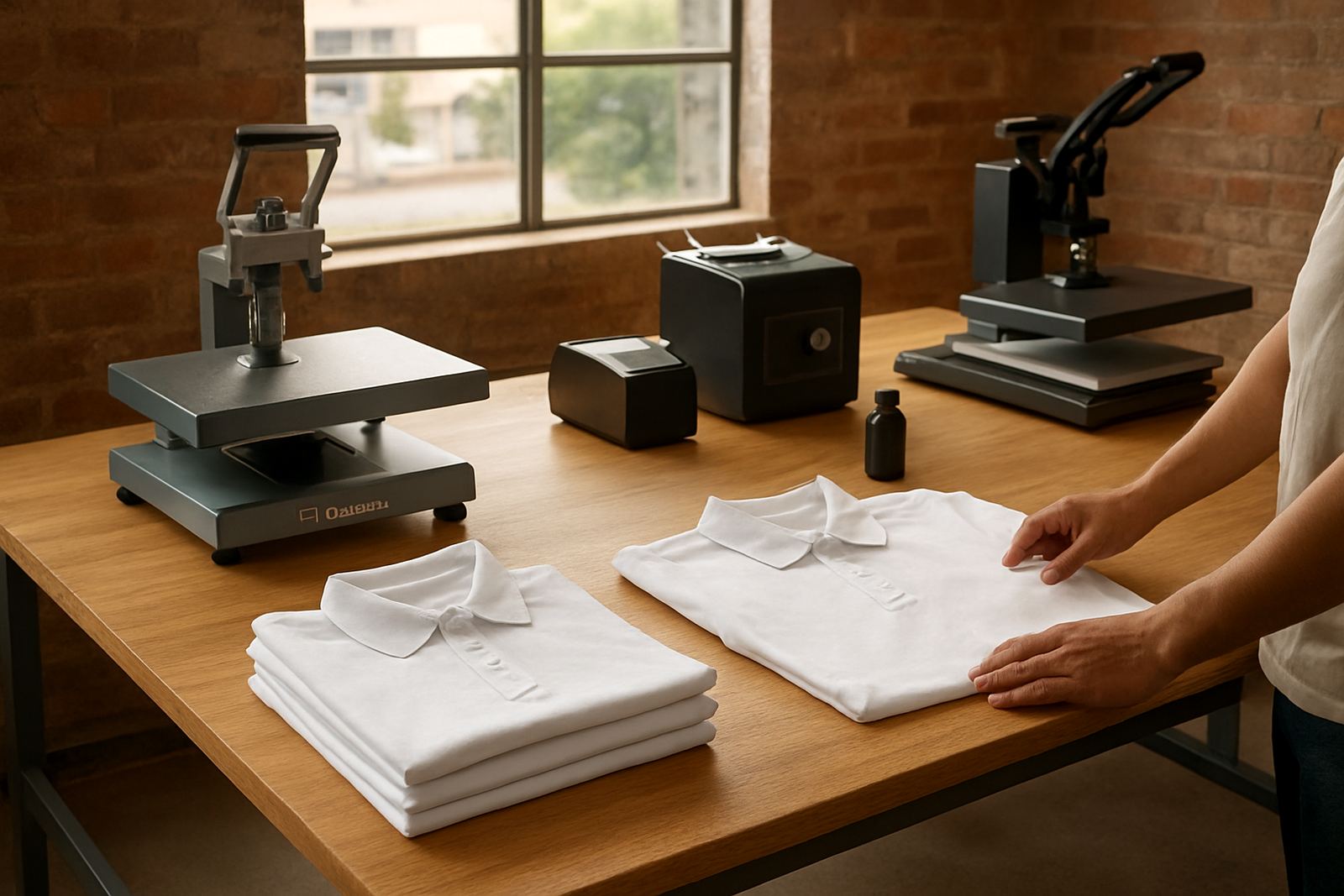
We also helped with print alignment and sample testing. A few test pieces showed where the artwork needed slight repositioning for collar height, chest width and sleeve clearance. Once those measurements were locked in, the team had a simple reference for future orders. They could keep the same look across small runs and larger batches, which is exactly what a corporate merch supplier needs when a client reorders three months later and expects the same finish.
- Platen installation and loading position setup
- Pretreat workflow adjusted for even coverage
- Print alignment checks for repeat order consistency
- Sample testing on core garment types
Training the operators for repeat output
Because the shop used more than one operator, we spent time on practical training rather than theory. The training covered platen choice, garment placement, pretreat handling, print alignment and what to check before a garment goes under heat. We also showed the team how to spot the early signs of drift, like a collar sitting too high or a sleeve seam pulling the print off centre.
The training was done over two weeks, with follow up support in the middle of the rollout. That gave the team time to work through actual orders and come back with questions from live production, not just from a test bench. Sipho handled technical support while Zanele ran the training side, so the advice stayed practical and the handover was clear. Ayesha kept the schedule steady and Johan sorted workshop adjustments where needed, which saved time and a fair bit of back and forth.
- Training period: 2 weeks
- Focus areas: platen choice, garment placement, pretreat control and pre-print checks
- Follow-up: remote troubleshooting and one onsite support visit
- Outcome focus: repeatable output across multiple operators
What changed after rollout
By the end of the project, the client had a cleaner production flow and fewer surprises on repeat jobs. The most obvious change was consistency. Shirts came off the line with better placement accuracy, and the team spent less time reworking the same artwork. Their operators also moved faster between garment types because the platen and hoop choices were already matched to the job list.
The other gain was confidence. The client could take on more corporate staffwear work without worrying that each batch would need a different handling method. That matters in Sandton, where turnaround expectations are tight and clients want polished output for boardrooms, launches and internal events. It also helped that the setup could cope with occasional power interruptions and the usual stop-start rhythm of Johannesburg production, which is just part of the day here.
- Less rework on repeat orders
- Cleaner placement across different garment sizes
- Faster changeovers between job types
- More confidence taking on short lead-time corporate work
What we would repeat for similar jobs
If we were doing the same kind of project again, we would start with the most common garments first and build the platen mix around actual order history. That keeps the setup lean and avoids paying for gear that sits unused. We would also repeat the sample-testing step early, before the team gets deep into production, because a small adjustment at the start saves a lot of recovery work later.
For corporate merch suppliers in Sandton, Midrand or Pretoria East, this type of rollout works best when the workflow is practical, the operator training is hands-on, and the support stays close during the first few weeks. That was the case here and it gave the client a stable base for scaling. If they need to add more volume later, the current system can be extended without starting over from scratch.
- Start with actual order history, not assumptions
- Use sample testing early to lock in placement
- Keep operator training practical and short
- Build a setup that can scale with seasonal demand
Key facts
| Project | Sandton Corporate Merch |
|---|---|
| Client type | Corporate merch supplier |
| Location | Sandton, Gauteng |
| Timeline | 2 weeks |
| Supplied | DTG platens, hoops and pretreatment kit |
| Support | Platen installation, workflow review, sample testing and training |