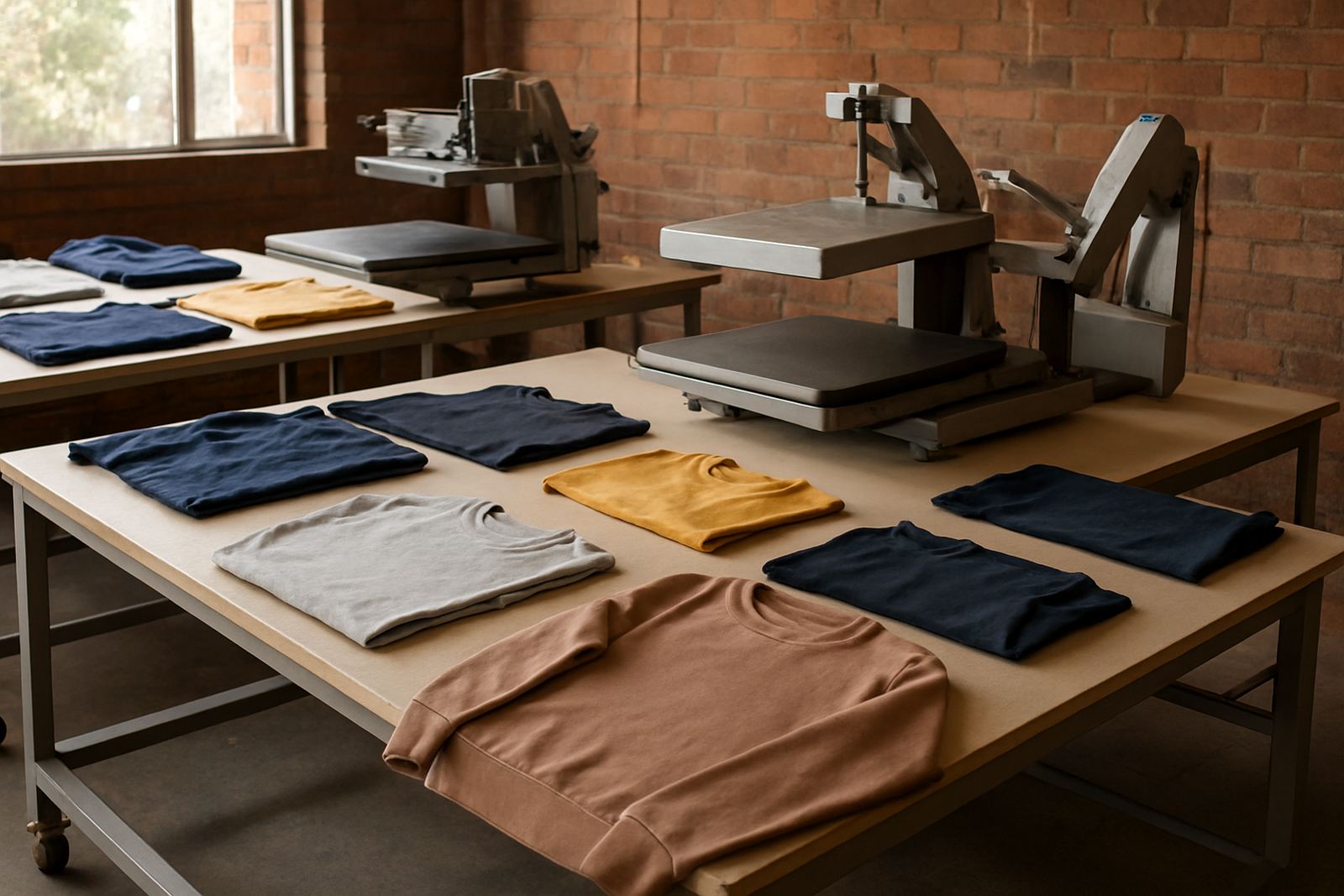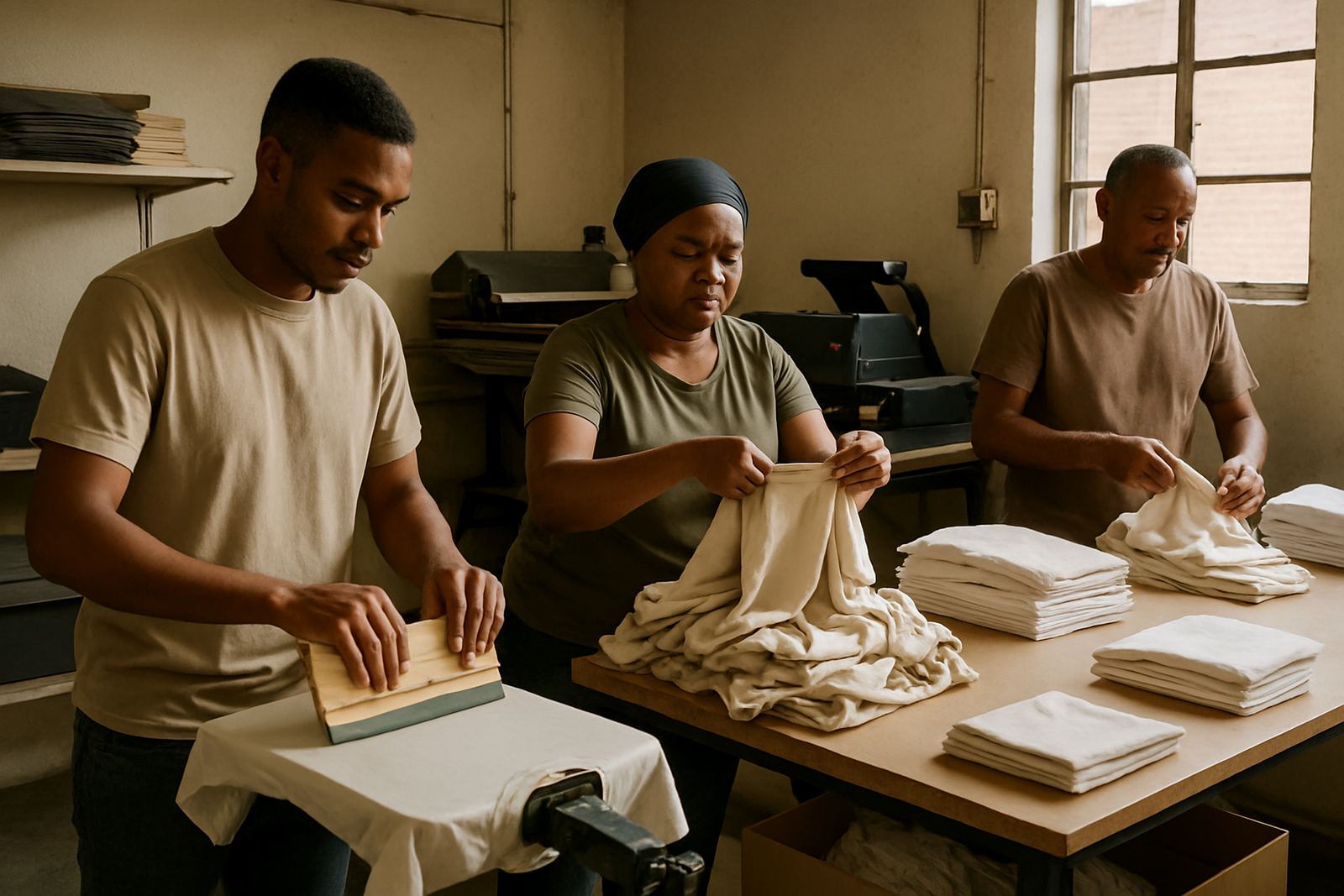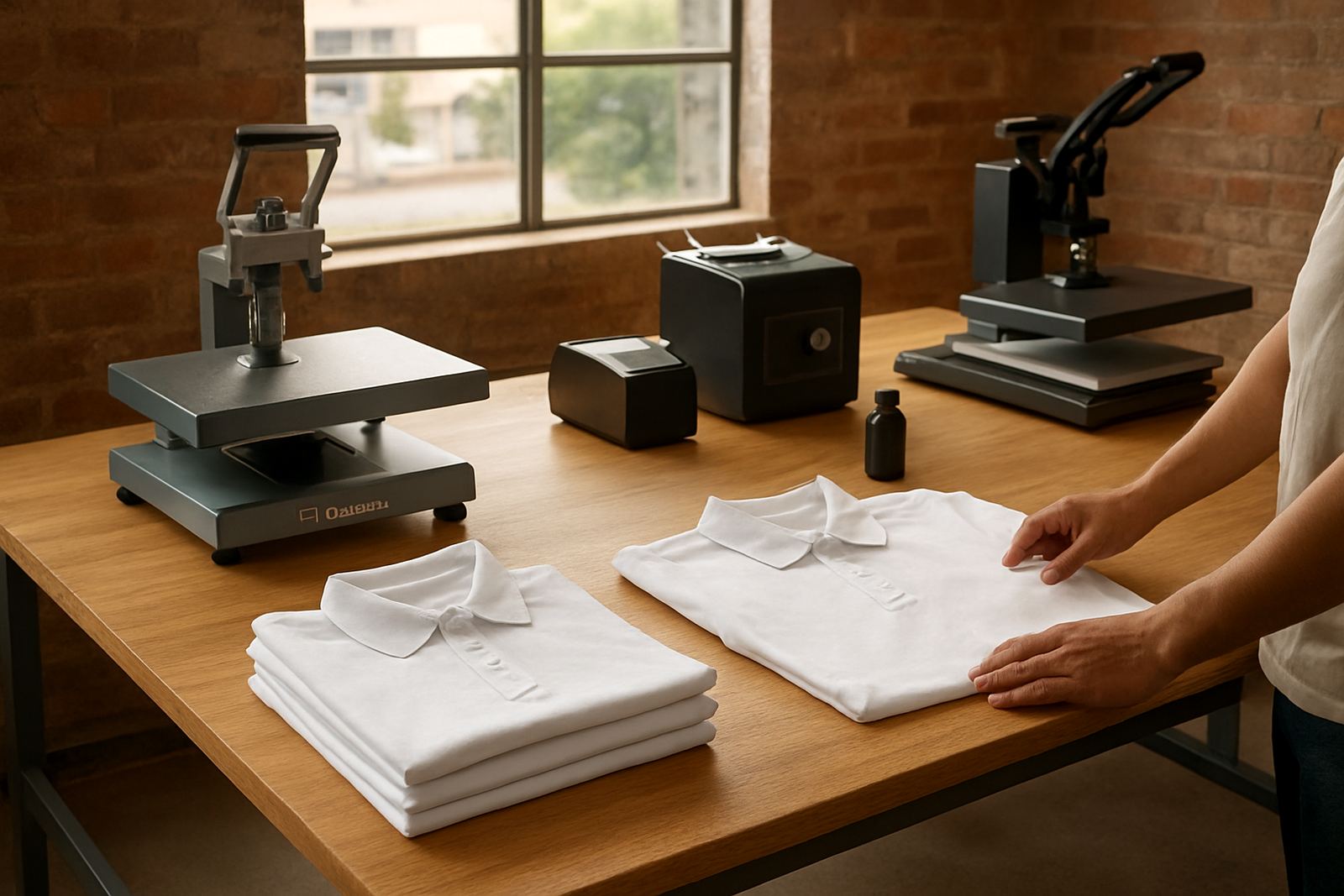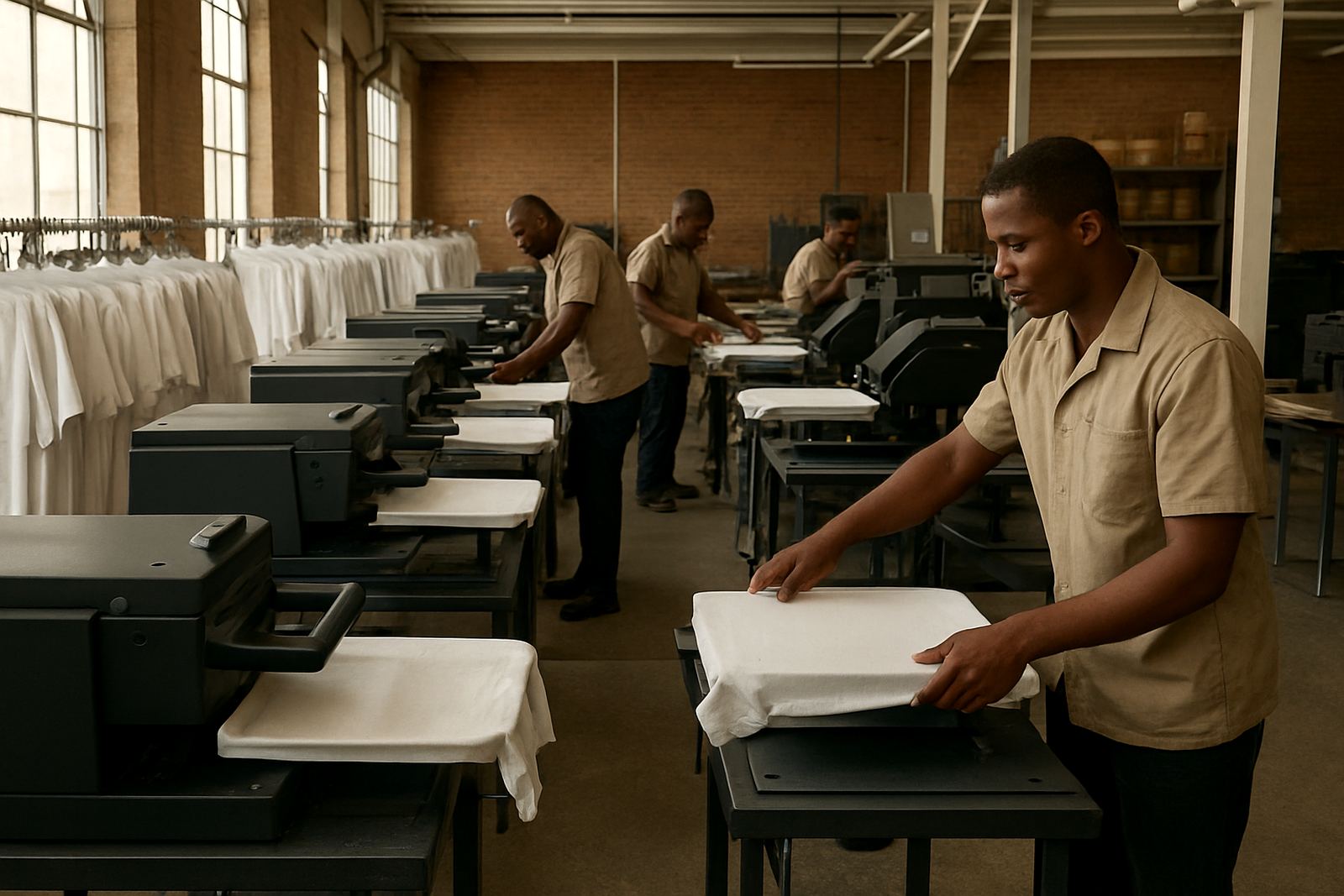
The Midrand brief and production pressure
The client was a promotional apparel workshop in Midrand handling a steady mix of corporate tees, event wear and branded staff clothing. Their main issue was not demand, it was time lost between jobs. Plate changes took too long, operators were making small alignment corrections on every run and the team was spending more effort resetting than printing. In a town where same-week delivery is normal, that slows the whole floor.
The workshop needed a practical fix that would fit their current press layout and keep the team moving during peak periods. They also wanted something that would not complicate training for new staff. The brief was simple enough on paper: improve throughput, keep platen swaps predictable, and make standard adult prints repeatable across cotton and polycotton garments.
- Client type: promotional apparel workshop
- Town: Midrand
- Primary goal: quicker job changeovers
- Secondary goal: cleaner placement consistency
What was slowing the line down
The workshop was working from a narrow space with limited staging room, so every movement had to count. On top of that, they were dealing with a mix of garment sizes and print positions, which meant the team kept reaching for different support setups. That created a lot of small pauses. If one platen sat slightly out of line, the operator adjusted by eye and the next shirt followed the same correction, then another. It adds up fast.
We also had to factor in Johannesburg dust and the reality of load-shedding. During power interruptions, any system that needs repeated fiddling becomes harder to run once power returns. The client wanted equipment that would be stable, simple to reinstall, and easy to keep clean. Durban humidity was not their issue, but they do ship work nationwide so the setup still had to handle varied garment stock from different regions.
- Limited floor space for storing change parts
- Mixed garment sizes coming through in batches
- Need for repeatable alignment after power cuts
- Operator training had to stay straightforward
What we supplied and how we set it up
We supplied quick-change platen bases and a matched set of standard adult platens for the workshop's most common promo sizes. The aim was to reduce handling time and keep the press ready for the next batch without rebuilding the setup each time. We also worked through the platen placement sequence with the team, so the changeover order became part of the routine instead of something each operator did differently.
Our support covered platen installation, print alignment help and a workflow review on site. The team wanted to keep a single, reliable path for most jobs rather than overcomplicate the line with too many special fittings. We also checked their pretreat workflow because a number of the garments were darker cotton blends and needed a consistent surface before print. The result was a cleaner handover from prep to press.
- Quick-change bases for faster swapping between jobs
- Standard adult platens for common apparel sizes
- Platen installation and alignment checks
- Pretreat workflow review for darker garments
Timeline from first visit to handover
The project ran over three weeks from the first site visit to full handover. Week one was the assessment and measurements stage, where we checked the current press layout, table height, operator reach and the most common shirt sizes being produced. In week two we supplied and fitted the platen set, then tested a few sample runs with different garment types. Week three was the training and fine tuning stage, where the operators worked through the new sequence until it became second nature.
That timing suited the client's production cycle because it avoided a long shutdown. They could keep running lighter jobs while the adjustments were being made. We also kept the support practical, because in a working print shop the best system is the one that gets used properly every day, not just the one that looks neat on install day.
- Week 1: site review and measurements
- Week 2: supply, fitting and sample testing
- Week 3: operator training and final adjustment
Results on the floor after the change
Once the team settled into the new setup, the first gain was time. Changeovers became quicker because the bases locked into a known position and the adult platens were already matched to the jobs they run most often. Operators no longer had to keep correcting the same placement errors, which meant less stopping and starting through the day. Throughput improved without adding another press.
The second gain was consistency. Print positioning was steadier across repeat orders, especially where the same artwork needed to be moved across multiple garment sizes. The workshop also found it easier to brief temporary staff because the process was now standardised. There was less guesswork, and when the line changed over during a busy day the flow held up better, even when the power flickered or a courier delivery arrived mid shift. The team told us the floor just felt calmer.
- Faster changeovers between promo jobs
- Better repeat placement on standard adult garments
- Less operator adjustment during the run
- Improved confidence for temporary staff
What we would repeat for another Midrand shop
If we were doing the same job again, we would start with the most common garment sizes and build the platen set around actual production, not around a wish list. That approach keeps spending sensible and the workflow tight. We would also spend extra time on sample testing before the handover, especially where the shop prints on mixed cotton and polycotton fabrics. A few small checks early on save a lot of rework later.
For Midrand and the surrounding areas, the lesson is clear: a shop does not always need a complete rebuild. Sometimes the best improvement is a set of well matched platens, a cleaner sequence, and people who know exactly how to use both. That is what makes the difference between a press that looks busy and a shop that actually clears work on time.
- Start with the most common garment sizes
- Test on real stock before handover
- Keep the workflow simple enough for relief staff
- Plan for regular power interruptions and quick restart
Key facts
| Project type | Promotional apparel workshop upgrade |
|---|---|
| Town | Midrand |
| Timeline | 3 weeks |
| Supplied | Quick-change platen bases and standard adult platens |
| Support | Installation, workflow review, sample testing and training |
| Primary outcome | Shorter changeovers and steadier print placement |