Roodepoort Brief: Youth Garments With Tight Repeat Orders
The client was a schoolwear and event clothing supplier in Roodepoort working with youth sizes, small run repeats and mixed fabric orders. Their day-to-day work included T-shirts, golf shirts, hoodies and polycotton items for learners, coaches and parent groups, so consistency mattered more than one-off showpiece printing.
The brief was simple on paper but strict in practice. They needed cleaner placement across small sizes, quicker changeovers between jobs and a process that could be repeated by different operators without shifting artwork position. Orders often came in before sports day, cultural week, class photo events and year-end prize giving, so delays were costly and staff could not afford guesswork.
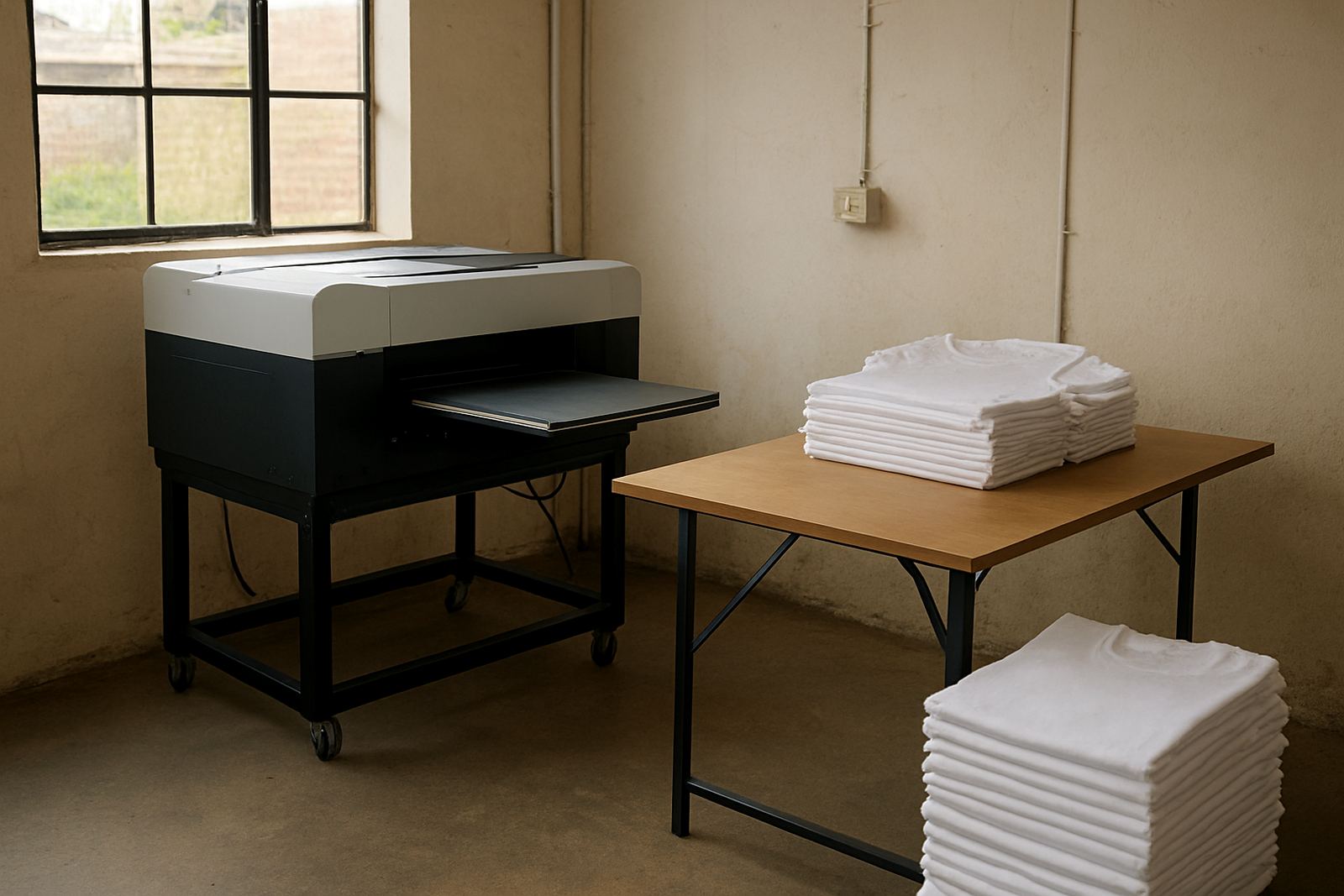
They also had space limits in the production room and needed something that worked in a busy South African shop environment, with occasional load-shedding, day-to-day dust and fabric variations from one batch to the next.
Constraints In The Shop And What Had To Be Solved
The main challenge was not print quality alone, but the repeatability of the whole garment handling process. Youth garments are unforgiving because a small shift on a size 3XS or 5-6 shirt becomes obvious very quickly. The team also needed a setup that worked across different collar shapes, seams and side-height differences without slowing the press crew down.
- Mixed garment sizes from youth through to adult small
- Frequent repeat orders with the same logo placement
- Limited floor space in a school supplier workroom
- Variable fabric blends, including cotton and polycotton
- Pressure to keep production moving during term peaks
Another issue was operator handover. One staff member could set up a run correctly, but the next person had to be able to match the same result. That meant the solution had to be practical, not fussy, and it had to reduce the chance of misalignment during busy weeks.
What DTGrip Supplied And Set Up
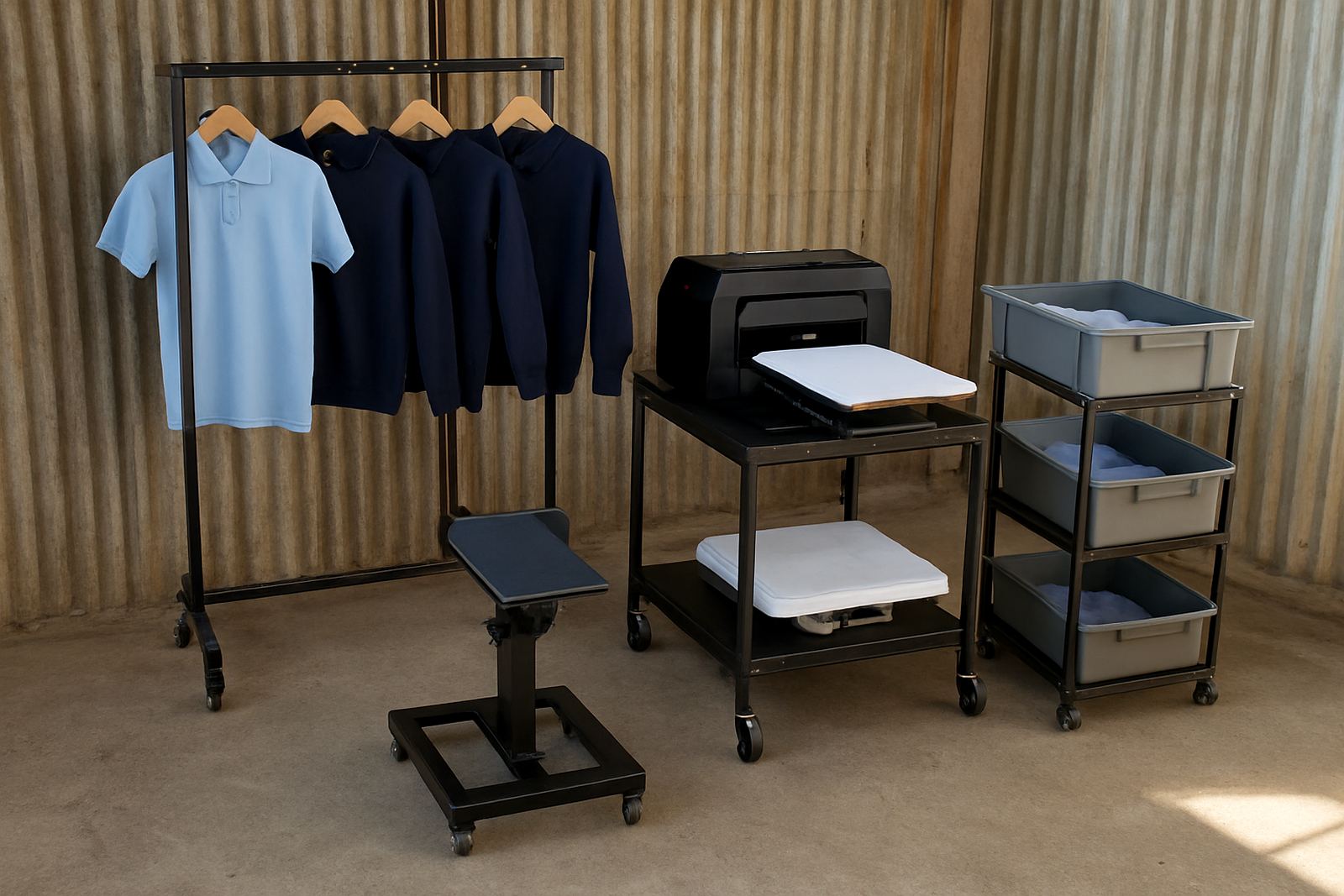
We supplied a working combination of direct-to-garment platens, hoops and pretreatment support for their core schoolwear sizes. The platen set gave them fixed placement for flat garments, while the hoop setup helped stabilise smaller pieces and reduce movement during loading. We also supplied pretreatment workflow support so the team could handle different fabric types with more confidence.
DTGrip carried out platen installation, print alignment help and sample testing on the most common shirt sizes used by the client. We checked where the artwork sat on the chest, how the garment behaved after loading and how much adjustment was needed from one size to the next. For the school supplier, that saved a lot of trial and error and cut down on reprints.
- Platen installation for youth and adult size runs
- Hoop setup for smaller garments and stable loading
- Pretreat workflow guidance for cotton and blended fabrics
- Sample testing on the most common schoolwear items
- Print alignment help for repeat term-time artwork
The setup was built to suit a Crown Mines-based support team with next-day courier cover to Roodepoort and the wider Johannesburg area, so any follow-up parts or adjustments could be handled quickly. That mattered because school order windows are short and production cant wait around for a week.
Timeline: Four Weeks From Review To Full Run
The project ran over four weeks. In week one, we reviewed the client's usual garment mix, measured the common print positions and identified the most used sizes. In week two, we tested platen and hoop combinations with sample garments and adjusted the pretreat steps for better surface consistency.
By week three, the team had a repeatable loading sequence for the main schoolwear range and were using a clearer check list before each print run. Week four focused on operator handover, seasonal reconfiguration and a final review of the workflow. Ayesha handled scheduling, Sipho worked through technical setup and Johan assisted with workshop adjustments. Thabo oversaw the production plan and Lerato kept the supply side moving.
For the client, the main benefit was speed without losing placement accuracy. They could move from one school order to the next with less setup drift, and the result was a cleaner finish across repeated batches.
Results For Term-Time Production And Repeat Orders
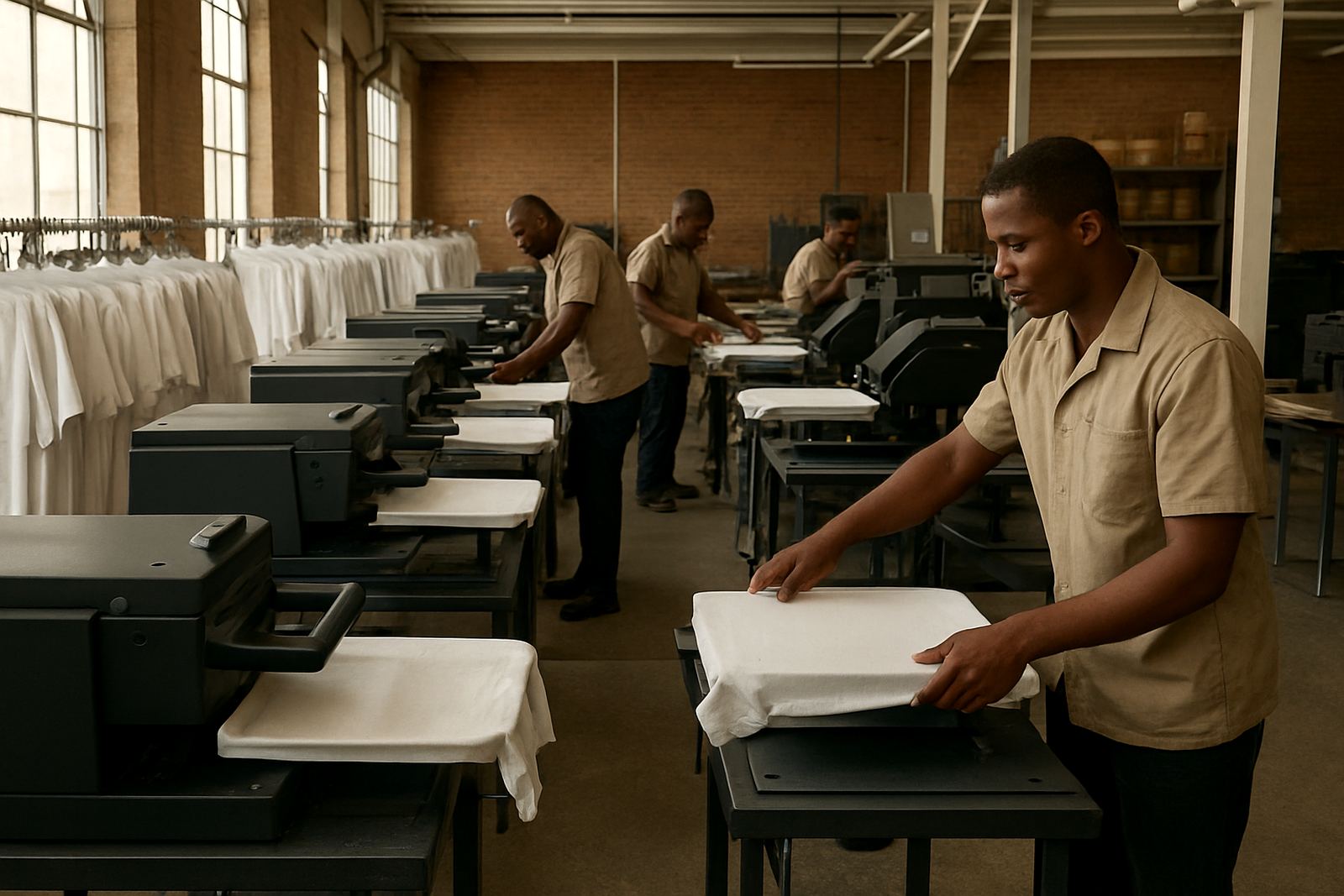
Once the workflow settled, the client saw more consistent chest placement on youth garments and fewer pieces needing correction after the first press. The team was also able to train a second operator faster, because the platen and hoop positions were easier to repeat and the pretreat process had clearer steps.
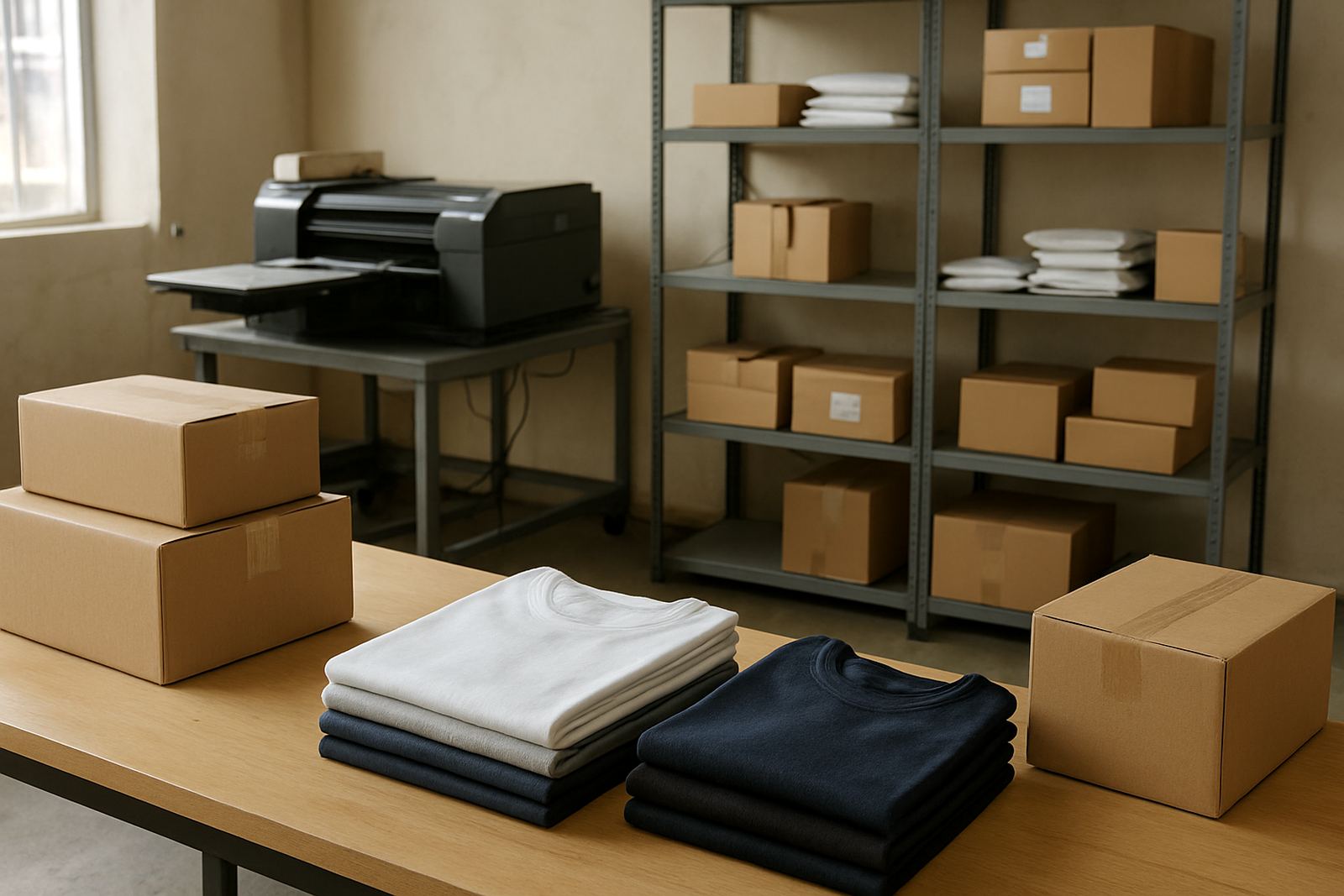
That made a noticeable difference during peak school periods. Orders for class events, sports days and promotional garments could be grouped by size with less confusion, and the workshop did not need to stop for full resets between each batch. It was not a flashy change, but it was the kind that improves the whole week.
- Cleaner and more consistent logo placement
- Lower reprint rate on small youth sizes
- Shorter changeovers between repeat orders
- Faster staff handover during busy term periods
- Better control over blended fabric runs
The client also appreciated that the system suited a practical South African supply business. It coped with normal workshop interruptions, and it gave them a better way to plan around courier deliveries and production peaks before the school calendar got crowded, which is usually where the stress starts.
What We Would Repeat On The Next School Account
If we were doing this setup again for a similar school supplier, we would start with the most common garment sizes and build the platen plan around those first. That keeps the early wins visible and stops the team from overcomplicating the workflow. We would also do sample testing on the exact fabric mix used for winter and summer items, because the difference between cotton and polycotton can show up fast.
For businesses in Roodepoort, Randburg, Soweto, Pretoria East or Midrand handling schoolwear, the best results usually come from matching the equipment to the repeat job list rather than trying to cover every possible garment on day one. Training matters as much as hardware, especially where different staff members share the same press room.
If the client added more sportswear or expanded into larger promotional runs, we would review platen sizes, pretreat handling and seasonal reconfiguration again to keep the line moving. The important thing is that the system stays simple enough for daily use, but controlled enough for proper production.
Key facts
| Client type | Schoolwear and event clothing supplier in Roodepoort |
|---|---|
| Project duration | 4 weeks |
| Core equipment | DTG platens, hoops and pretreatment support |
| Primary use | Youth garment consistency and repeat term-time orders |
| Service coverage | Johannesburg base with next-day courier nationwide |
| Support included | Installation, alignment help, sample testing and operator training |