Set Up the Shirt So the Pretreat Stays Where It Should
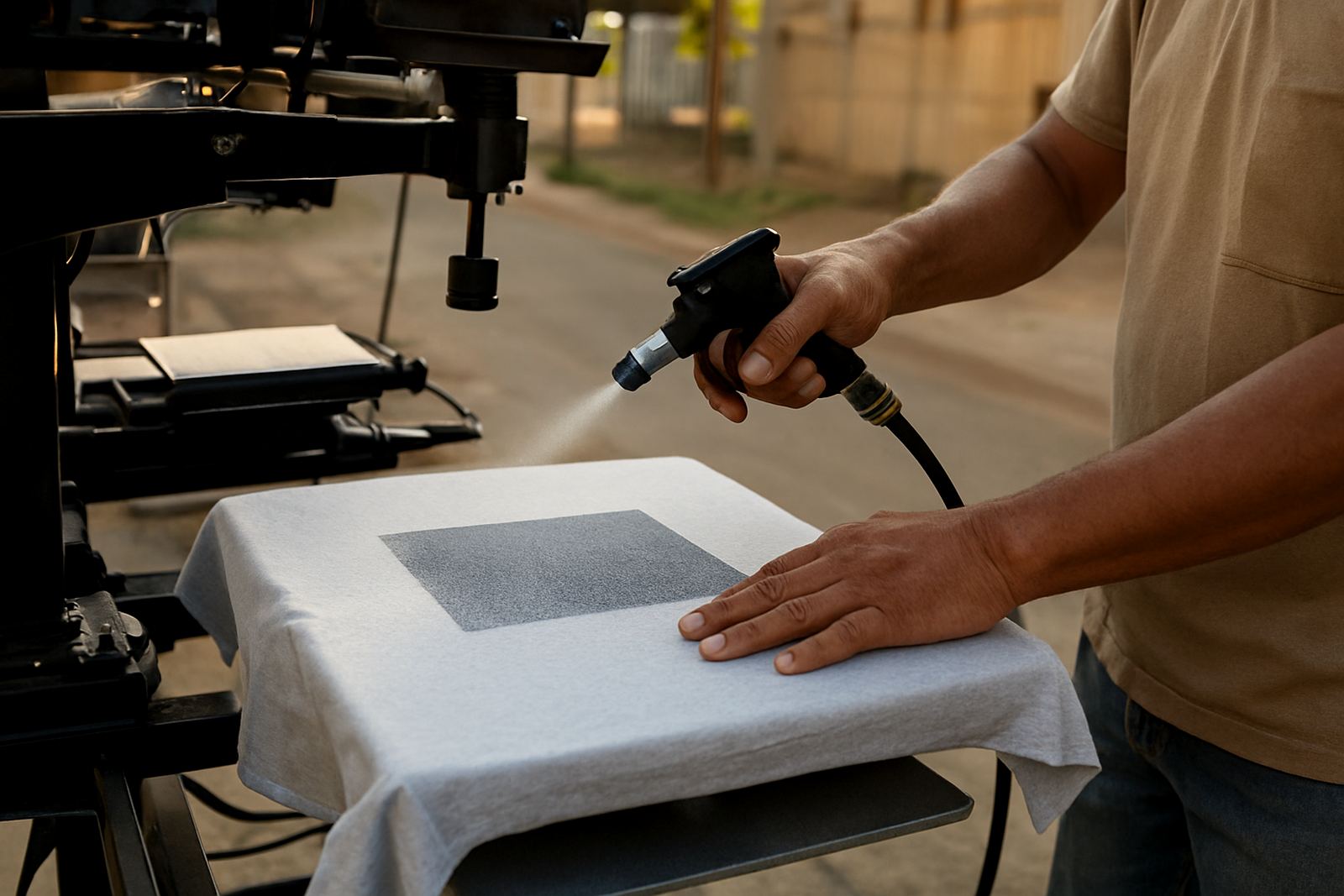
Small-area pretreat starts with good garment positioning. Lay the shirt flat, smooth out side seams and make sure the print zone sits level on the platen or pressing surface. If the garment is twisted, the spray pattern shifts and you end up coating more fabric than needed.
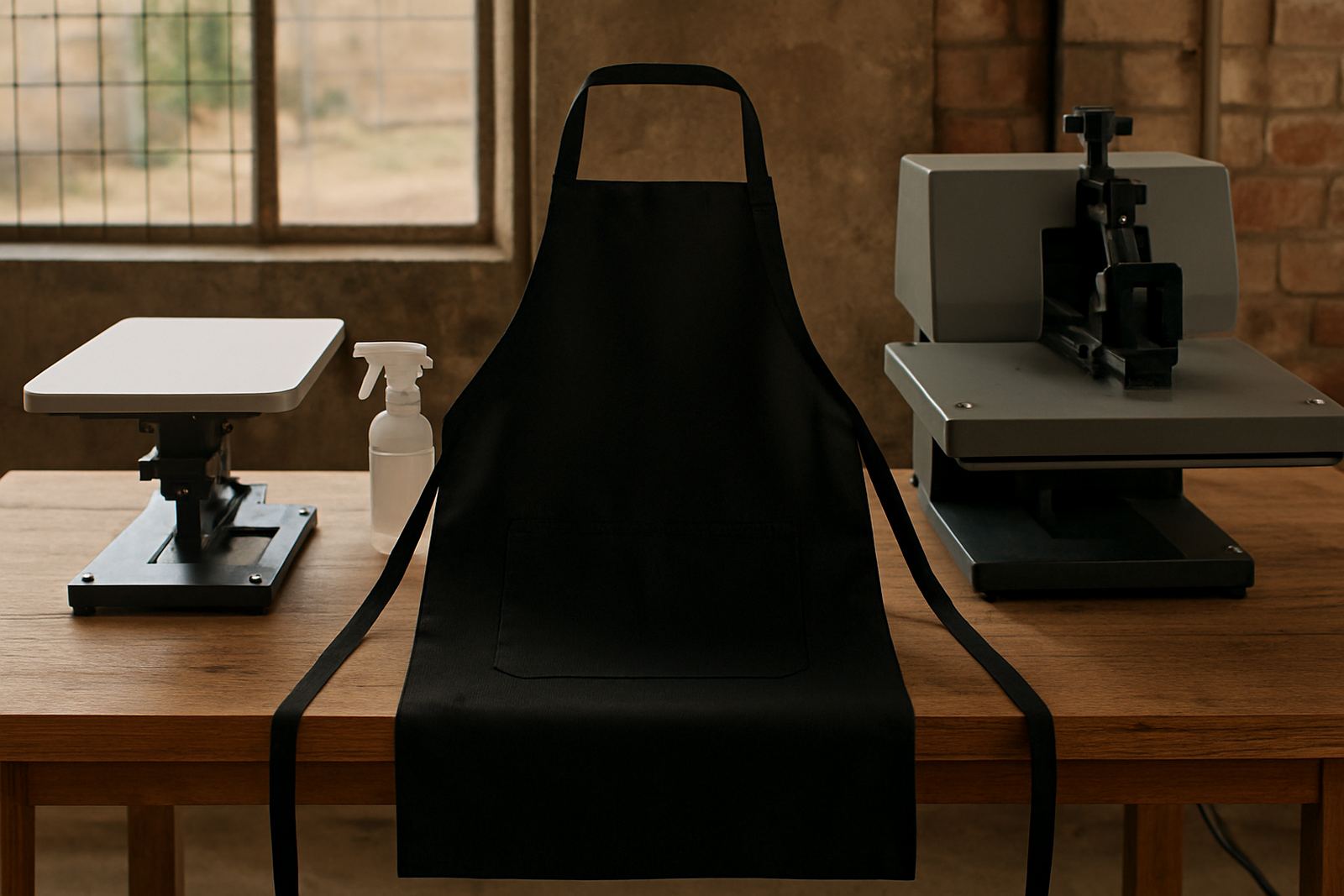
For left chest or pocket work, use a platen that matches the area closely. A smaller platen helps reduce waste and keeps the spray path tight. If your shop runs in Crown Mines, Sandton or Midrand, where daily volume can move quickly, it is worth setting aside a dedicated small-area station instead of adapting a large one each time.
- Check that the garment is centred before spraying.
- Use a flat, dry surface with no lint or loose fibres.
- Keep seams, buttons and pocket edges out of the spray path.
- Confirm the print zone mark before you start.
Choose the Right Spray Pattern for Small Print Zones
Overspray usually happens when the spray fan is too wide or the hand movement is too slow. For pocket-sized or left chest areas, shorten the spray pass and keep the nozzle at a steady distance. A controlled, even pass gives you coverage without wetting the surrounding fabric.
If the fabric is light coloured, overspray is easier to spot after curing and that can mean more rejects. On dark garments it may not show immediately, but it still affects hand feel and can leave a mark around the print. In humid Durban conditions, keep an eye on dwell time and drying, because slow drying can make the coated area spread beyond the target zone.
- Use short passes rather than one long sweep.
- Keep your hand movement consistent from shirt to shirt.
- Test the spray on scrap fabric before starting a new run.
- Adjust for fabric type, weight and moisture in the room.
Mask Off Nearby Fabric When the Layout Is Tight
Some jobs need a little extra control, especially when the print sits close to stitching, zips or pocket edges. Light masking can help limit overspray and keep the fabric around the print zone clean. This is useful for promotional shirts, schoolwear and retail garments where the finish needs to look neat from every angle.
Use masking only where it helps the workflow. Too much tape or covering can slow production and create new problems if it lifts fibres or leaves marks. The aim is to protect the surrounding cloth without making the setup awkward.
- Mask only the edges that are at risk.
- Do not cover the actual print surface.
- Remove masking carefully before curing.
- Check for residue on pale fabrics before moving to the next shirt.
Match Pretreat Amounts to the Garment and Ink Load
Small print zones do not need the same pretreat amount as a full front print. If you apply too much, the area can feel stiff and the print may cure unevenly. If you apply too little, colour can look weak and wash performance can suffer. The right amount depends on fabric blend, garment colour and the size of the print itself.
A useful rule is to keep your application focused on the image area only. For pocket prints and left chest logos, that usually means a narrower treatment band with careful edge control. This is especially important for cotton-rich tees, polycotton workwear and fashion garments where finish matters. Small mistakes show fast on close-up branding and retail orders.
- Record the amount used for each garment type.
- Run sample tests when switching from one fabric blend to another.
- Keep pretreat notes by size, colour and print area.
- Review any stiff or patchy results and adjust in small steps.
Dry and Cure Without Smearing the Small Zone
After pretreating, drying needs the same level of control as spraying. If the area is moved too soon or heated unevenly, the coating can shift beyond the print zone. For left chest work, keep the garment flat while it dries and avoid stacking shirts before the surface is ready.
In winter across Pretoria East or Centurion, colder rooms can slow the process. In summer, warm rooms can create different issues if the fabric dries too fast at the edges and stays wet in the middle. Watch the surface, not only the timer. A good dry state should feel even, not tacky, and the print area should stay clean and smooth.
- Do not fold or carry the shirt before the pretreat is dry.
- Check the whole treated zone, not only the centre point.
- Keep airflow steady but not harsh.
- Use the same drying method across the shift for consistency.
Use a Quick Pre-Print Checklist Before the Press
Before you go to print, a short checklist can save time and reduce rework. Small-area jobs are often part of mixed production, so it helps to confirm the setup before the garment reaches the printer. That is where a simple routine keeps the job moving and avoids mistakes on repeat orders.
Our team in Crown Mines often sees issues that start with small setup slips rather than printer faults. A slightly off-centre shirt, too much spray or a rushed dry can affect the final result. Take 20 seconds to check the basics and you will save far more time later.
- Print zone marked and aligned.
- Pretreat applied only where needed.
- No wet patches outside the target area.
- Garment dry and flat before pressing.
- Platen size matches the job.
When to Ask for Help on Repeat Jobs or New Fabrics
If you are changing garment types, shifting from full front work to smaller placements, or scaling up for a seasonal order, it helps to review the process before production starts. Some fabrics behave differently, and a setup that works on one batch may not suit the next. That is common with mixed cotton blends, promotional stock and new supplier runs.
DTGrip supports print shops across Johannesburg, Randburg, East Rand, Durban and beyond with remote troubleshooting, onsite support visits and workflow reviews. If your small-area pretreat is wasting product or leaving overspray marks, it may be time to reassess platen choice, spray method and drying sequence together.
- Book sample testing for new fabric ranges.
- Review settings before a large repeat run.
- Ask for training when new operators join the floor.
- Use a seasonal reconfiguration if your production mix changes.