
Built For Aprons, Bibs And Front Panels
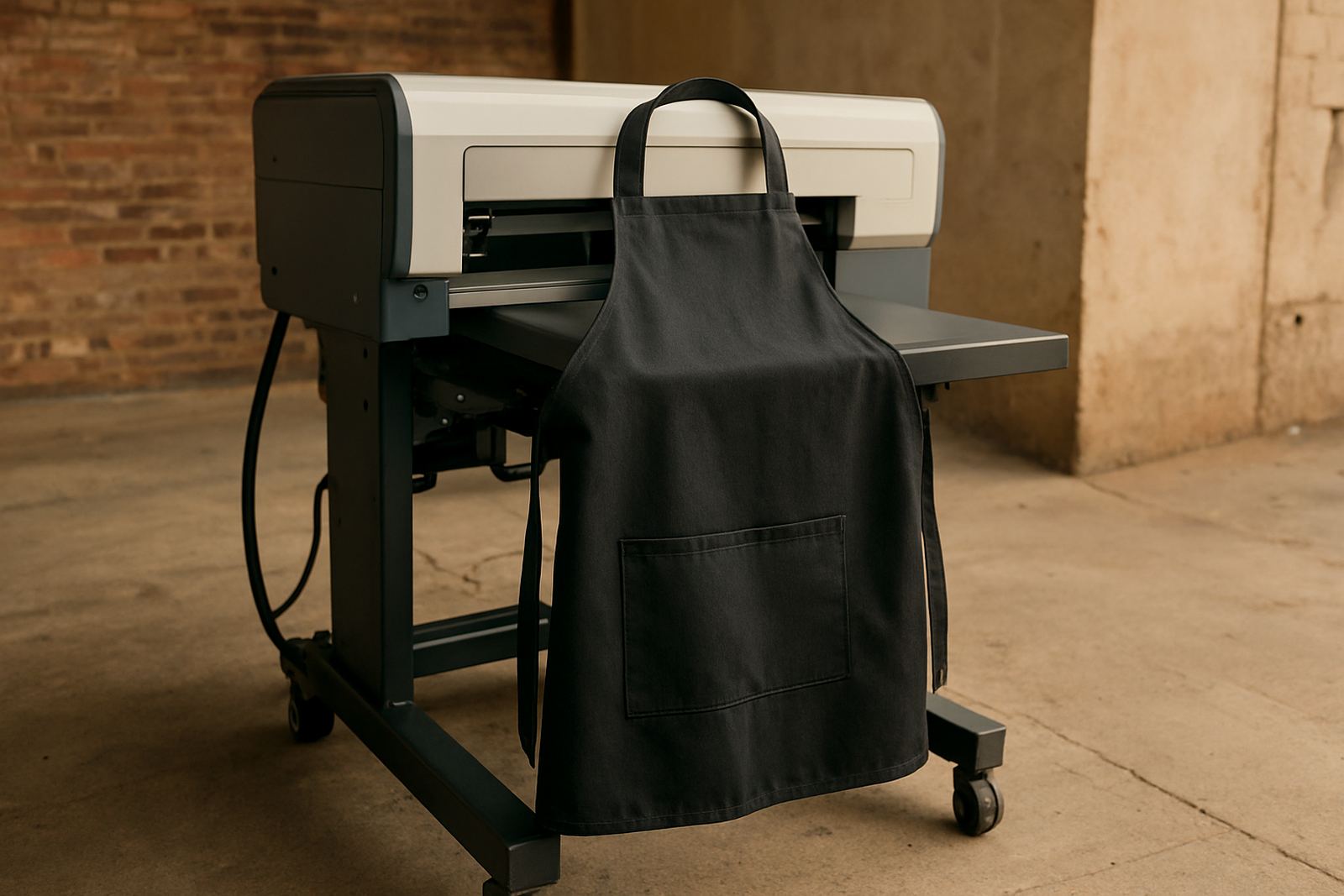
An apron platen gives you a stable printing surface with a shaped front area that lets the apron sit flat while straps and ties are kept out of the way. That matters on kitchen aprons, hospitality bibs, trades aprons and promotional workwear where the chest print must land in a fixed position every time. It reduces creases, shifting and wasted prints, especially on short runs and mixed sizes.
For shops in Johannesburg, Pretoria, Durban or the coast, this kind of platen helps keep production moving when you are dealing with cotton, polycotton and heavier utility fabrics. The apron sits snugly, registration is easier and the print head has a more predictable surface to work over. Less fiddling, more output.
- Made for apron fronts and similar narrow upper panels
- Helps keep ties, straps and neck loops clear of the print zone
- Useful for hospitality, catering, security and industrial workwear
Size Options And Machine Fit
Apron platens are usually chosen to match the print area you need rather than the full garment size. Common working sizes suit small logo placement near the chest, a medium centre-front print, or a wider artwork block for branding across the body. The right size depends on your press setup, the garment cut and the image you want to place.
Before ordering, measure the area where the apron lies flat once it is dressed on the platen. If you are printing for a uniform contract in Sandton, a restaurant group in Centurion, or a production line in East Rand, consistency matters more than guessing a size that looks close. A small error can shift your print too high, too low or onto a seam.
- Typical print areas: small chest logo, medium front mark, wider front branding
- Available in multiple widths and lengths to suit different apron styles
- Compatible with standard garment loading workflows on DTG setups
Where It Suits Best In Real Production
This platen suits shops printing aprons for restaurants, butcheries, schools, event crews, cleaning teams and promotional campaigns. It is also useful for workwear that has a similar front shape, such as bibs, tabards and utility garments with straps above the chest. If your team prints one-off samples in the morning and bulk orders after lunch, the platen keeps the setup simple.
For coastal clients, the main advantage is control. Humidity can soften fabrics and make positioning less predictable, especially on blended garments. A fitted platen helps hold the fabric in place while you line up your pretreatment and print. In colder inland winter months around Johannesburg, it also cuts down on handling time, which helps when load-shedding has already interrupted the day and you need to get jobs out fast.
- Hospitality aprons and chef bibs
- Cleaning, security and industrial workwear
- Promo aprons for events, giveaways and brand activations
Installation, Power And Workshop Setup
The apron platen is a mechanical accessory and does not need its own power supply or gas connection. It mounts to the printer or press setup according to the machine format and is then used as part of the normal loading process. That makes it practical for workshops dealing with unstable power, generator use or inverter-backed operations during load-shedding.
When fitting a new platen, check that the carriage, platen lock and print height all clear correctly before production starts. If your shop in Crown Mines, Randburg or Pretoria East is running several garment formats in one day, it is worth setting a fixed workflow so operators can swap platens without losing time. A clean install also helps reduce strain on the machine and on the operator.
- No dedicated power or gas required
- Fits into standard DTG loading and alignment routines
- Best installed with a quick test print and height check before full production
Care, Cleaning And Service Intervals
Keep the platen clean and free of dried pretreatment, lint and ink mist. Wipe it down after use with a soft cloth and a mild cleaner that will not damage the surface finish. If your shop prints daily, inspect the platen edge and mounting points weekly. A worn or sticky surface can affect garment placement and slow down production.
For Durban and other humid areas, store the platen in a dry spot so moisture does not affect the fabric grip or the mounting hardware. If you are running a busy workshop with several operators, assign one person to check that platens are returned properly after each shift. That small habit saves time and keeps alignment problems from building up.
- Clean after production to prevent buildup of pretreatment and lint
- Check mounting points and edges weekly on high-use jobs
- Store dry to avoid moisture issues in coastal areas
What To Check Before You Order
Before ordering, confirm the garment type, the print size and the machine model or platen mount you are using. If the apron has long straps, a narrow bib cut or a thick neck loop, that will affect how the fabric sits on the platen. You should also know whether you need a platen for small logo work, medium branding or full-front decoration.
It helps to send a sample garment or exact measurements if you are unsure. That is especially useful for new shops in Midrand, Centurion or the East Rand that are building a workflow from scratch and need the first setup to be right. We can help with sample testing, workflow review and operator training so your team knows how to load the garment correctly and keep the straps out of the print path.
- Garment type and fabric blend
- Required print area and placement position
- Machine compatibility and mounting style
- Whether you need help with setup, testing or training
Key facts
| Product | Apron Platen for direct-to-garment printing |
|---|---|
| Use case | Aprons, bibs, workwear fronts and similar garments |
| Print area | Small, medium or wider front placements depending on size selected |
| Power or gas | None required |
| Typical material support | Cotton, polycotton and many workwear fabrics |
| Support | Courier delivery nationwide with setup help available from Johannesburg |