Why Hoodie Runs Need a Different Setup
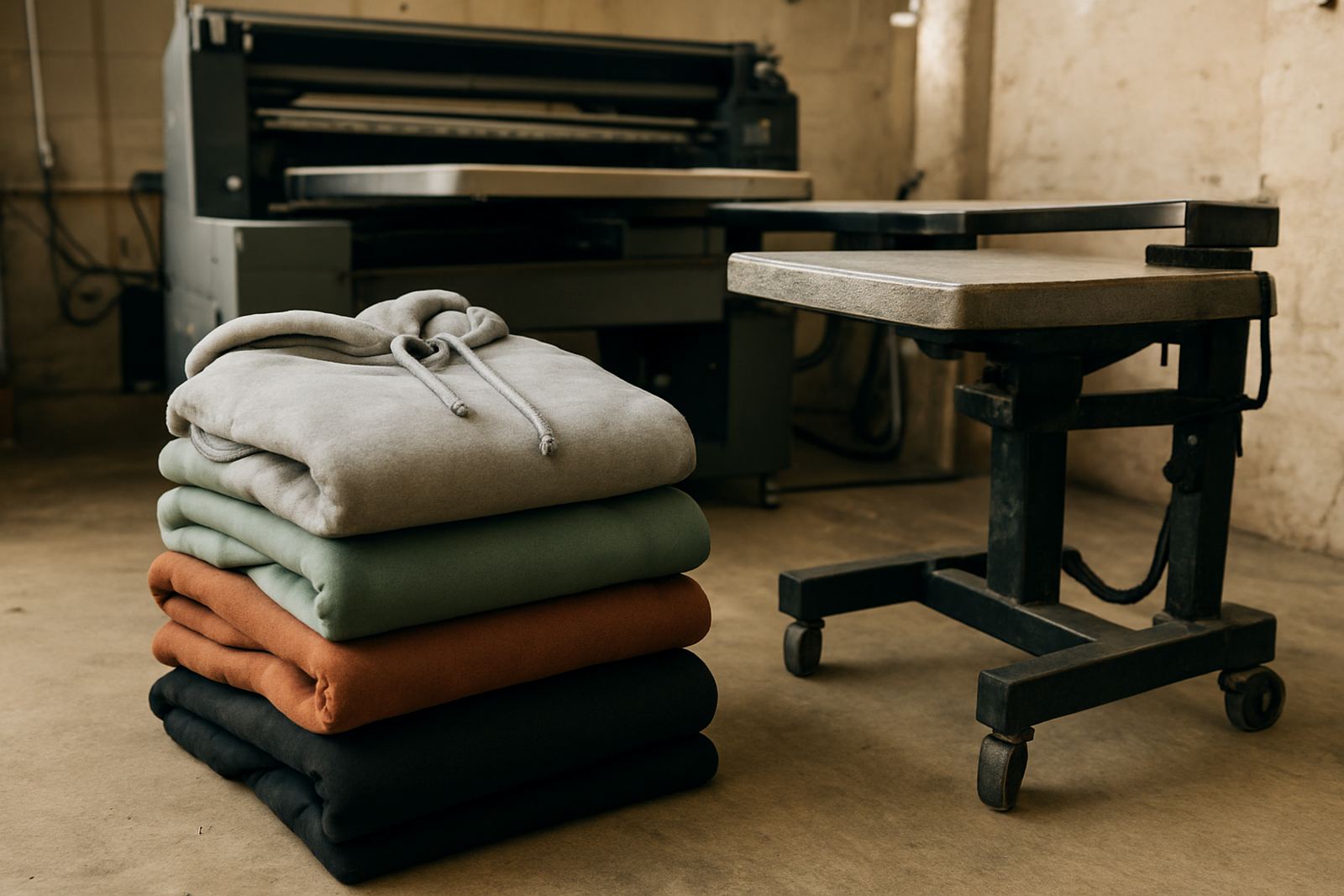
Hoodies behave differently from T shirts, especially on mixed runs where sizes change from small to 5XL and the fabric weight shifts between light fleece and heavy brushed cotton. The front pocket can lift the print area, the hood adds bulk at the neck, and side seams can throw off alignment if the platen is too narrow. In Johannesburg print rooms that run cold in winter and warm up fast under curing equipment, those small differences matter even more.
For many shops, the real challenge is not the artwork, it is repeatability. If the first ten pieces sit nicely and the next ten start shifting because the garment was loaded too quickly, production slows down and reprints start eating into margin. A hoodie run should be planned around loading time, print area control and cure access, not just the final image size.
Typical Platen And Hoop Choices For Hoodies
Most hoodie production works best with a platen set that gives extra support across the chest and enough clearance around the pocket area. A common setup includes full front platens, youth sizes for smaller garments, and compact platens for left chest prints. For shops doing mixed decoration, hoops can help with positioning on specialty items like caps or smaller apparel, but hoodies usually rely more on the right platen shape and a clean loading process.
- Wide front platens for standard adult hoodies
- Smaller platens for left chest and sleeve prints
- Raised support where pockets sit too high
- Heat-safe pretreat tools for lighter garments and capped runs
- Extra alignment aids for repeat orders across multiple sizes
At DTGrip in Crown Mines, the focus is on practical fitment for local garment shops, including operators who need next-day courier to Pretoria East, Randburg, Midrand, Sandton, Centurion, the East Rand and Durban. A good set-up should reduce handling time, keep the print face flat and help the cure stage work without scorching the thick fabric edges.
Layout Planning For Clean Loading And Faster Turnaround
Hoodie runs go smoother when the room is set up for movement. Keep the loading point close to the printer, with enough table space for sorting sizes before they reach the machine. If your team is handling school wear, promo orders or retail stock, label piles by size and colour before pretreat starts. That saves time and avoids the common mistake of putting the wrong shade into the wrong curing cycle.
Think about workflow from left to right or right to left and keep the process the same for every operator. A consistent layout means the garment arrives, is checked, loaded, printed, and moved to cure without backtracking. In a shop with load-shedding backup, this matters because every extra movement uses time when power is unstable and you want the run finished before the generator or inverter battery drops too low.
- Store hoodies by size range, not just by style
- Keep pocket-heavy garments on a separate prep stack
- Mark loading depth so every print lands in the same place
- Leave curing space clear for thicker garments
- Set aside test pieces for colour and placement checks
Common Mistakes That Cost Time And Stock
One of the biggest errors is forcing a standard platen under a hoodie that really needs more support. This can leave the pocket area raised and the print ends up too high or too low. Another common issue is over-pretreating thick fleece. Too much liquid soaks into the fibres and can leave a patchy finish, while too little can make the print sit weakly on the surface and wash down too quickly.
Heating is another trouble spot. Hoodies hold more moisture than light garments, so they often need a little extra attention before and after printing. If a shop rushes them through cure without checking the seams and pocket bulk, the edges can come out undercured while the flat centre looks fine. That is why sample testing matters, especially when a shop is moving from basic cotton tees into higher-margin winter ranges.
A final mistake is training only one person to handle the run. If that operator is absent or tied up on another job the whole production line slows down. It is better to have at least two staff members who understand loading position, pretreat flow and how to spot a crooked garment before it reaches the print stage.
Budget Ranges For A Hoodie Print Room Upgrade
Budgets vary depending on how many sizes you run, how many platens you need, and whether you want remote help, onsite support or a full workflow review. A small shop in Randburg doing short hoodie runs may only need a few platen sizes and basic setup advice. A larger printer in Centurion or the East Rand might need a broader set, plus operator training and seasonal reconfiguration for winter demand.
As a working guide, small hoodie run improvements can start from around R2 500 to R6 000 for a basic setup review and a few support items. Mid-range planning with extra platens, workflow adjustments and training often sits between R7 000 and R18 000. Larger production changes, including new shop planning, sample testing and onsite support, can move from R20 000 upwards depending on the volume and equipment mix. These figures help shops plan properly before peak season hits and the orders start stacking up.
For Crown Mines clients and nationwide print shops alike, it usually makes sense to match spend to volume. If you are doing 20 to 40 hoodies a week, you need a practical setup that cuts mistakes. If you are doing school, corporate or retail winter runs at scale, investing in better loading and alignment gear pays back faster through less wastage and smoother turnaround.
How DTGrip Supports Hoodie Production Across South Africa
DTGrip works with garment decorators who need practical answers, not guesswork. The team can help with platen installation, hoop setup, pretreat workflow, operator training, print alignment help and workflow review. If a shop is struggling with hoodie pockets, mixed sizing or recurring misprints, remote troubleshooting can often identify the problem quickly, while an onsite support visit gives hands-on correction where it is needed.
The Crown Mines base is useful for Johannesburg shops that want quick collection and next-day courier to the rest of the country. That includes busy operators in Sandton, Pretoria East, Midrand, Randburg, Centurion, the East Rand and Durban who need parts or advice without waiting a week. The aim is simple: help the shop print cleaner hoodies with less rework and steadier production through busy seasons.
Questions To Ask Before You Start The Run
Before a hoodie order goes live, it helps to check a few practical points. What is the fabric blend, how thick is the fleece, do the pockets sit high enough to interfere with the print, and will the run be sorted by size before it reaches the machine? If you answer those early, the job tends to move faster and the curing stage becomes far less stressful.
- Are all hoodie sizes loaded on the correct platen?
- Has the pretreat amount been tested on one sample first?
- Is there enough curing space for bulkier garments?
- Will the operator on shift know the alignment mark to use?
- Do you need training for a second person in the team?
That kind of planning is what keeps winter production under control. A hoodie run should not feel like a guess every time a new order lands, it should feel like a process the whole team can repeat with confidence.