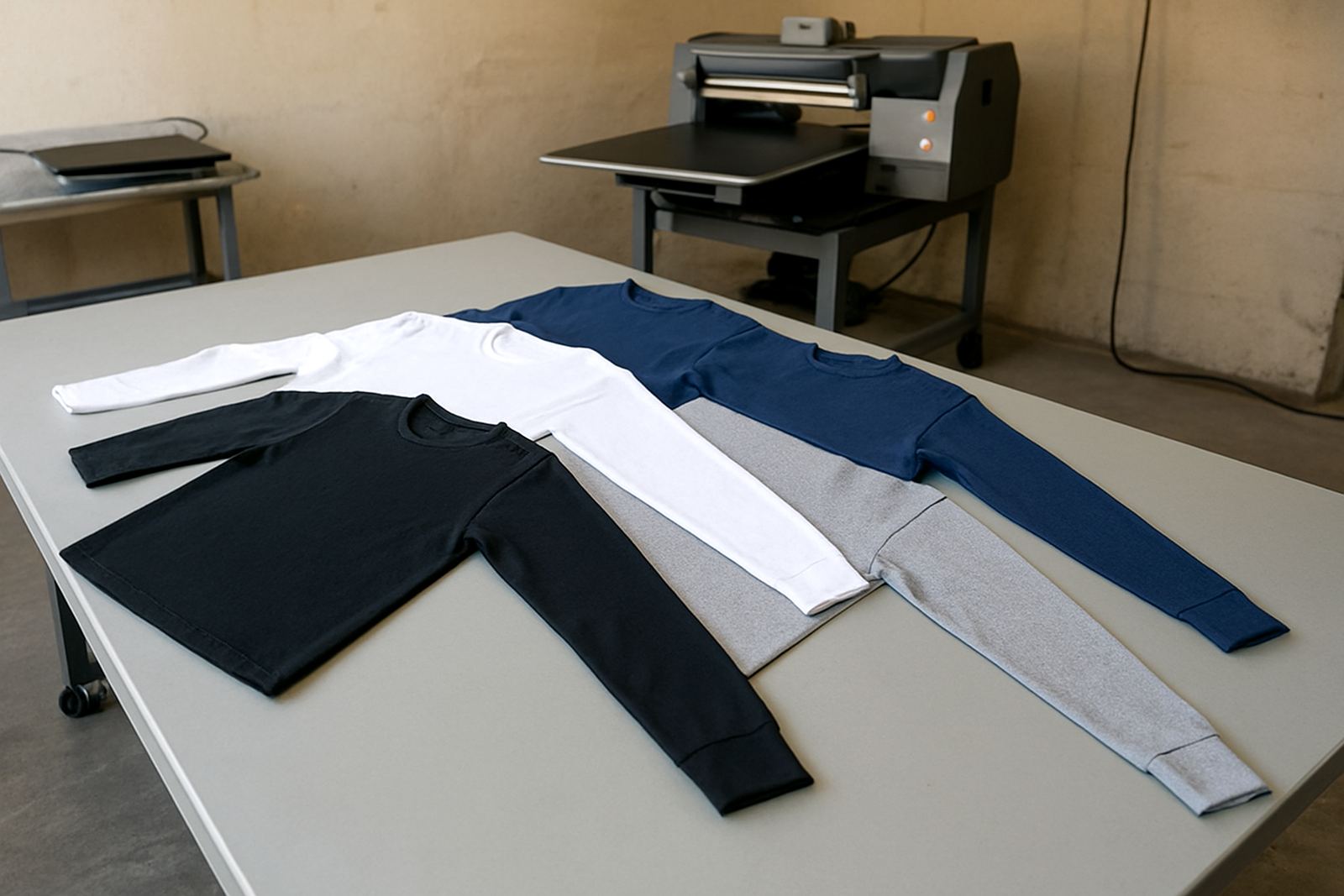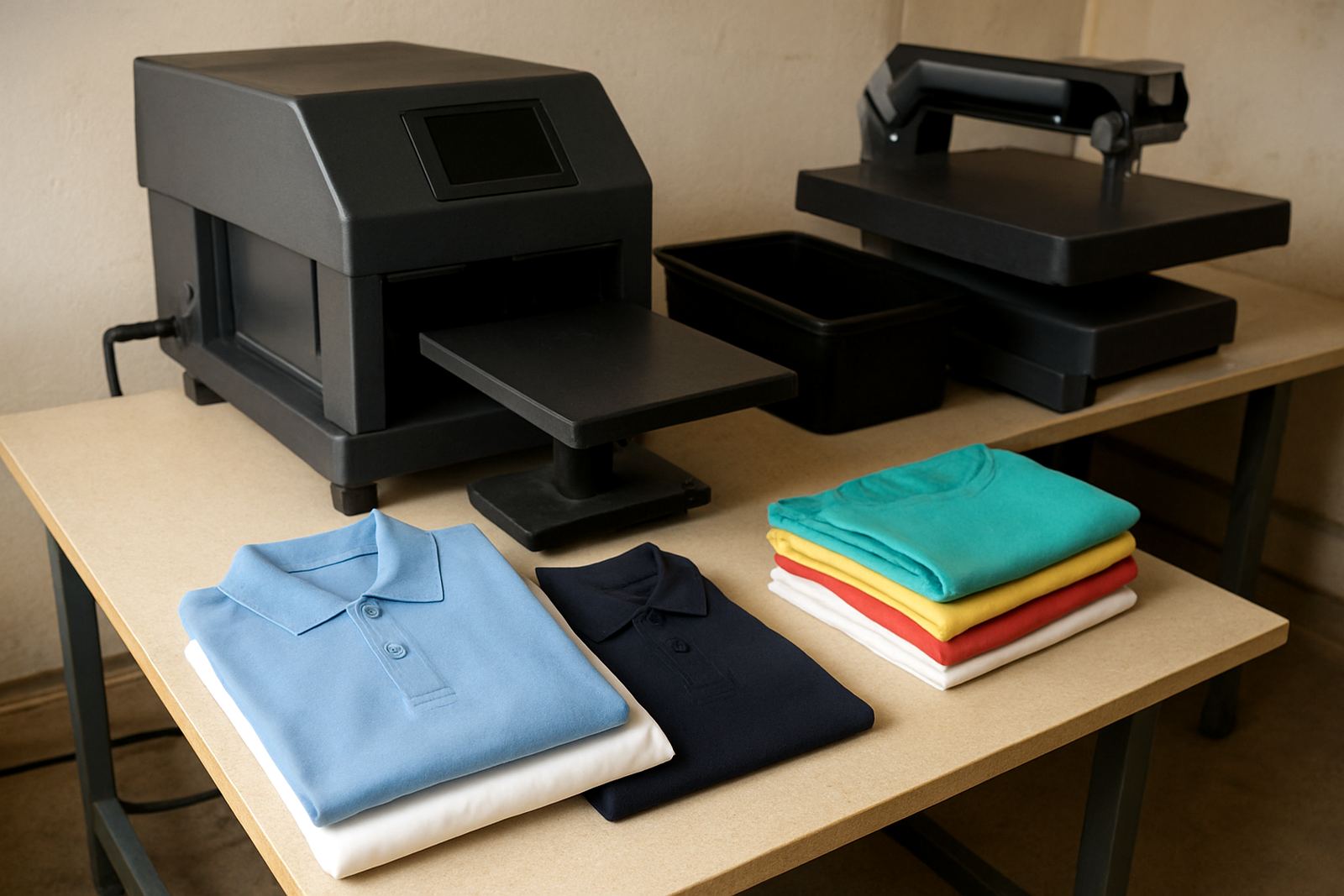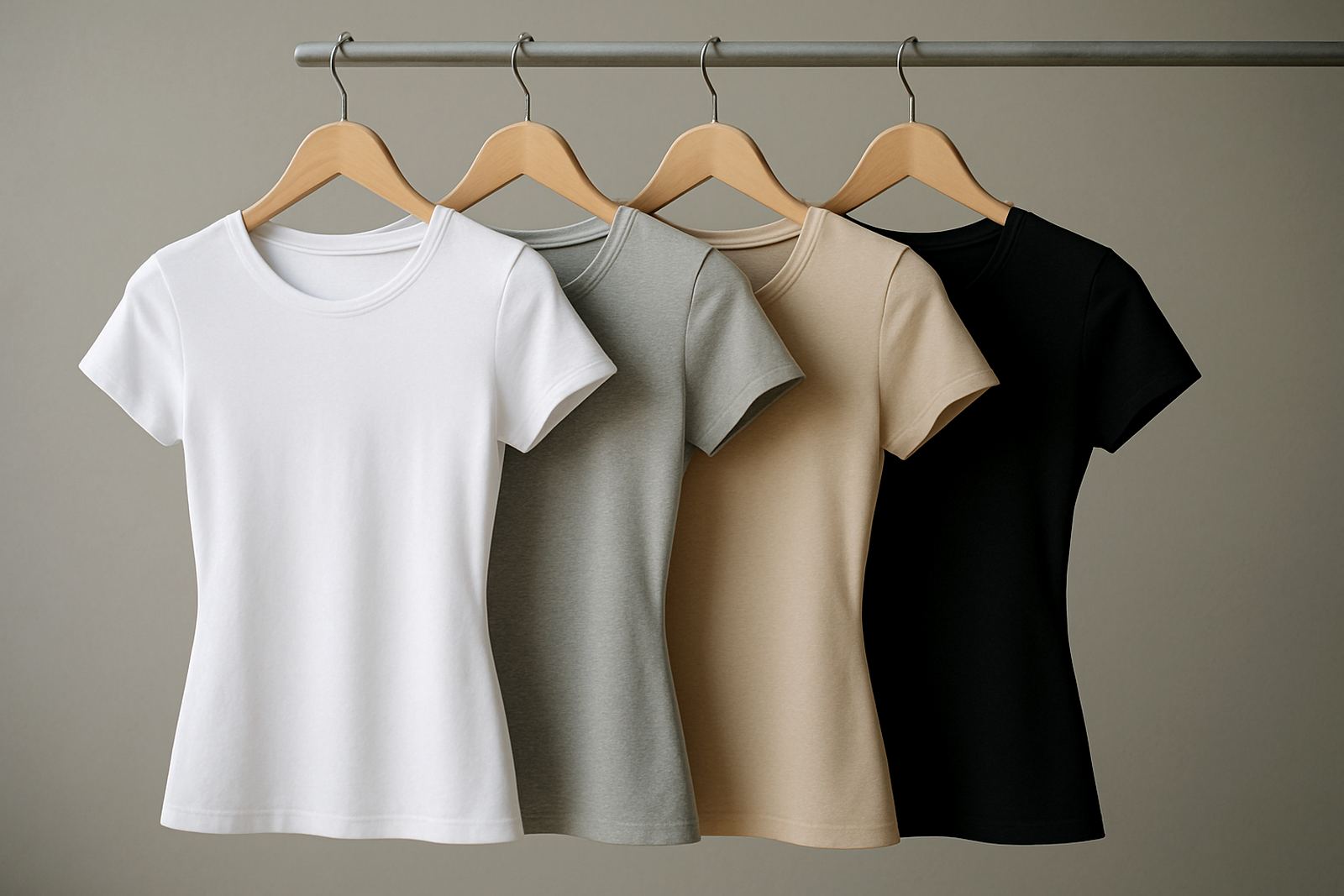

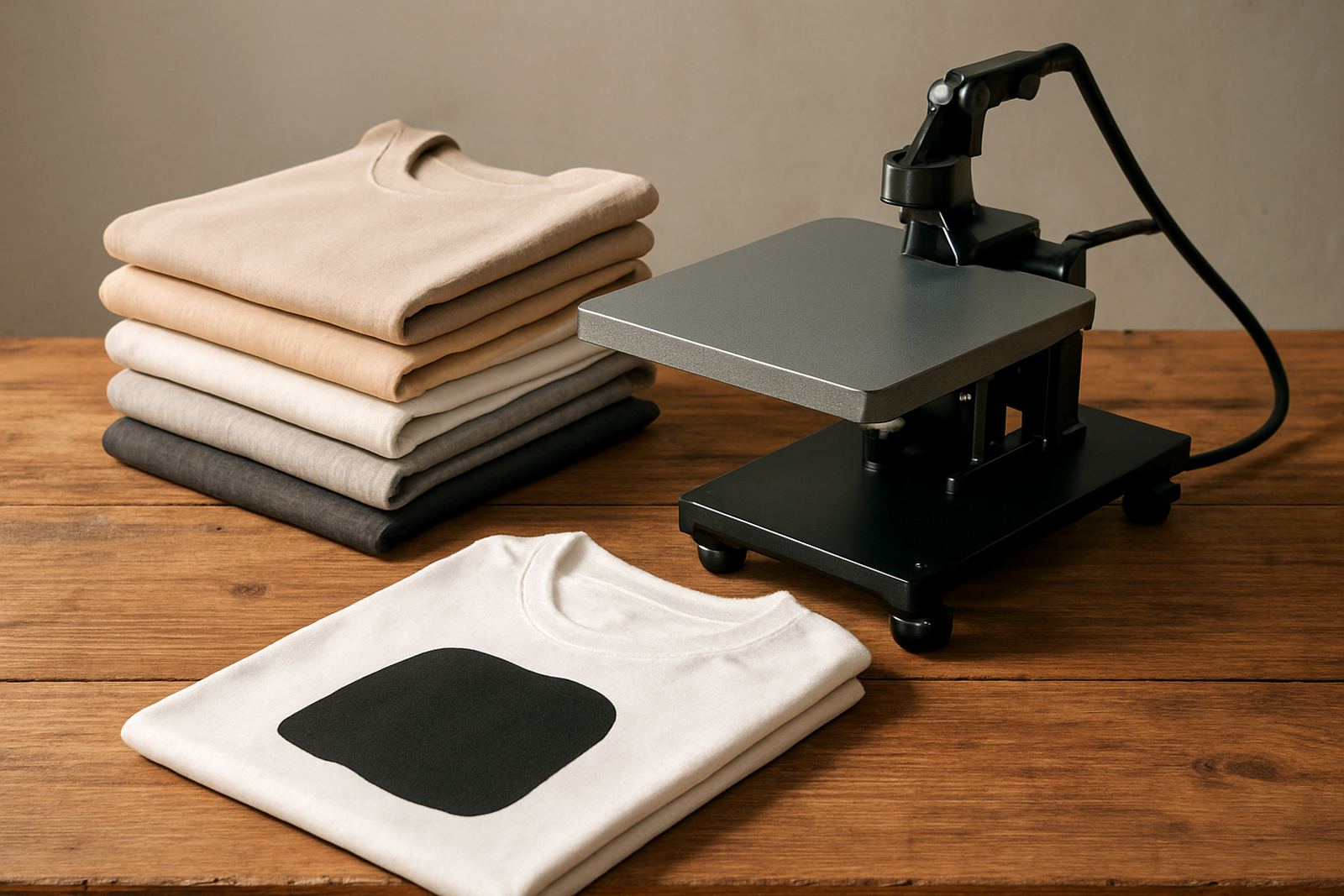
When Fashion Tees Need More Than a Standard Setup
Fashion T-shirts are not the same as bulk promo tees. You are often working with softer cotton, relaxed fits, varied neck drops and print positions that must land exactly where the customer expects. A front chest mark that is 15 mm off centre is enough to ruin a premium garment.
In Johannesburg and the surrounding trade areas, many print shops handle a mix of small runs, sample approval work and repeat orders for boutiques, labels and event merch. That means the platen choice and prep method must support quick changeovers, clean alignment and repeatable results through long shifts, even when load-shedding interrupts the day and the team has to pick up again fast.
Typical Equipment Set For Fashion Garment Work
For fashion tees, most shops benefit from a set of platens rather than one all-purpose board. Smaller youth sizes, ladies cuts and oversized tees each sit differently, and the garment must lay flat without stretching the collar or shoulder line.
- Standard adult platens for everyday small to medium runs
- Narrow or reduced-size platens for fitted tees and fashion cuts
- Oversize platens for relaxed fit garments and large front graphics
- Left chest and sleeve support platens for premium detailing
- Hoops for stable fabric positioning during pretreatment and print prep
When the garment is held correctly, print placement becomes easier and the finish looks more considered. That matters a lot for branded retail stock where the customer inspects necklines, seams and print feel before approving the order.
Planning The Layout Before The First Print
Good fashion tee production starts before ink ever touches fabric. The workshop should have a simple flow from receiving, sizing, pretreat, pressing, loading, printing and curing. If the operator has to keep walking across the room for each shirt, output slows and errors creep in.
A practical layout in Crown Mines or any busy Gauteng workshop often includes a pretreat station close to the printer, drying or flash space nearby, and a clear bench for sample checking. Keep your most used platens within arm's reach and store less common sizes together so the team does not waste time hunting for fittings.
For shops with seasonal peaks, it helps to plan for reconfiguration. Summer fashion ranges and year-end promo work can change your platen mix quickly, so the setup should let you switch from small premium runs to larger volume orders without rebuilding the room. A simple workflow review can save alot of wasted motion.
Pretreat Methods That Protect Hand Feel
Fashion customers care about feel as much as colour and placement. Too much pretreat can leave a stiff patch, a shine mark or a visible box around the print area. Too little can cause weak colour, poor wash results or patchy coverage on darker garments.
The right kit and method depend on garment fibre, print size and how the shirt will be worn. Lightweight cotton tees for boutique ranges need different handling from heavier promotional blanks. In coastal areas like Durban, humidity can also affect drying times, so a process that works in dry weather may need small changes when the air is damp.
- Match spray volume to the print area, not the full shirt size
- Keep the shirt flat and centred before applying pretreat
- Use consistent drying or pressing time for every batch
- Test new fabric lots before full production starts
A sample test is worth far more than a rushed full run that comes back with uneven colour or a hard hand feel.
Common Mistakes On Fashion Tee Jobs
The most common problem we see is operators using one platen size for everything. That works for rough production, but fashion garments need better support around the shoulder line and neckline. A shirt that hangs loose on the platen can shift during printing and spoil the placement.
Another mistake is overthinking the artwork and underplanning the garment setup. If the neck drop, side seam and sleeve length are not considered, the print may look fine on a screen but wrong on the actual shirt. This is where print alignment help and operator training pay for themselves.
- Using the wrong platen for fitted or oversized tees
- Printing before checking the garment lie on the board
- Skipping sample testing on new fabric types
- Ignoring pretreat marks, press shine or ghosting
- Running the same settings across different shirt weights
Some issues are quick to fix, others need a workflow review. If the team keeps repeating the same mistake, the production system probably needs adjusting not just the operator.
Budget Ranges For Smaller Studios And Busy Print Shops
Fashion tee work can be started on a modest budget, but the right choice depends on how many garment types you handle each week. A basic platen and hoop setup for a small studio may start around R2 500 to R8 000, while a broader set for mixed fashion production can sit between R8 000 and R25 000 depending on sizes and the number of fittings.
Pretreatment kits and setup accessories usually sit in a lower range, but they still affect output quality. Many shops budget between R1 500 and R6 000 for starter prep gear, with extra spend on sample testing, operator training and seasonal reconfiguration when the work mix changes. For larger teams in Pretoria East, Midrand or the East Rand, the real saving comes from reducing waste and keeping the press line moving through the week.
Next-day courier to print shops nationwide makes it easier to fill gaps fast, especially when a platen gets damaged or a new size is needed for a retail order.
Support For Shops That Need Repeatable Results
Fashion tee production is not only about equipment, it is about consistency. DTGrip works with print shops across Johannesburg, Sandton, Randburg, Midrand, Centurion, Pretoria East, the East Rand and Durban to improve setup, placement and day-to-day output.
Support can include platen installation, hoop setup, pretreat workflow, remote troubleshooting, onsite support visits, new shop planning and production scaling. If your team needs help choosing the right mix for fashion tees, a short workflow review can clarify what to keep, what to change and where the delays are coming from.
With the right support, your shirts land straighter, the print feels better and the whole job moves with fewer reprints and less waste. That is what keeps premium fashion work worth the effort.