Why summer changes your print room routine
By November, many print shops start feeling the difference before lunch time. Heat builds in the workshop, pallets can warm up faster than expected, and pretreatment behaves differently on fabric that has been sitting in a hot storeroom or delivery area. If your team is running DTG jobs from Crown Mines to Centurion or Durban, summer is the season where small habits matter most.
The biggest risk is not only temperature. Humidity, dust, power cuts and extra foot traffic all affect how garments handle pretreat, how operators move through the floor, and how consistent the final print looks. A solid summer routine helps reduce waste and keeps turnaround times realistic when the order book is full.
Keep pretreat stable before it reaches the garment
Pretreat works best when it is handled consistently. In hot weather, leave drums and bottles in a shaded, dry area rather than next to a roller shutter or sunny window. If a product has been standing in a warm store room, give it time to settle before use. Shake or mix only as directed, and do not top up a half used container with old stock from another batch.
For shops that do promotional tees, schoolwear or fashion drops, a simple pretreat check at the start of each shift helps. Look at spray pattern, nozzle condition and fabric response on a sample garment before moving into the day’s production run. A quick test now can save a full batch later.
- Store pretreat in a cool dry room away from direct sun.
- Keep lids closed tightly after every use.
- Label opened containers with the date and batch.
- Run a sample on the same fabric you will print that day.
Storage habits that protect garments and consumables
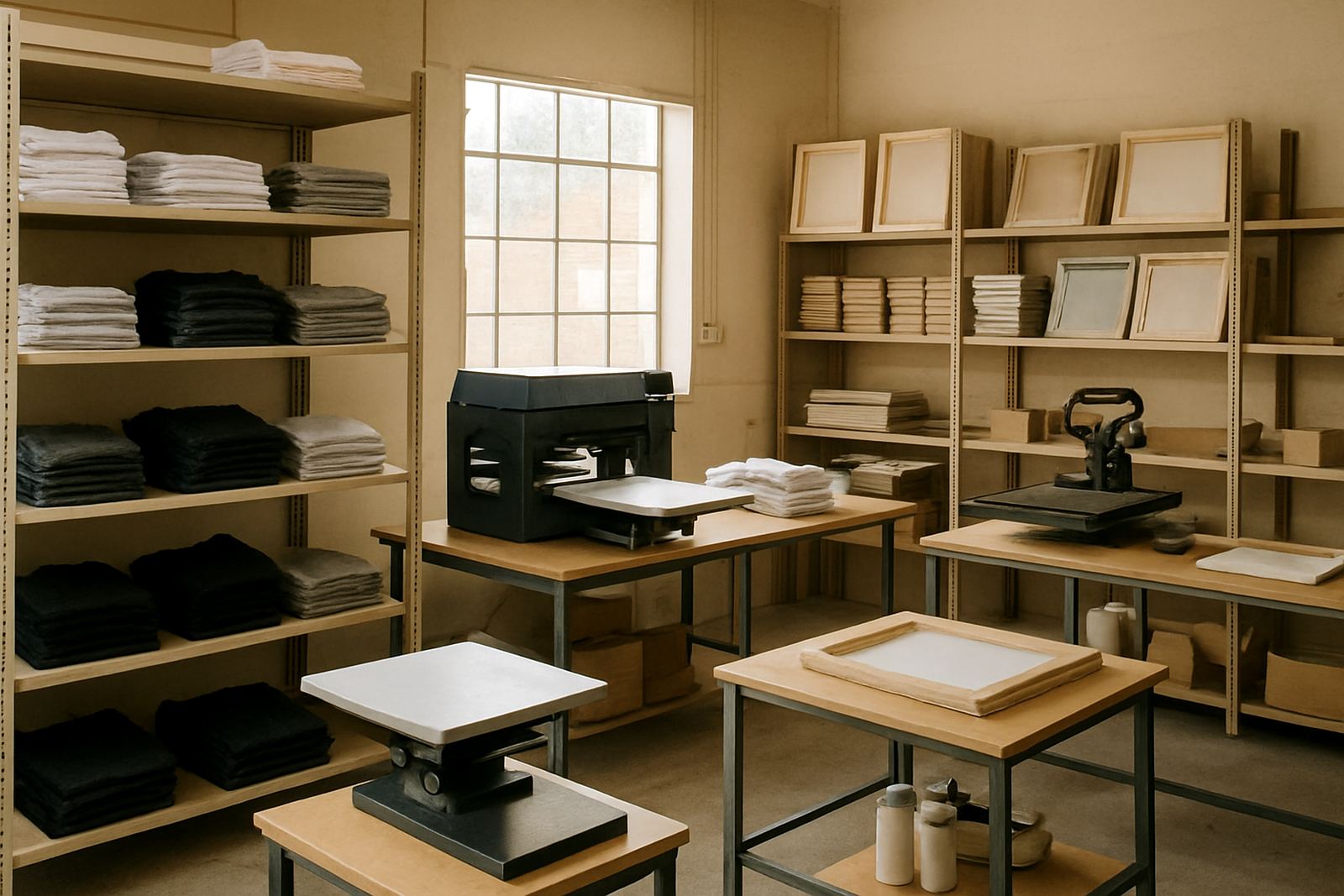
Garments absorb heat quickly, especially dark cotton and blends packed into plastic sacks. If stock arrives in the morning and sits in a hot loading area until after lunch, the fabric may feel slightly damp or flat, which can affect pretreat and print placement. Keep incoming stock off the floor, away from leaking roofs and clear of any direct airflow from open doors. In coastal areas like Durban, moisture can be the bigger problem, so sealed storage and proper stock rotation become essential.
Use FIFO stock rotation and separate completed work from incoming blanks. It sounds simple, but many print rooms lose time because a half used size run or a seasonal order gets buried under fresh cartons. When space is tight in places like Randburg or the East Rand, vertical shelving and clearly marked bins help more than a bigger room with no system.
- Lift cartons onto pallets or shelving, not straight onto the concrete.
- Keep finished garments in clean breathable packaging where possible.
- Separate light colours from dark garments to avoid marking.
- Check for moisture on labels, sleeves and folding tables each morning.
Operator comfort affects print consistency
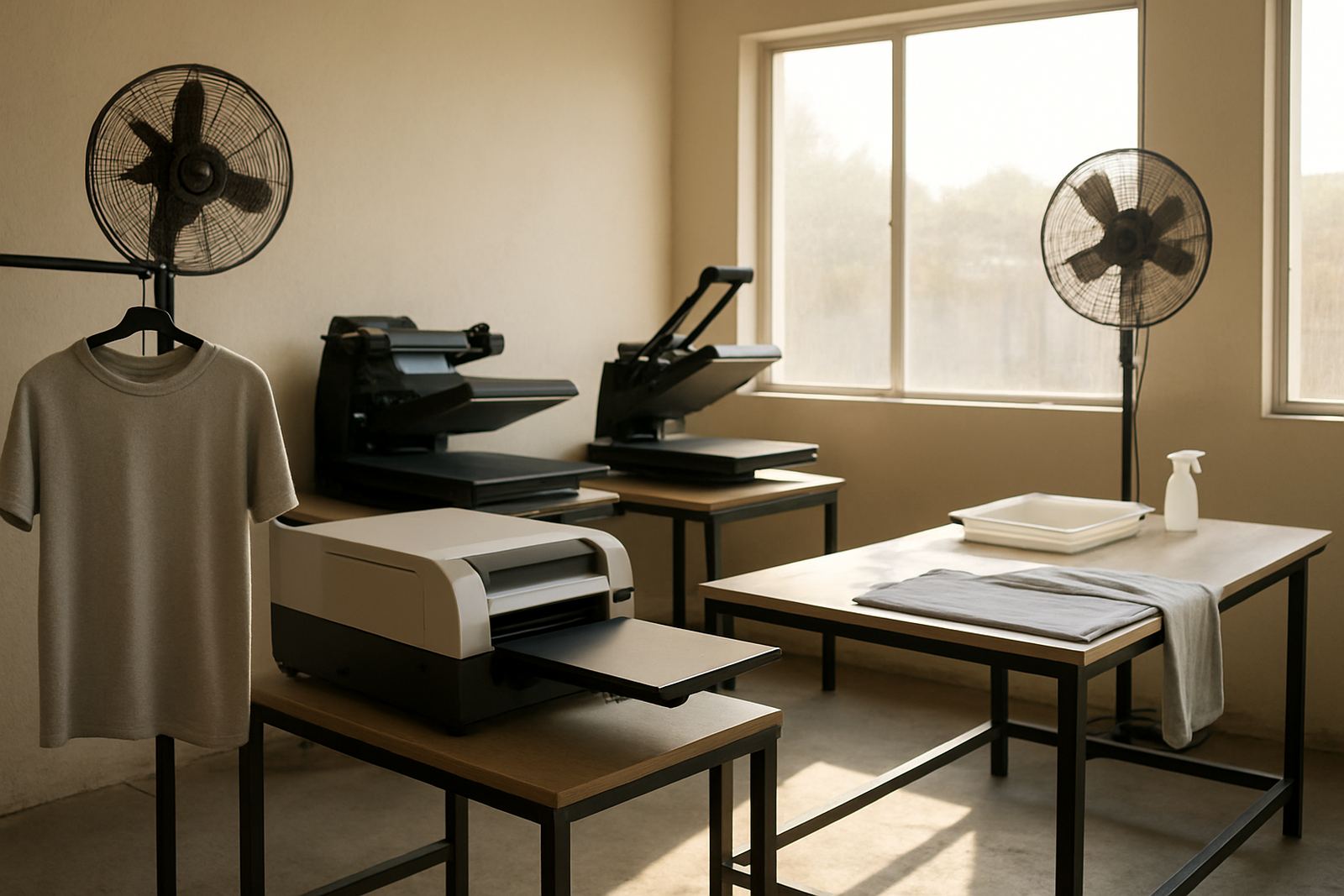
A tired operator makes more setting mistakes, especially in a hot workshop. Long summer shifts are easier when the line is arranged so that the most repetitive tasks are not done in one cramped corner. Good lighting, a small fan that does not blow dust onto open prints, and a clear path between pretreat, press and curing points all help.
It is also worth reviewing breaks and shift timing. Many shops in Johannesburg move their heaviest production earlier in the day and use the hotter afternoon hours for admin, prep or smaller runs. If staff are working through load-shedding, make sure there is a written plan for what happens to pretreat, wet garments and curing steps when the power drops. A rushed restart often leads to avoidable rework.
Recheck platen, hoop and garment fit for summer fabrics
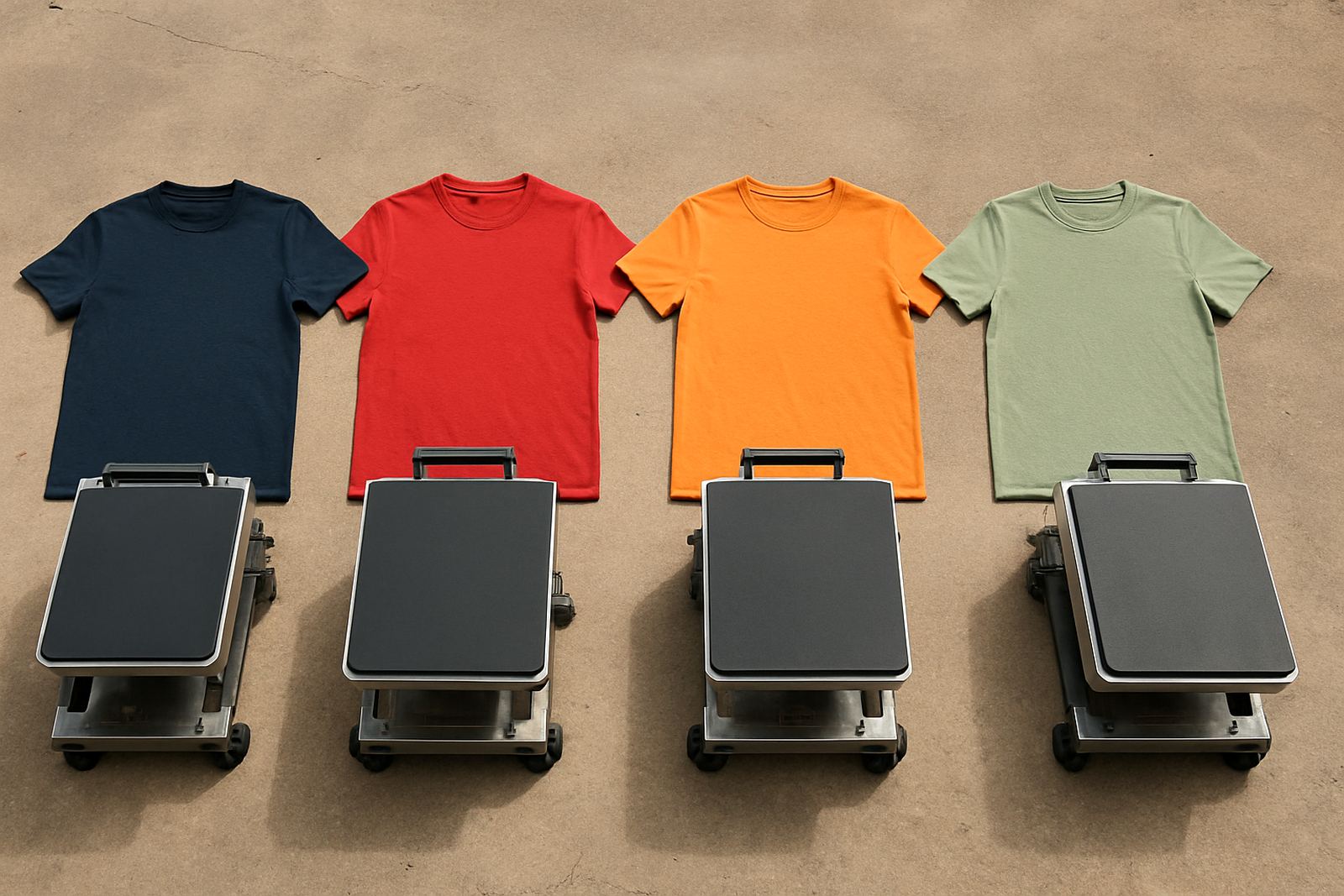
Summer garments are often lighter, stretchier or cut with different finishes than winter stock. That means your platen and hoop setup may need a quick review. A shirt that sits neatly in May can shift under pressure in January if the fabric is thinner or the seam line is different. The same applies to kidswear, promotional vests and poly blend items.
Before a seasonal run, test a few sample sizes and confirm the artwork sits where the customer expects it. If the shop is switching from thick hoodies to thin tees, the team should recheck height, tension and alignment before the first production batch. That one step saves a lot of arguing when the courier is already booked.
- Run sample testing on the exact summer fabric before mass production.
- Review hoop tension on lighter garments.
- Confirm platen size against the garment size range.
- Mark preferred placement positions for repeat orders.
What a Crown Mines shop can do before peak season
A practical example: a Crown Mines print shop handling school events, sportswear and corporate summer orders can lose half a day if pretreat and stock are left to improvise. A better plan is to rework the floor before the rush starts. Put pretreat near the press area, move slow moving stock into cooler storage, and assign one person to check sample prints at the start of each run.
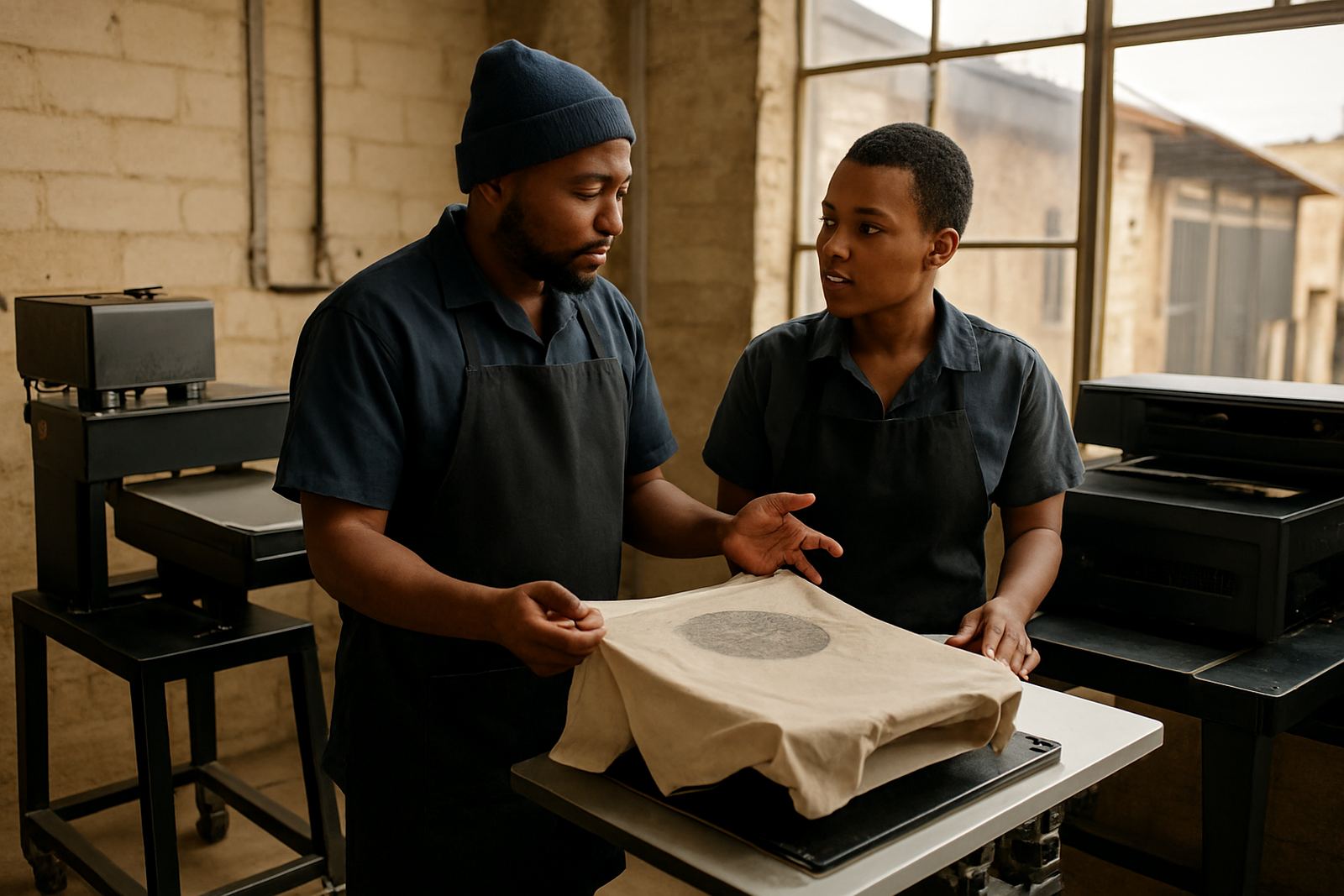
For many teams in Sandton, Midrand and Pretoria East, the summer season is also when new staff join or casual operators cover leave. That is the right time to refresh the workflow and not wait until orders are late. Short training, a simple checklist and a quick support visit can keep the team steady without changing the whole production line.
DTGrip works with garment decorators across Johannesburg and nationwide on platen installation, hoop setup, pretreat workflow and operator training. If your shop needs a seasonal reconfiguration, remote troubleshooting or a production scaling review, use the enquiry form on our contact page and the team will help you plan the next steps.
Small summer checks that prevent bigger problems
Summer does not have to slow you down. It just means your workshop needs tighter routines and a bit more attention to storage, handling and staff comfort. Shops that do well in this period usually keep their checks short and repeat them every day, instead of waiting for faults to show up in the print.
If you are running jobs across Johannesburg, Randburg, Centurion or as far as Durban, make time for a five minute start of day review. That small habit can protect quality, reduce waste and keep the line moving when the temperature climbs. It also helps when the power comes and goes, which is still part of life for many South African print rooms.