
Why stretch fabric moves so easily on the press
Spandex blends, rib knits and light polycotton stretch all behave differently once they are pulled over a platen. The fabric wants to return to its natural shape, so even a small tug can shift the grain, twist a neckline or lift one side higher than the other. That is why a shirt that looked flat on the loading table can move the moment the operator lets go.
In a busy Gauteng shop, this usually shows up when the team is chasing speed. One person loads, another pretreats, and the press is waiting behind the next job. If the garment is over stretched, the print can land in the wrong spot and then sit crooked after the fabric relaxes. The problem is not only visual, it can also affect wash wear and customer returns.
- Check the cut and sew direction before loading.
- Use the right platen size for the garment panel.
- Keep the fabric under light, even tension, not hard pull.
- Let the garment rest flat for a few seconds before printing.
Loading methods that keep the print area square
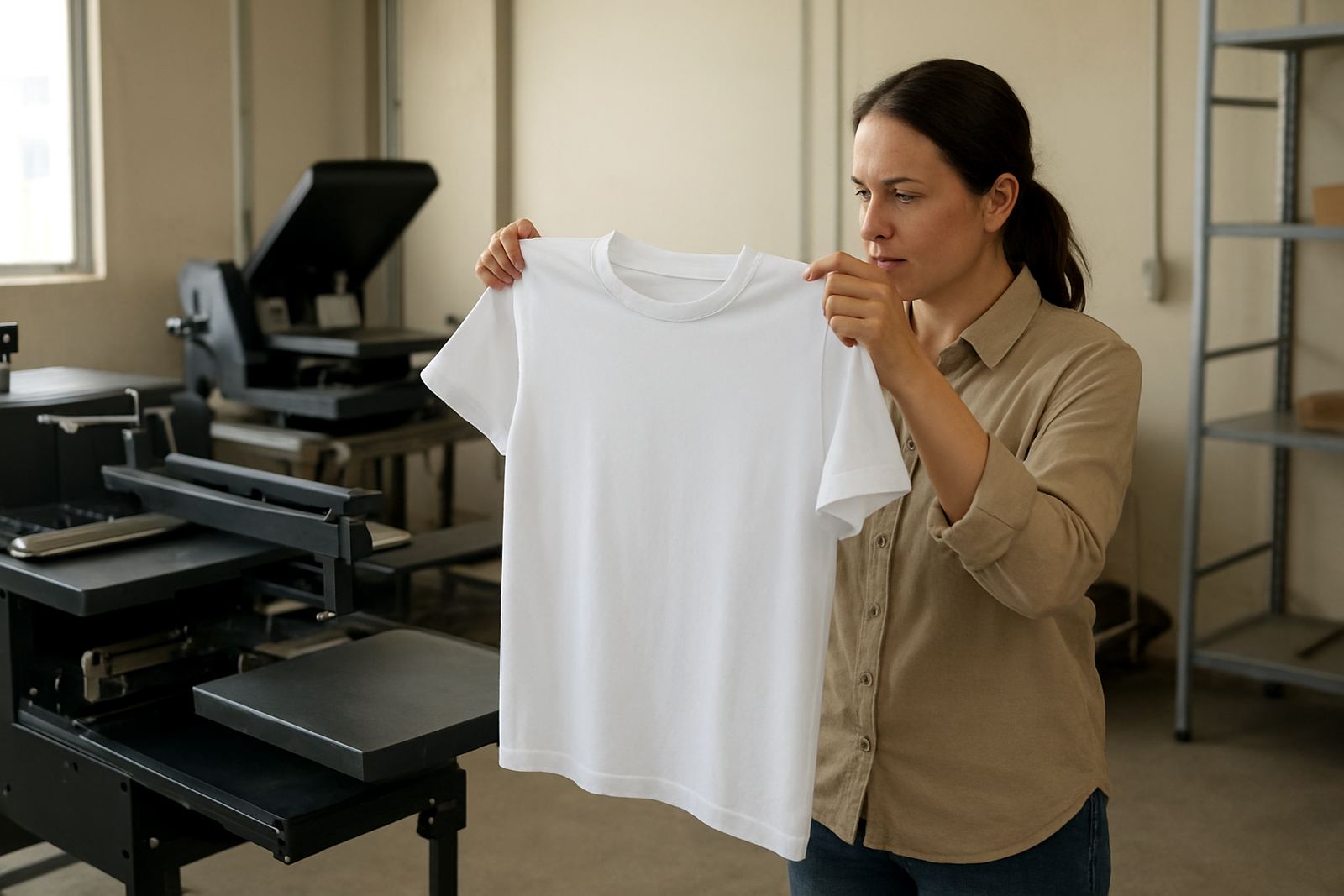
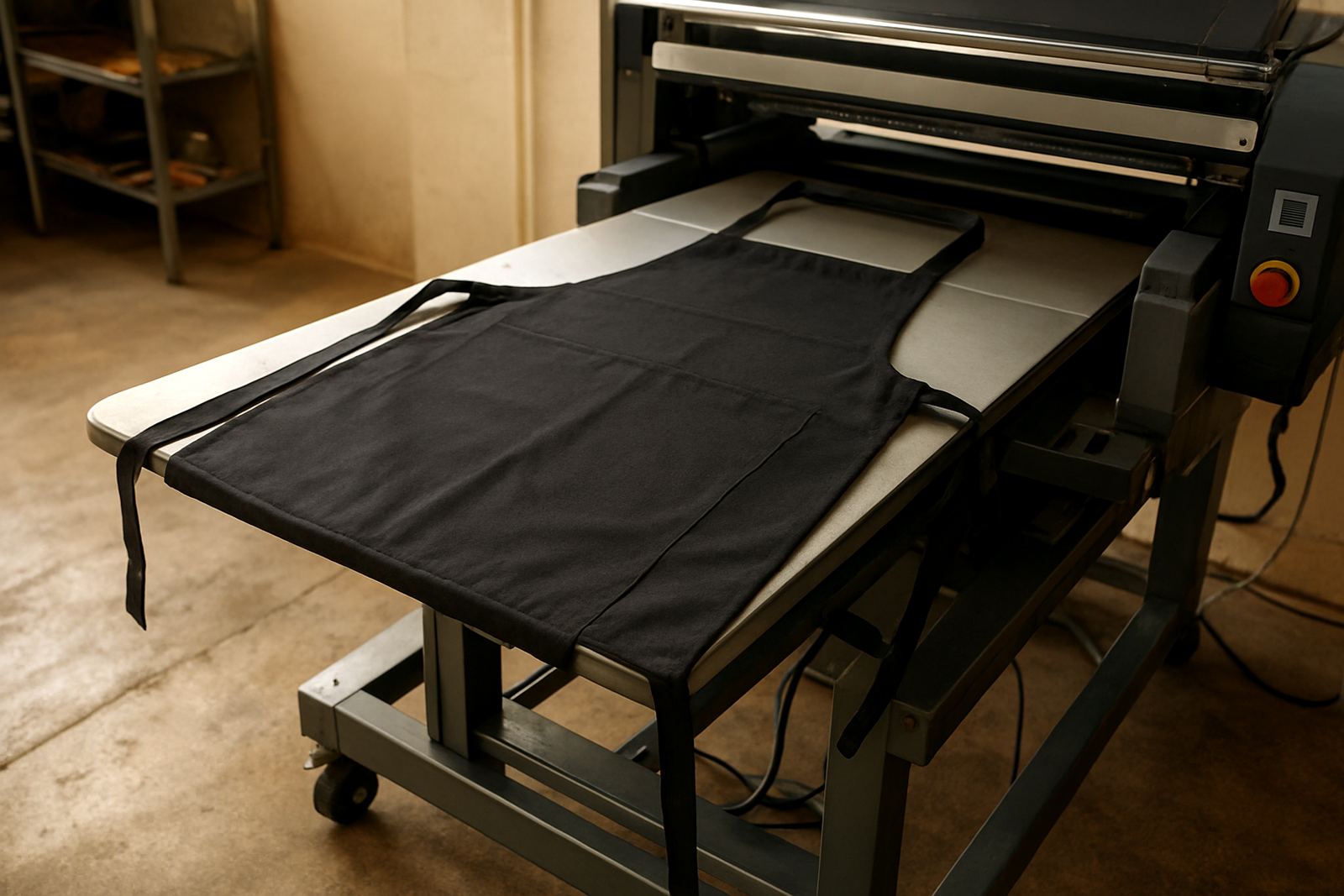
For stretchy garments, the loading step should feel controlled and repeatable. Place the garment so the collar, side seams or hem line up with a fixed reference point on the platen. Do not use one hand to pull the entire garment tight while the other hand tries to centre it, because that often twists the body panel by a few millimetres, which is enough to show on finished print.
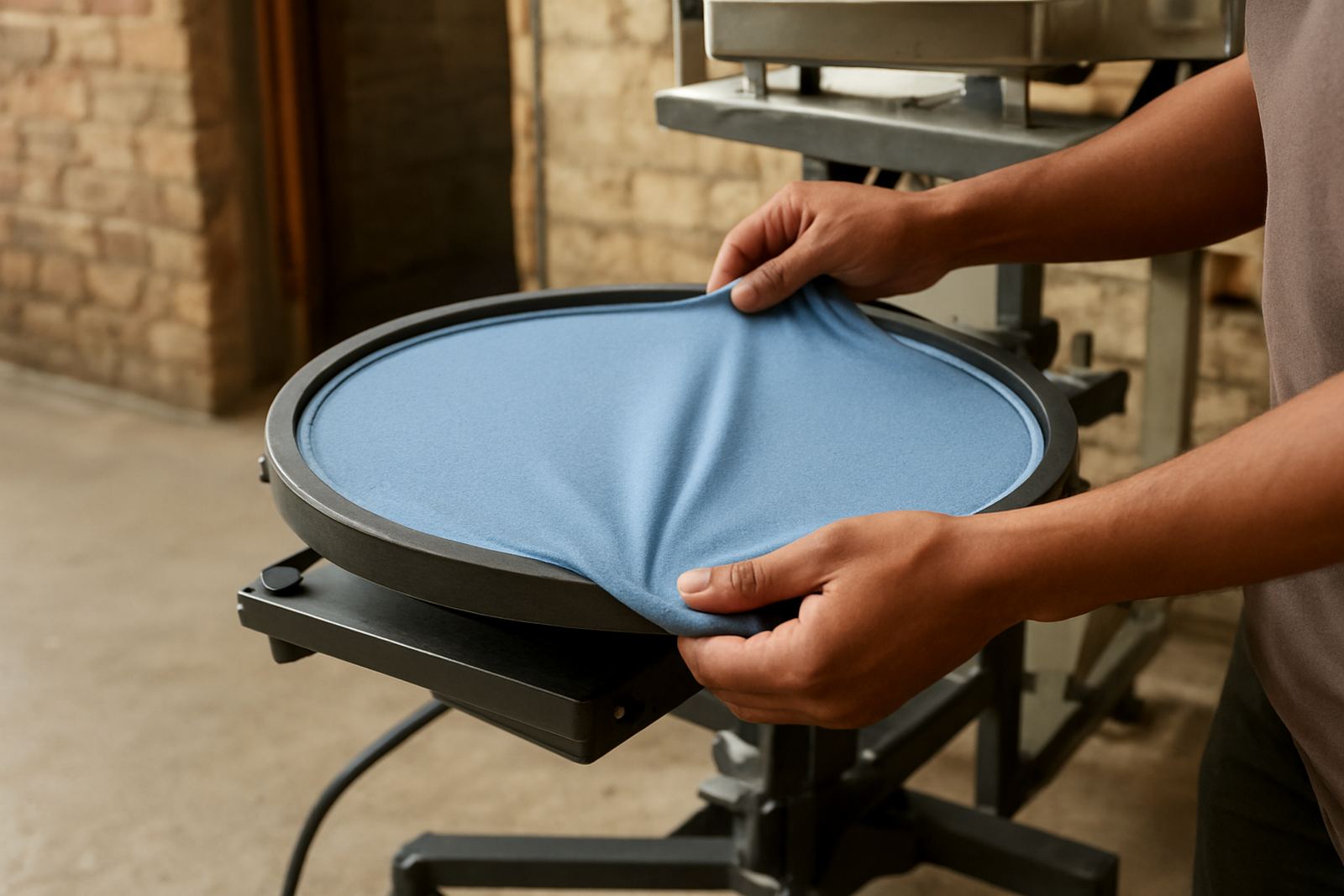
When printing on slim fashion tees or vests, use a platen that gives support close to the print zone. A smaller support area helps reduce sagging and keeps the fabric from floating at the edges. If the garment is long or has a curved hem, check the bottom line after loading and again after pretreat drying. A quick recheck saves more time than a reprint.
- Line up the garment with the platen centre before smoothing outward.
- Use clips, guides or stop points where your workflow allows it.
- For V-necks and wide necklines, support the shoulders first.
- Keep hands off the print area once the fabric is in position.
Pretreat care for stretch blends and coated fibres
Pretreat is where many stretch jobs go wrong. Too much liquid can soak into the knit and leave the fabric stiff in patches. Too little can cause weak white underbase coverage or colour laydown that looks uneven once the shirt has been washed. On stretch garments, the goal is an even, light application that suits the fibre content and the final feel the client wants.
Let the fabric dry fully before printing, especially on humid coastal jobs or during a wet week in Durban. If moisture remains in the fibres, the garment may shift again when it hits heat. In Johannesburg, where winter air is dry but shop floors still pick up dust, it helps to keep pretreat bottles sealed and the work area clean so you do not drag lint into the finish.
- Test on spare fabric first when you change garment type.
- Use a consistent spray pattern and distance.
- Dry each piece fully before it goes to the press.
- Store pretreat supplies away from heat and direct sun.
Heat, pressure and rest time need to match the fabric
Stretch fabrics do not all like the same heat. Some blends recover well after pressing, while others show shine marks, edge distortion or a slight puckering if the pressure is too high. Rather use enough pressure to cure the print properly, then confirm that the garment still sits flat once the platen opens. If the cloth springs back too much, the image may crack or sit unevenly after the first wash.
Load shedding makes timing more important. If the shop loses power mid cycle and the piece cools unevenly, the print can cure in a half set state. Keep a clear restart routine so operators know whether a garment must be rechecked, reheated or set aside for another run. That kind of discipline matters in places like Crown Mines, Sandton and Centurion where print rooms are often moving from one job to the next through the day.
A practical rule is simple: use the lowest pressure and shortest dwell time that still gives a full cure, then inspect the garment after it cools. If the fabric has relaxed, adjust the next job rather than forcing the same setting on every blend.
How to stop shift and twist during high volume loading
When orders stack up, stretch garments can start moving faster than the operator can correct them. The answer is not more speed, it is tighter workflow. Keep similar garment types together, set one loading pattern for each cut, and make sure everyone on the floor uses the same centre mark, fold line and pull direction. A mixed pile of tops leads to mixed results.
Training helps too. A new operator often pulls too hard on the first few pieces and then releases the fabric too soon. A short session on hand placement and platen choice can cut waste within a day. For shops in Midrand, Pretoria East or the East Rand that handle school wear, activewear and promo shirts in the same week, this consistency becomes a big help when seasonal volumes rise.
- Group garments by fabric content and print size.
- Use the same loading steps for each operator.
- Mark common print positions on the platen or jig.
- Review misprints weekly so the same error does not repeat.
A local example from a small shop changing its process
A print shop in Randburg was struggling with stretchy promotional tees that kept drifting to one side during loading. The team had good artwork and decent curing settings, but the fabric was moving because each operator was pulling by feel. We suggested a smaller platen for the front chest print, a fixed centre mark, and a slower pretreat dry cycle so the knit could settle before printing.
Within a short run, the shop saw fewer off-centre prints and less rework. The owner said the biggest change was not the machine, it was the method. Once the loading step was standardised, the garments sat flatter, the print position stayed true, and the team stopped second guessing every piece. That is the point with stretch care, the fabric should be managed before it has a chance to move.