Why repeat orders fail when the first run looked fine
Most repeat order problems start after the original job has left the shop. The first run may have been signed off, but the measurements, platen choice, hoop position or print path were never recorded properly. Two months later, a different operator is asked to match the same left chest logo or back print and the small differences start to show.
In garment decoration, a few millimetres can change how a repeat order feels to the customer. A chest logo that sits a touch higher, a sleeve mark that is off-centre, or a youth shirt that uses the wrong platen size can make a reprint look inconsistent even when the artwork itself is correct. That is why repeatability is not only a print issue, it is a shop control issue.
Build a repeatable setup before the print starts
The most reliable repeat orders come from a setup that removes guesswork. At DTGrip in Crown Mines, we see that the best results usually come from shops that standardise the physical side of the job first, then train operators to follow the same sequence every time. If the garment sits in the same position on the platen, the hoop lands in the same place and the print head path is checked the same way, the outcome becomes far more predictable.
For shops in Johannesburg, Sandton or Randrandt, where a lot of work moves quickly between retail, corporate and promotional runs, this sort of discipline saves time and keeps clients calm. It also helps when load-shedding or a rushed deadline throws the day out, because your process still has a clear starting point.
- Use one measuring method for all repeat placements
- Mark centre lines on platens and jigs where appropriate
- Keep one reference garment or sample print for comparison
- Separate youth, ladies and unisex setups in your job cards
How platen choice and hoop setup protect placement
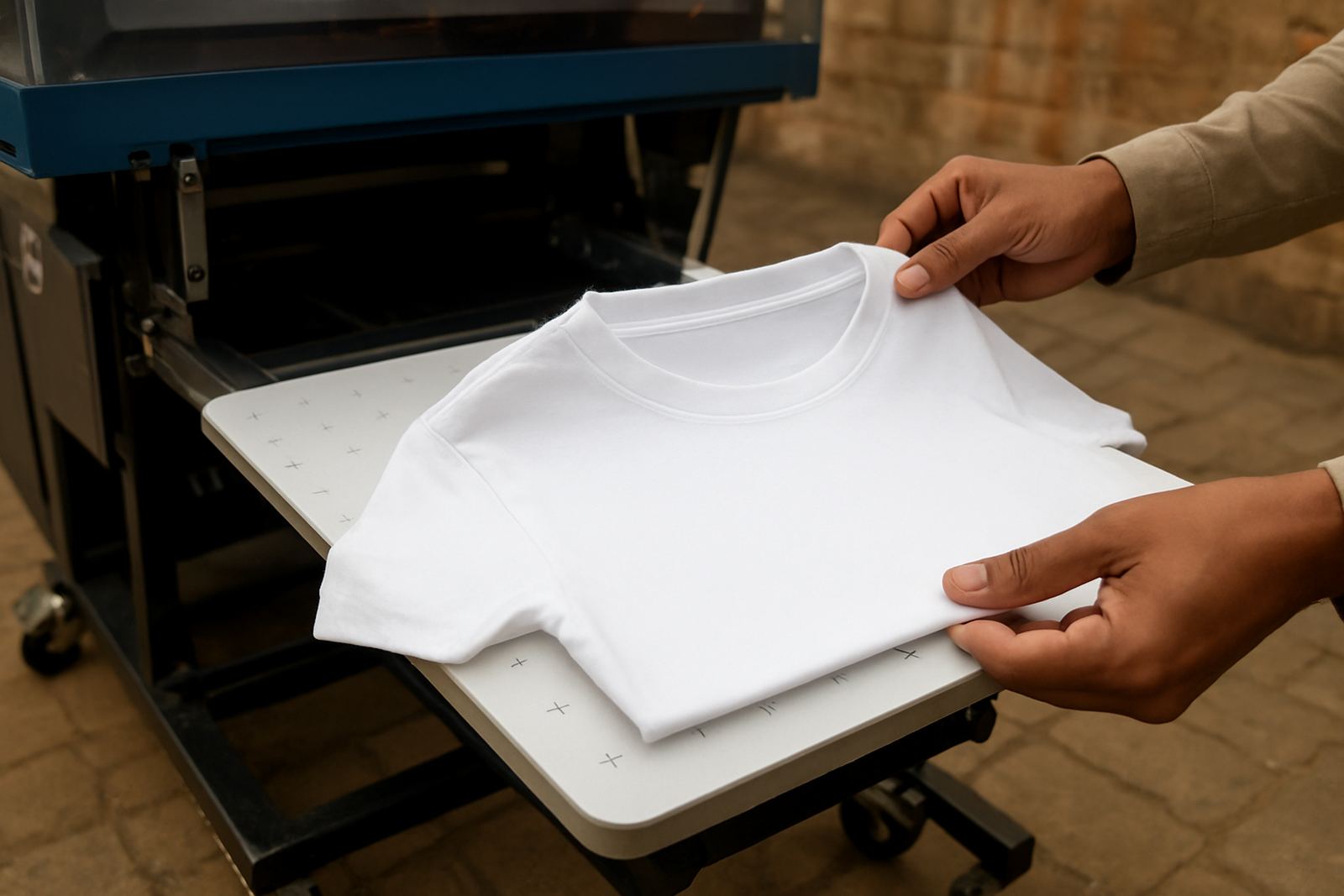
Platen choice has a direct effect on repeat order consistency. A shirt printed on the wrong platen can shift slightly under the garment, which changes where the image lands. On the other hand, a well matched platen supports the fabric in the same way every time, so the print sits where the operator expects it to sit.
Hoops matter just as much. If the garment is hooped loosely, or if the hoop setup changes from one order to the next, the fabric can stretch and release differently after curing. That is especially noticeable on activewear, polycotton blends and stretch garments where the finish needs to hold its position after washing.
For shops printing in Durban or other coastal areas, humidity can make fabric behaviour less predictable during the day. That does not mean the job is impossible, only that the shop needs a consistent hoop method and a stable pretreat workflow. A repeat order should not depend on who happened to be on shift that morning.
Keep customer confidence with clear records and proof samples
Customers trust repeat orders when the shop can show that the previous job was tracked properly. If a client returns and asks for the same logo in the same position, the fastest way to reassure them is to open the old job record, check the sample and confirm the measurements before production begins. That is better than saying the team will “make it the same” and hoping for the best.
Good records do not need to be complicated. A practical shop file should show the garment type, size range, print position, platen used, pretreat notes and any alignment adjustment that was needed. If the first run had a special handling step for a tricky fabric, that should be written down as well. Minor typos in notes are not the problem, missing notes are.
- Keep a photo of the approved first sample
- Note the placement in centimetres from collar, side seam or hem
- Store pretreat quantity and drying time with the order details
- Record any rework or customer changes before the job closes
A practical repeat order workflow for busy print shops
Busy shops in Pretoria East, Midrand, Centurion and the East Rand often need a repeat process that is simple enough for the whole team to follow. The aim is not extra paperwork, it is fewer surprises. Once the system is in place, the operator can move from intake to setup to print without stopping to ask where the last batch was placed.
A repeat workflow should start with a quick file check, then a garment check, then a placement check. If any one of those three changes, the job card should say so clearly. That is how you avoid the common problem where a customer says, “It was the same last time”, but the actual size, garment make or print area was slightly different.
For larger accounts, this approach also supports production scaling. The same method can be used whether you are printing 20 shirts for a small business or 500 garments for a campaign. Once the process is standardised, the team does not have to improvise every time the order repeats.
Where local support makes the difference on repeat work
Repeat order consistency is easier when the shop has access to practical support from people who understand the local garment market. DTGrip works from Crown Mines, Johannesburg, with next-day courier support to print shops nationwide, and the same hands-on approach applies whether a client needs a platen installation, hoop setup, print alignment help or remote troubleshooting.
That matters when a shop is trying to keep a long standing client happy. A repeat order is not just another batch. It is proof that your business can match the previous result under pressure, in season, after staff changes, and during the usual SA realities of power interruptions and deadline rushes. When the process is clear, the customer notices less drama and more consistency.
Thabo Mokoena and the team, including Ayesha Naidoo, Sipho Dlamini, Lerato Molefe, Johan Smit and Zanele Khumalo, spend a lot of time helping shops tighten the small details that affect repeat work. That may be a workshop visit, a workflow review, or a quick sample test before a larger re-run. The goal is simple: the next order should look like the last one, not like a new experiment.