Why Storage Creases Change the Final Print
Storage creases are not just a visual issue. On cotton tees, blends and hoodies, a fold can change the fabric thickness under the print area, which affects how the garment sits on the platen and how the ink lands. If the cloth has been folded tight in a box or stored for weeks in a warm storeroom, the crease can become a set line that shows through the print or holds a slight ridge after heat is applied.
In Johannesburg and the wider Gauteng area, many shops receive stock from suppliers or client-run promotions in bulk cartons. That is normal. What matters is how the garments are handled after unpacking. A print placed across a hard fold line may stretch unevenly, especially on thin knitwear. On darker garments, the pretreat coat can also pool at the crease and dry patchy, which may leave one side of the print looking duller than the rest.
What To Check Before A Garment Goes On The Platen
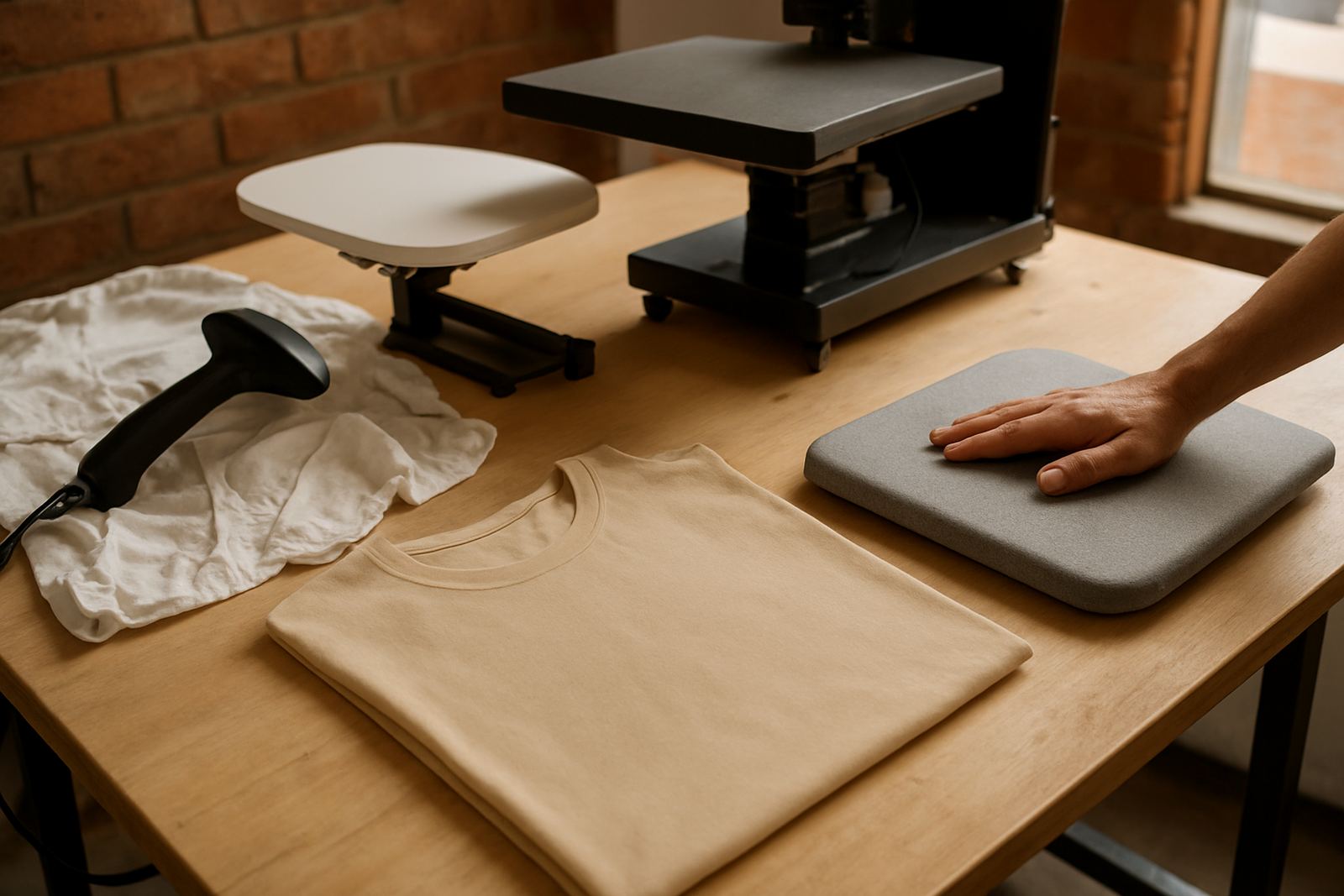
A quick inspection saves time later. Do not rush to align artwork on a shirt that still carries packaging folds, sleeve memory or tight waistband marks. Lay the item flat, smooth it by hand and check the print zone under good light. If the crease is in a sensitive area, give the garment a light prepress to relax the fibres before you apply pretreat or start positioning the print.
- Check the front, back and sleeves for fold memory and packaging lines.
- Feel for thick ridges near seams, hems and side folds.
- Look for moisture from delivery, especially in coastal humidity around Durban.
- Confirm that the size and shape still match the chosen platen or hoop.
- Reject or rework any item with a crease that will sit under the artwork.
This is especially important when handling promotional wear, schoolwear and fashion basics where repeat placement matters. One shirt with a small fold can throw off a whole batch if the operator uses it as a guide for the rest of the run.
Pretreat Needs A Flat, Even Surface
Pretreatment only performs well when it reaches the fibres evenly. If the fabric is creased, the liquid can sit heavier on one side and lighter on the other, which changes both colour and wash performance. A crease can also create a tiny channel where overspray collects, then dries into a shiny patch or a stiff line after curing.
For shops in Crown Mines, Midrand or the East Rand, where order volumes can jump quickly before a campaign deadline, this usually shows up when garments are unpacked and printed on the same morning. The answer is not more heat for the sake of it. It is proper garment preparation, even press contact and a clean workflow from unpacking to final cure.
- Use a flat work surface before pretreating.
- Press out packaging folds lightly, not aggressively.
- Keep the spray path and bottle setting consistent.
- Allow garments to cool and dry fully before printing.
- Separate damp stock from dry stock if there has been rain or delivery delay.
Choosing The Right Platen Or Hoop For Folded Stock
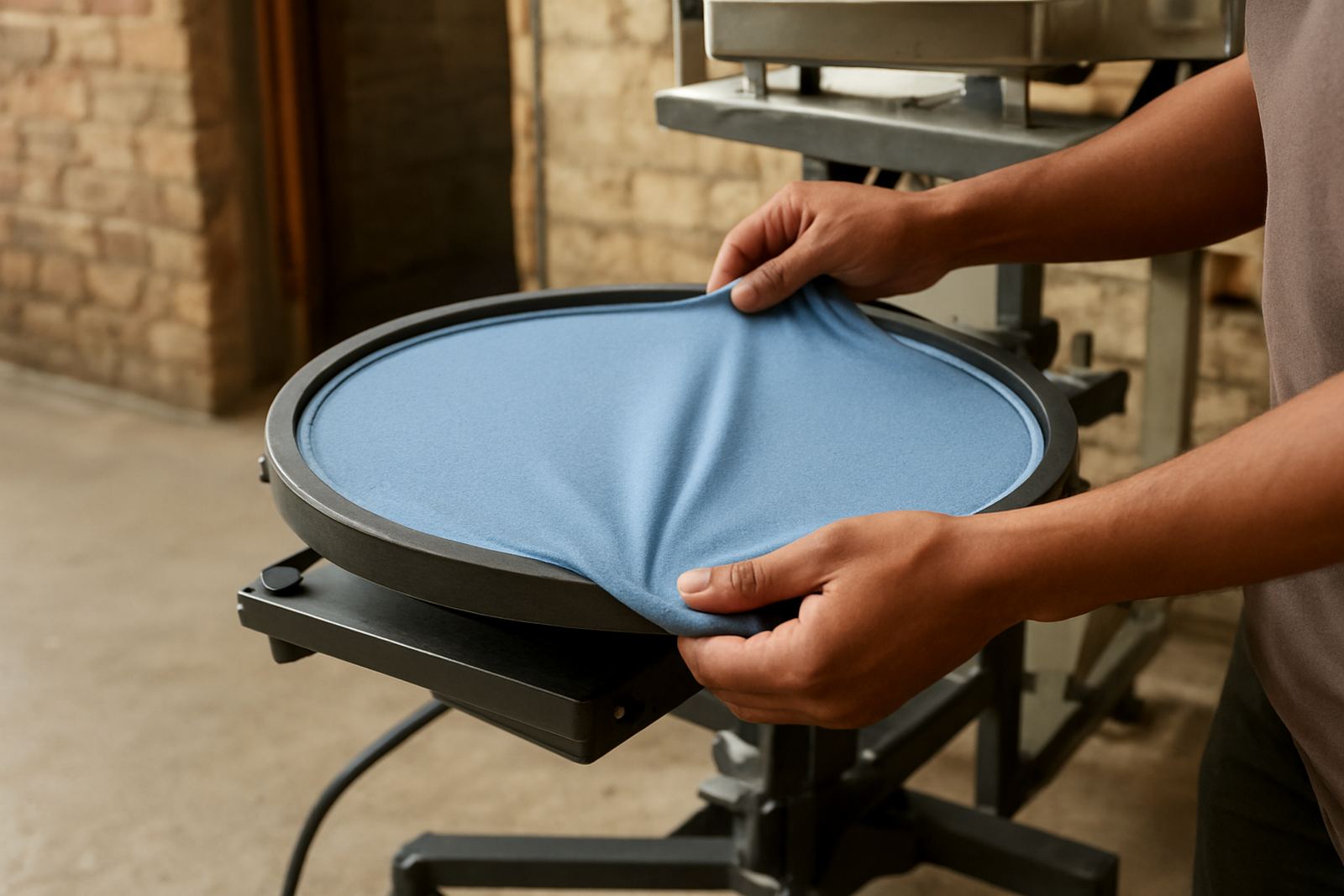
Not every garment behaves the same way once it is out of storage. Small youth sizes, oversized tees, hoodies and garments with side seams each need a different hold. The right platen or hoop helps flatten the print area without forcing the garment into a shape it does not want to hold. That makes alignment easier and reduces the chance of a fold line hiding under the artwork.
At DTGrip in Crown Mines, this is a common point of advice for shops that move between fashion pieces and bulk promo work. A print shop might be handling 30 units one day and 300 the next, so the setup has to be quick but still accurate. If a fold keeps returning in the same place, it often means the platen size, garment tension or loading method needs adjusting rather than just more heat or more pressure.
- Match the platen size to the print area, not just the garment size.
- Use hoops or supports that hold fabric steady without pulling it thin.
- Test the setup on a sample before running the full order.
- Recheck alignment after loading the first few pieces of a batch.
A Local Example From A Busy Gauteng Print Shop
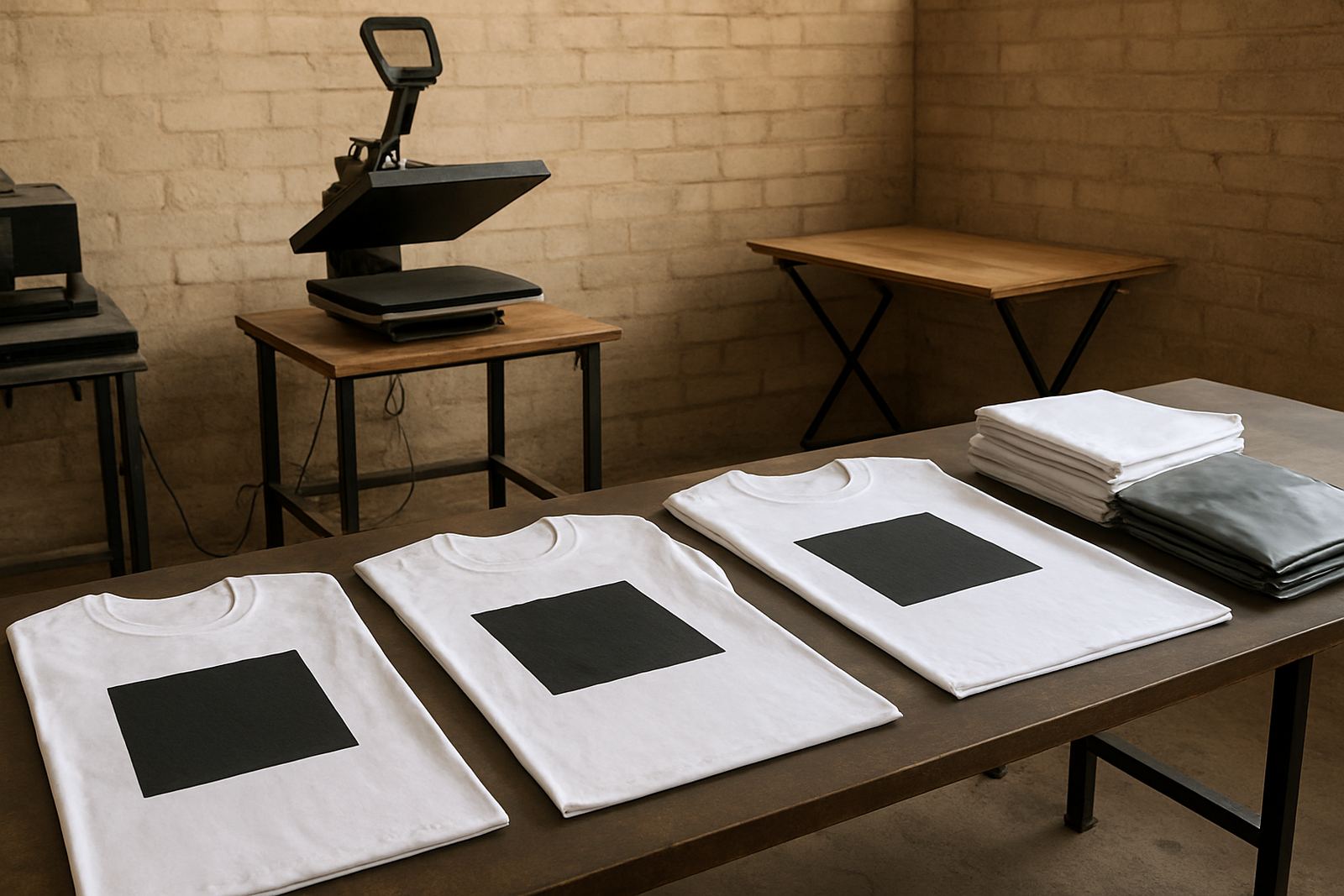
A shop in Randburg once received a run of black cotton tees for a corporate event, packed tightly in cartons after a long warehouse hold. The shirts looked fine at first glance, but each one had a deep fold running across the chest from collar to hem. The team started by printing one test piece and noticed a faint line showing through the pretreat and the press mark sitting slightly uneven. Instead of pushing ahead, they changed the prep flow.
The garments were unpacked earlier, laid out flat and given a short prepress before pretreat. The team also shifted to a platen size that gave the chest area better contact without pulling the side seams too far. The result was cleaner output and less rework. It took a few extra minutes per batch, but it saved a full afternoon of correcting mistakes and reprinting two damaged pieces.
That kind of small adjustment matters across Johannesburg, Pretoria East and Centurion, where many shops work under tight turnarounds and courier cut-off times. A crease can be tolerated on a shelf, but not in the print zone.
Building A Crease Control Routine That Holds Up
The best way to handle fold lines is to make them part of the incoming goods check. Every garment should pass through the same steps before it reaches the printer. That keeps the workload steady, reduces scrap and gives operators a simple standard they can follow even on busy days when load-shedding, late deliveries or a full production table put pressure on the shift.
For most South African shops, a workable routine is simple: unpack, inspect, flatten, prepress, pretreat, test and then print. If a garment still shows a hard line after that, do not force it through the run. Set it aside for rework, replacement or a sample test. The small delay is cheaper than a batch of shirts with a visible line through the artwork.
DTGrip supports print shops with platen installation, hoop setup, pretreat workflow, operator training and onsite support visit options from Crown Mines to Durban. The right equipment helps, but the day-to-day habit of handling folded stock properly is what keeps the final print clean.