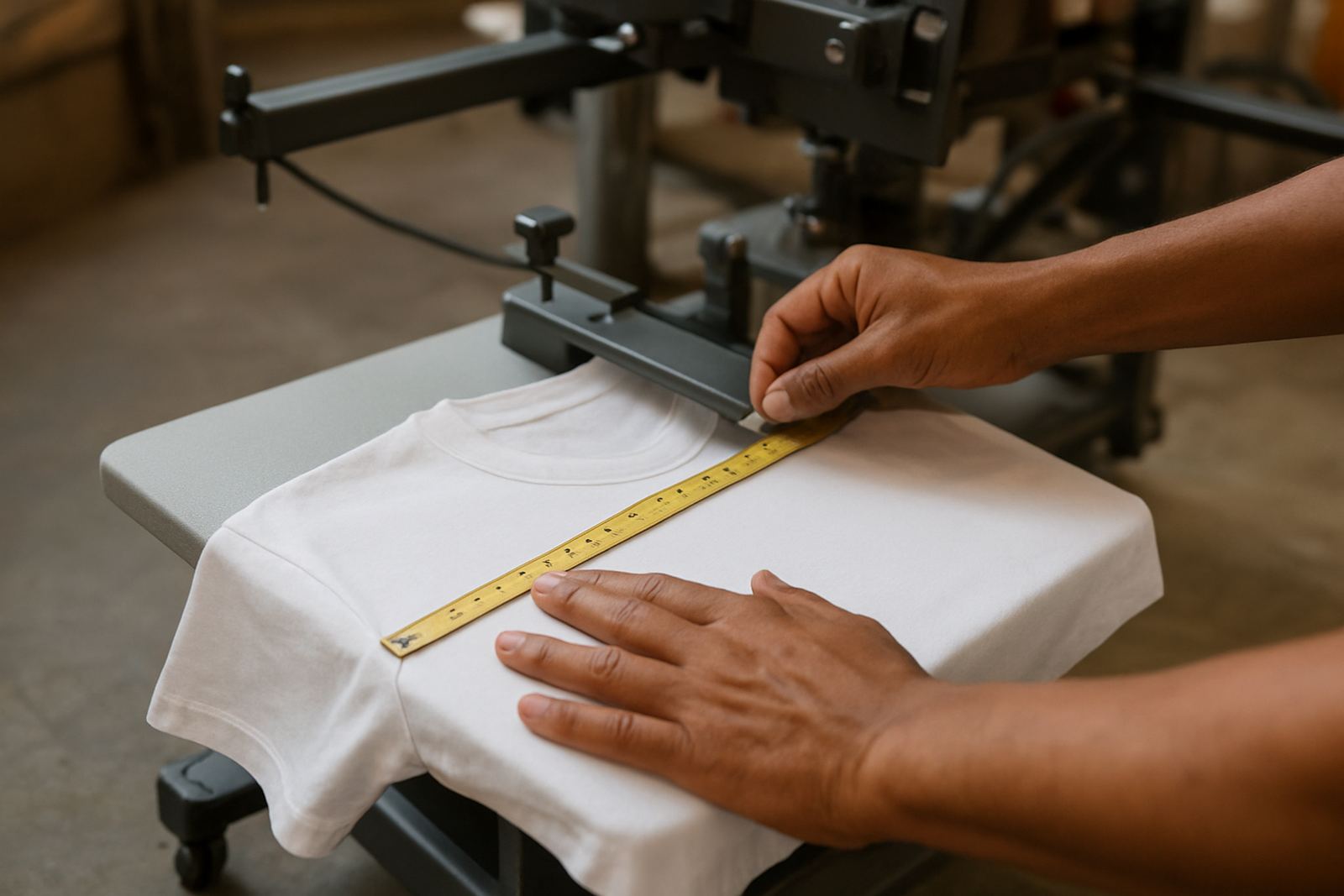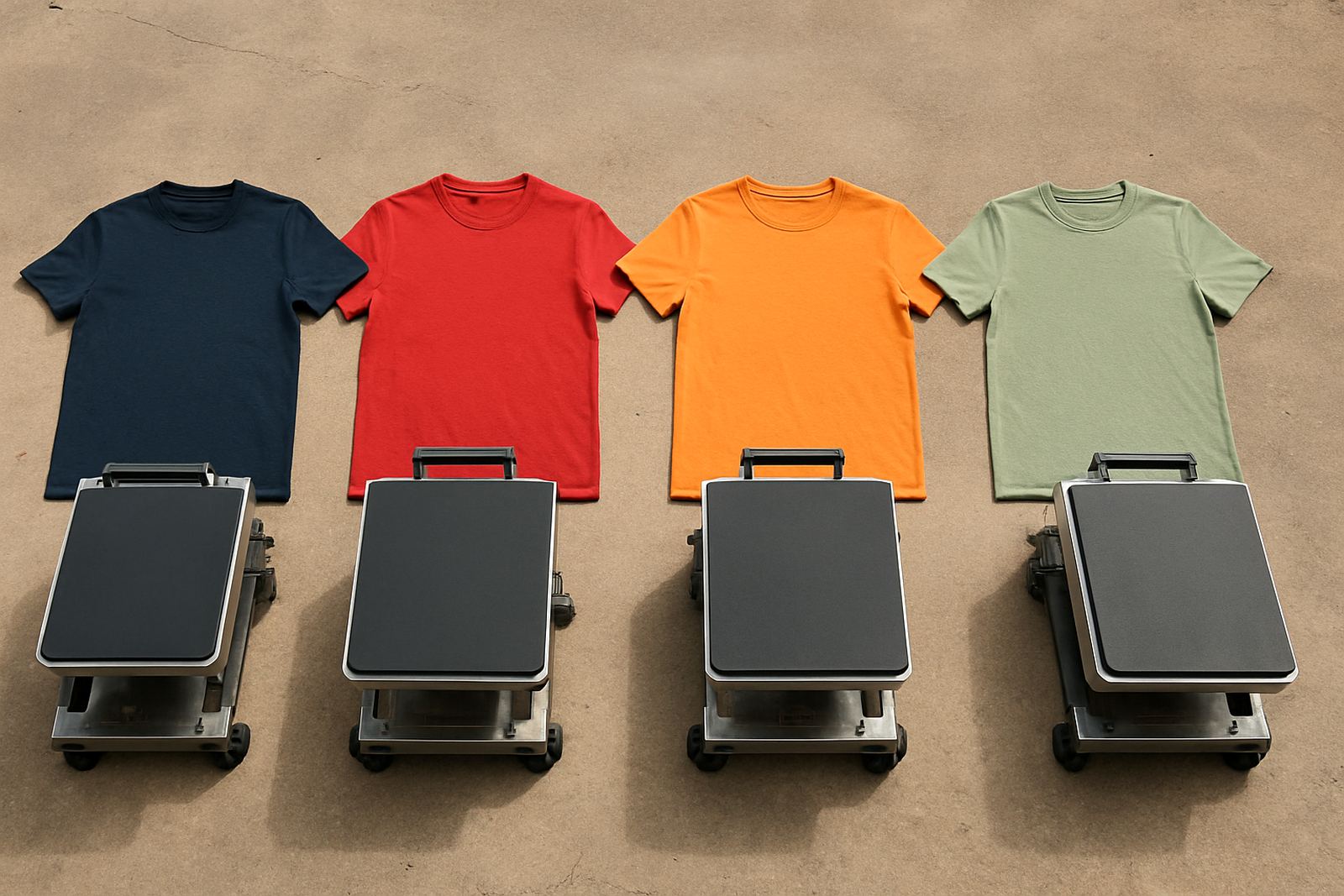

Start With The Sizes You Print Most Often
For a new shop, the biggest mistake is buying every platen size before you know what your customers actually order. Most small print businesses in Johannesburg, Pretoria and Durban start with a mix of adult tees, a few youth sizes and one or two specialty platens for tricky garments. If you are mainly printing promo tees, school events or small fashion runs, begin with the platen sizes that match that work instead of spreading cash too thin.
A practical starter setup usually includes one standard adult platen, one smaller youth platen and, if your work includes zip hoodies or ladies cuts, a platen that helps with tighter print areas. That keeps changeover simple and gives your operator a clean surface for the most common jobs. It also helps with consistency when the team is still learning the pressure, placement and garment handling.
In Crown Mines, we often see smaller shops in their first 6 to 12 months trying to manage every job on one general platen. It can be done, but it slows production and makes positioning harder on different fabric weights. A better approach is to match your platen choice to your order mix, then add more pieces only once the repeat work tells you what is worth keeping on hand.
Hoops Need To Match The Garment And The Operator
Hoops are often treated as a side item, but for entry-level shops they matter just as much as the printer itself. A good hoop helps keep the fabric flat, reduces shifting and gives your operator a repeatable way to load each garment. That matters when you are training a new staff member or running a two-person team and every minute counts.
When choosing hoops, think about the garments your shop will actually process day to day. Lightweight cotton tees need different handling from thicker fleece, workwear or blended sportswear. If the hoop size is awkward for the print area, the operator will waste time fighting the garment instead of loading and printing it cleanly.
- Choose hoop sizes that suit your most common print placements, not rare one-off jobs.
- Make sure the hoop is easy to tension without over-stretching the fabric.
- Keep a small number of spare hoops ready, so a damaged item does not stop production.
- Label each hoop by size and use, especially if more than one person shares the station.
That last point sounds small, but it saves real time in a busy room. Ayeesha in the operations role, or anyone handling stock, will know how quickly loose parts disappear when orders start stacking up.
Pretreat Workflow Is Where Small Shops Win Or Lose Time
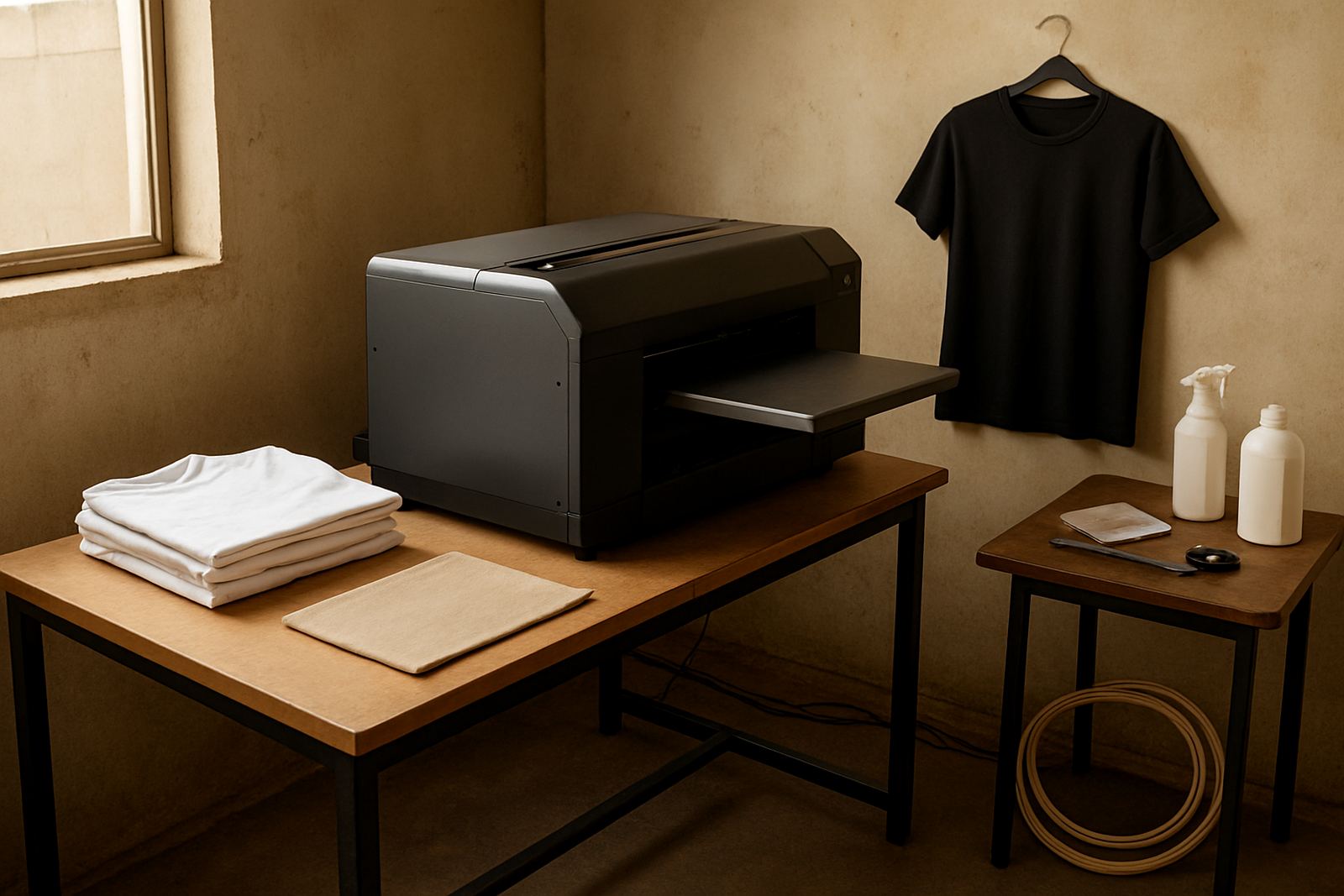
Pretreating is where many start-up shops lose quality because they rush the sequence. The print may look fine on the platen, but if the pretreat is uneven, too wet or poorly cured, the final result can look patchy or dull. A simple, repeatable workflow is worth more than a long list of extras.
For small operations, the aim is consistency. Keep your garments grouped by fabric type where possible, check your spray or application method, and give the team a clear order for moving from pretreat to press to print. If the shop is in a humid area like Durban, drying time can change through the day. In winter in Johannesburg, static and dry air can create different handling problems. So the workflow should be easy to adjust without changing the whole system.
It helps to write down the steps in plain language for the person on shift. For example:
- Check fabric type and print area before pretreating.
- Apply the pretreat evenly and avoid over-soaking the shirt.
- Dry or press the garment according to the fabric weight.
- Load the garment flat and confirm placement before printing.
- Keep one sample piece aside for quick checks at the start of each run.
A small shop does not need a complicated pretreat room. It needs a method the team can repeat on a Monday morning after a busy weekend, when the orders are there and the pressure is on.
Training Comes Before Expansion
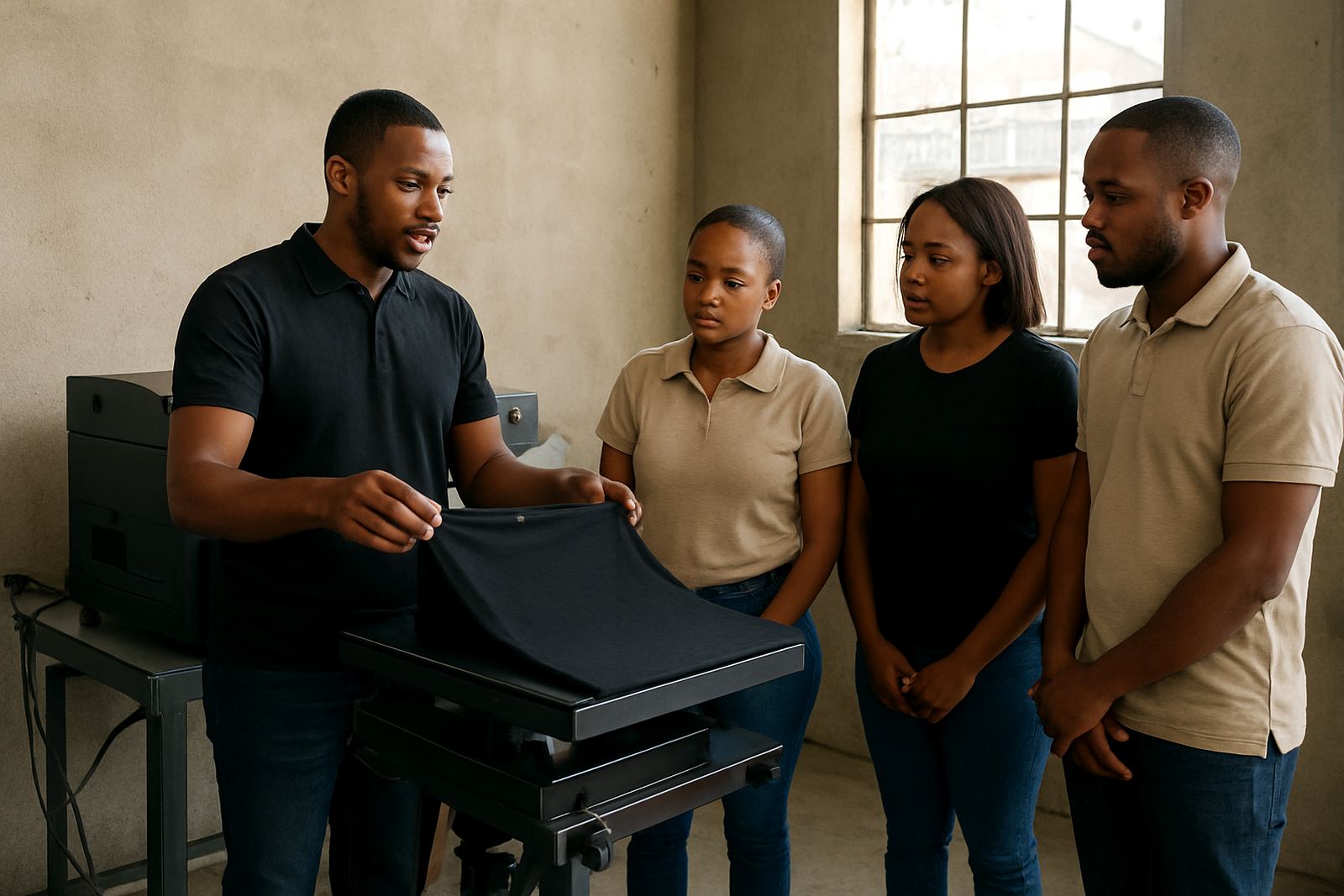
Many small shops think growth means buying more equipment first. In practice, growth starts when the operator can print the same quality on day three, week three and month three. If the team does not know how to load garments, check alignment or spot a bad pretreat job early, extra equipment will just increase mistakes.
Entry-level businesses should set time aside for operator training before the order book gets too heavy. That includes platen installation, hoop setup, print alignment help and a basic production routine that suits the space available. If you are working from a compact room in Randburg or a mixed-use industrial unit in Midrand, you may need a workflow that keeps walkways clear and reduces unnecessary lifting.
Good training should cover more than the machine itself. It should explain how to handle different fabrics, how to store consumables, what to do when a print drifts off centre and when to pause for sample testing. A new shop often saves more money from one proper training session than from buying another low-priority item too soon.
Plan For Power Cuts, Heat And Daily Wear
South African print shops have to work around load-shedding, summer heat and equipment that gets used hard from the first month. Entry-level buyers should choose equipment that can cope with stop-start production, quick changeovers and normal workshop wear. If your team loses time every time the power dips, the whole setup becomes harder to manage.
For small businesses, the smartest move is to plan a daily routine that assumes interruptions will happen. Keep your best-used platens close at hand, store hoops where they will not be bent or crushed, and make sure the pretreat area is easy to clean after overspray or spillages. In a hotter shop, drying and handling times may need a small adjustment, and in coastal towns the moisture in the air can affect how fabrics behave before printing.
Also think about the floor space around the machine. A cramped entry-level shop often has stock, packing material and customer samples all sharing the same room. That leads to clutter, and clutter slows everything down. A clear production path is one of the cheapest ways to improve output.
What A First-Year Shop Should Budget For
When a business is starting out, the budget should go first to the tools that affect print quality every day. That usually means the main platens, the correct hoops, a reliable pretreat routine and enough training to keep the operator confident. After that, add only what the jobs justify.
It is better to buy one item that fits your workload than three items that only work sometimes. For example, a shop taking promotional orders in Sandton may need faster turnaround on repeat sizes, while a newer shop in Pretoria East might need more flexibility for mixed garments. The point is not to copy someone else’s setup, but to match your own work pattern.
If you are unsure where to begin, a practical workflow review can help you look at the station, the sizes you print most, and the gaps that are slowing you down. That can include sample testing, seasonal reconfiguration and remote troubleshooting when the team needs help between visits.
For smaller businesses, the best setup is the one that helps you print cleanly, train quickly and keep orders moving without waste. That is what turns a basic room into a working production space.