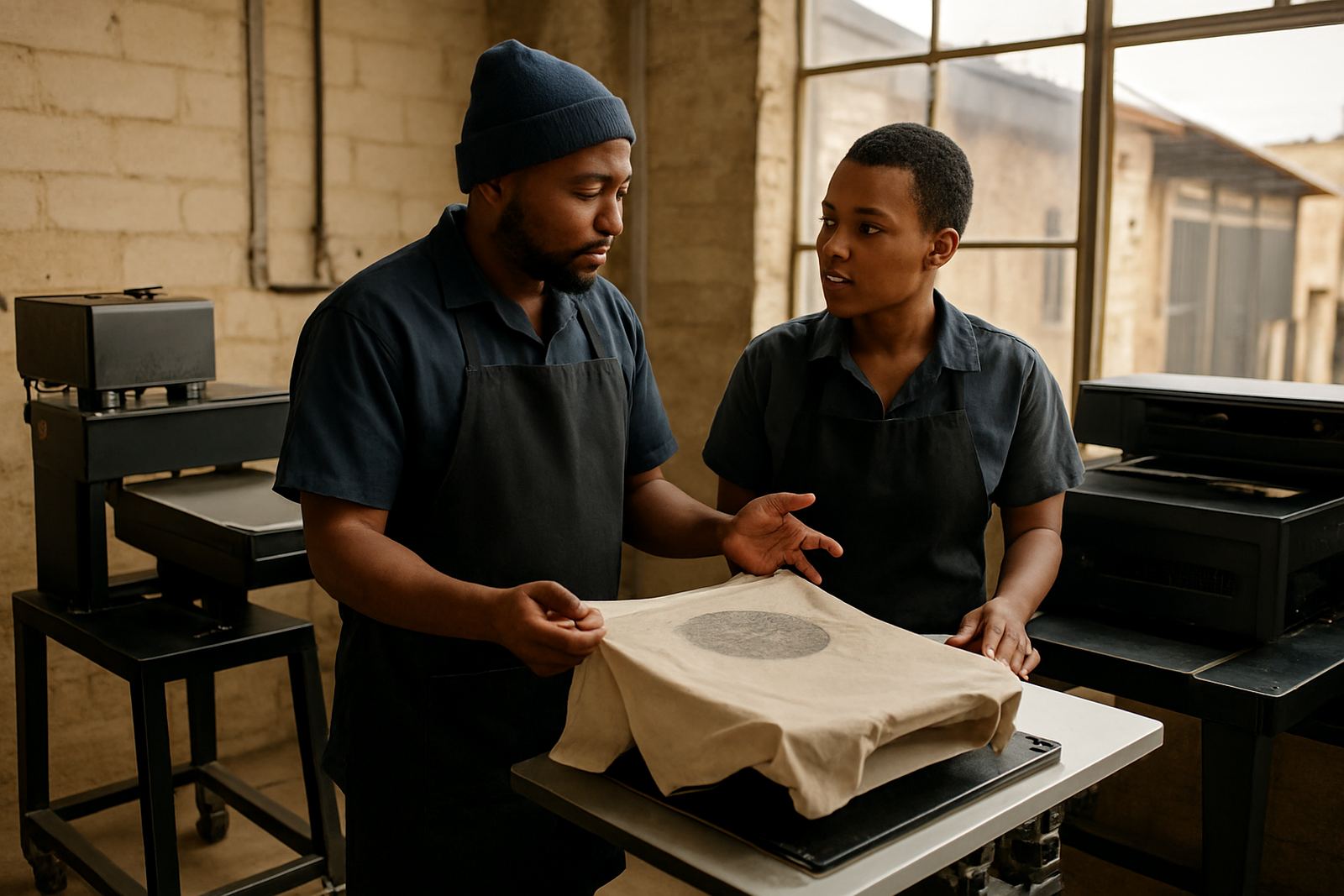
Starting with the Wrong Platen Size for the Job
One of the most common mistakes is buying a few platens and hoping they will suit every garment. A youth tee, ladies fit, oversized streetwear top and a tote bag all need different support. If the garment sits loose on the platen, you get movement, misalignment and patchy print areas.
In a busy Crown Mines workshop, that usually shows up as wasted blanks, extra test prints and operators spending too long adjusting each garment. A better approach is to map your daily order mix first. If most of your work is A4 chest prints, build around that. If you do hoodies, work out how the seams, pockets and hood cords affect placement before you start production.
- Match platen size to the most common garment shapes, not the rare one-off job.
- Keep a clear label on each platen so operators do not guess.
- Check how the fabric stretches over the edge before print starts.
Treating Pretreatment Like an Afterthought
Pretreatment is often the step that gets rushed when orders start coming in. That is a mistake. Too little pretreat and whites can look dull, colours can sink in and wash resistance suffers. Too much pretreat and the fabric can feel stiff, with marks showing around the print area.
In Johannesburg, where winter dryness and summer dust can change how garments behave, consistency matters. A shop that uses the same pull speed, spray pattern and cure method every day will get better repeat results than one that improvises. If you print on cotton blends, dark cotton or fashion finishes, sample testing should be part of setup, not something done only after a customer complains.
- Measure your pretreat amount and spray coverage, do not estimate by eye.
- Keep test swatches for each fabric type you print.
- Record cure times and heat settings for repeat jobs.
Ignoring the Real Production Flow
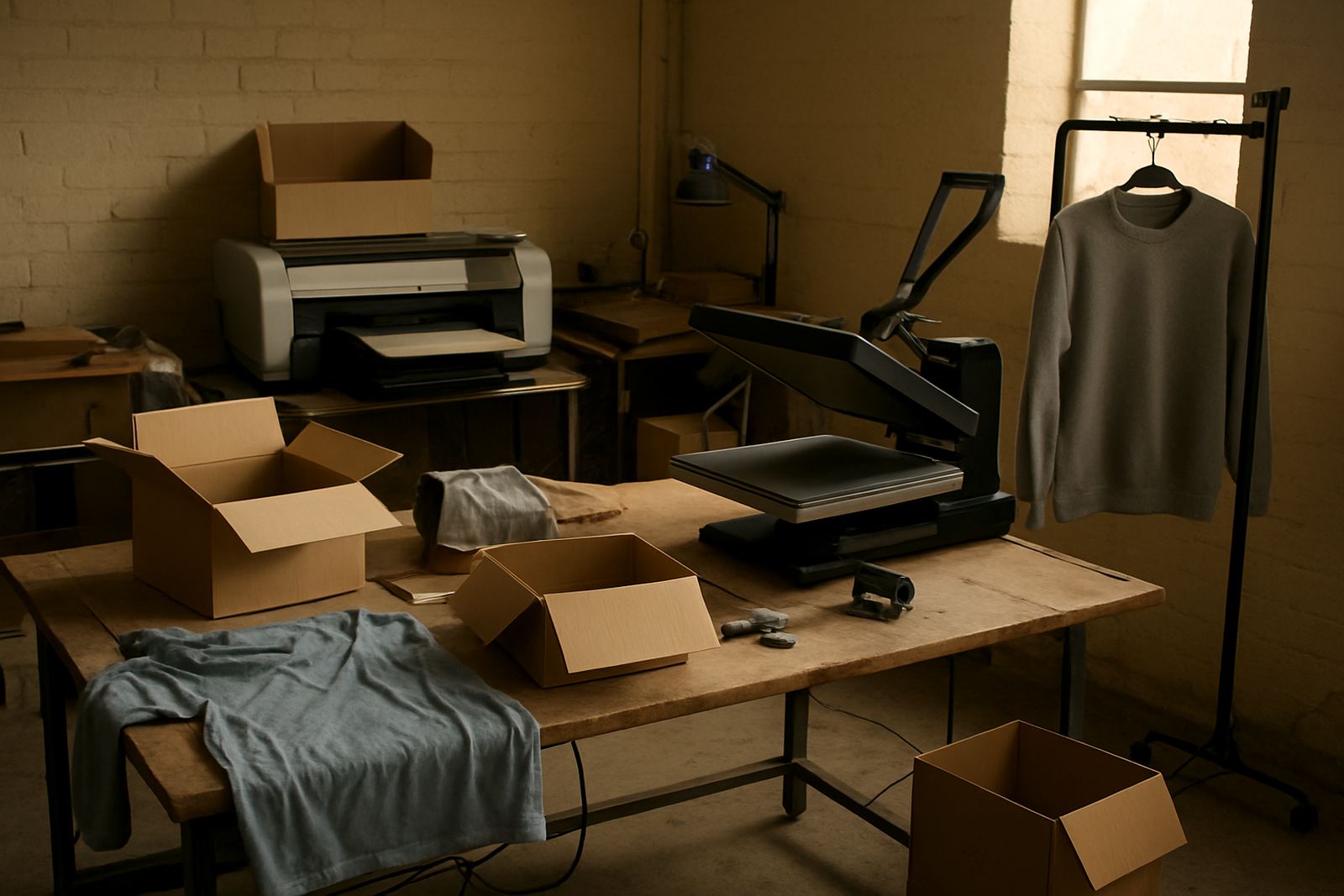
Newer shops often think in terms of equipment first and workflow second. That leads to a cluttered room, crossing paths between curing, pressing and packing, and unnecessary handling of garments. The problem is not only speed. More handling means more dust, more misplacement and more mistakes.
A practical workflow should move in one direction: receiving, checking, pretreat, drying, loading, printing, curing, inspection and packing. If your team keeps turning around for the next step, the layout needs attention. Shops in Sandton or Midrand working with tighter floor space often benefit from a simple process review before buying more gear. Sometimes one repositioned table saves more time than a new machine.
- Keep incoming blanks separate from finished work.
- Place your print, cure and pack points in a logical line.
- Leave space for operators to work without bumping into each other.
Skipping Operator Training Until Problems Start
Many startup owners assume a capable team member will simply figure it out. In practice, small mistakes in loading, alignment, pressure and timing can ruin an entire batch. A shirt that sits one centimetre off centre may not seem serious until twenty pieces are already printed.
Training should cover more than button pressing. Operators need to understand garment positioning, platen fit, pretreat coverage, print alignment and when to stop and ask for help. For a Pretoria East or Centurion shop with different staff on different shifts, a written process note helps keep standards steady. It also makes seasonal reconfiguration easier when a shop goes from winter hoodie work to lighter summer garments.
- Train every operator on the same loading and alignment method.
- Use one simple checklist for setup and shutdown.
- Review common errors weekly, not only at month end.
Not Planning for Power Cuts and Output Pressure
Load-shedding is still part of life for many South African print shops. If your pretreat workflow, curing step or drying stage depends on a tight timing window, a power cut can throw off the whole day. Startups that do not plan for this often end up with half-cured garments, inconsistent finish and late deliveries.
Another common problem is trying to scale before the shop is ready. A few good weeks can hide weak systems. Then orders from Durban, the East Rand or Randburg land all at once and the team cannot keep up. Scaling only works when the shop can repeat the same quality at higher volume. That means reviewing platen count, operator capacity, drying space and turnaround times before taking on more work.
It helps to build a simple fallback plan for outages, delays and rush orders. If your shop can pause and restart without losing product quality, you are in a stronger position than many newer competitors.