How do I choose the right platen for the garment I am printing?
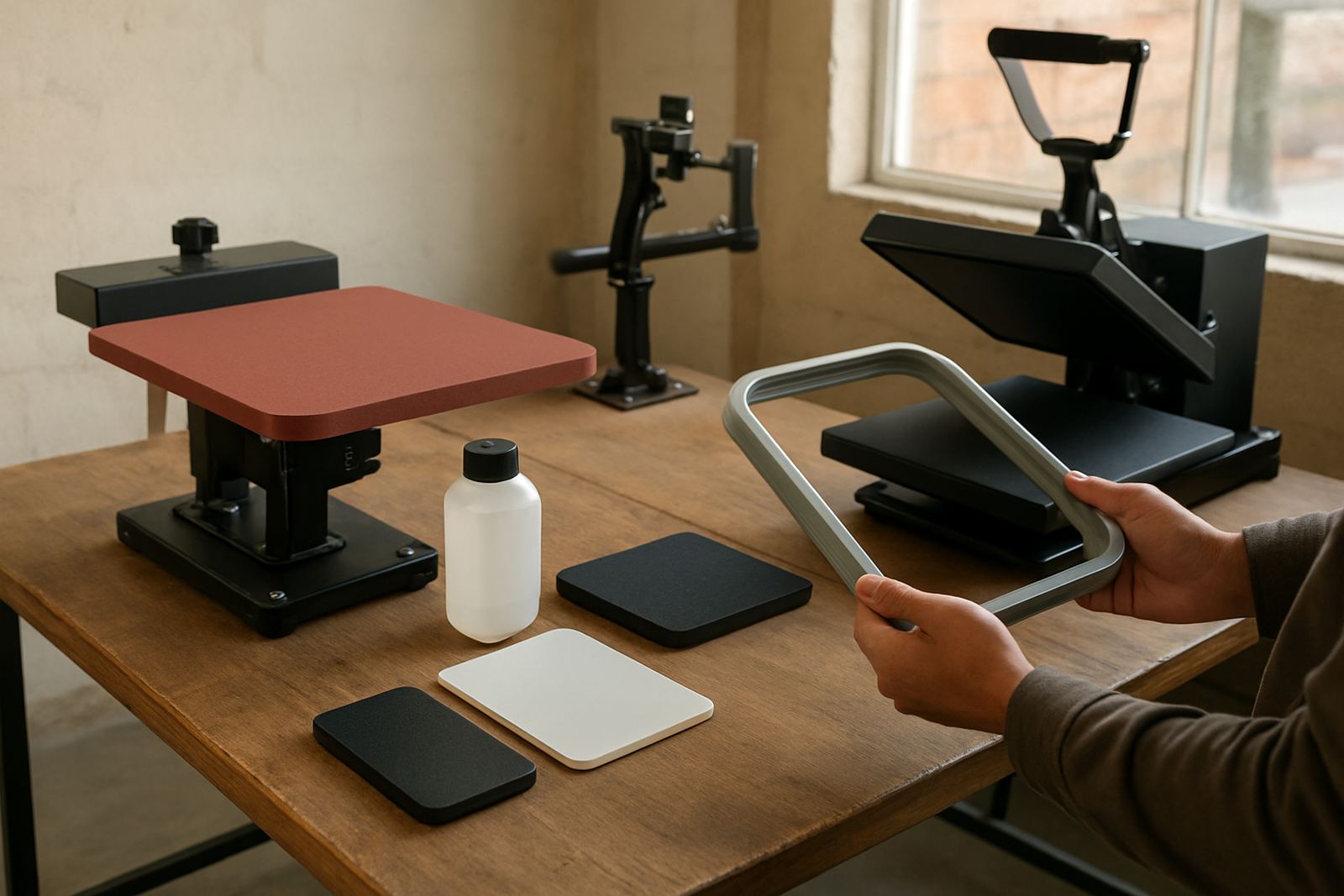
The main rule is simple: match the platen to the garment size and print area you need. A youth shirt, a standard adult tee, a long sleeve, hoodie or tote bag all need different support under the print surface. If the platen is too small the garment shifts, and if it is too large the fabric can sit loose and affect print placement.
For most shops, the best starting point is to keep a small set of common platens for everyday jobs, then add specialised sizes for caps, sleeves or larger promo items. In Johannesburg and surrounding areas we often see printers improve speed just by changing to a platen that matches the product, instead of forcing one size to do everything.
- Use a smaller platen for youth wear, sleeves and narrow panels.
- Use a standard platen for regular cotton tees and workwear.
- Use wider support for oversized garments, tote bags and some fleece items.
- Check that the garment sits flat, with no pulling at the seams.
What is the best way to set up hoops for clean printing?
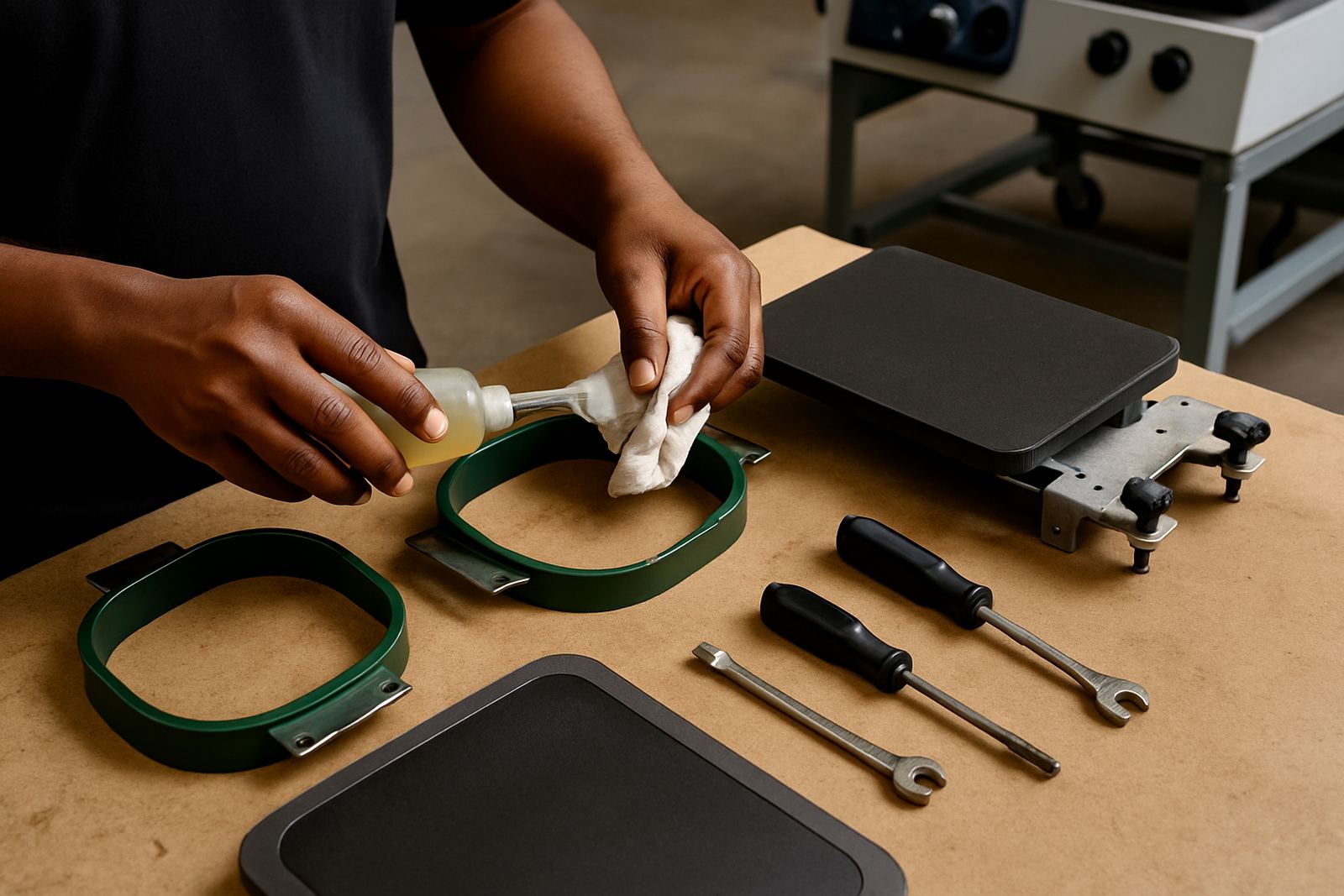
Hoops are there to hold the garment flat and in the same position from one print to the next. A good hoop setup reduces movement, helps with accurate placement and lowers the chance of ghosting or uneven pressure. This matters when you are running short turnaround jobs, or printing the same logo across a large batch.
Start by checking the garment thickness, seam position and print location. Then centre the artwork zone before tightening the hoop. If you print on mixed fabric types, keep separate notes for each style because stretch, shrinkage and thickness will change the way the hoop behaves.
- Place the garment smoothly, with no folds under the print area.
- Keep seams clear where possible so the hoop sits level.
- Mark repeat jobs so operators can copy the same setup each time.
- Test one sample before moving into full production.
When should pretreatment be applied, and how much is enough?
Pretreatment is important for direct-to-garment work because it helps the print sit correctly on the fabric and improves wash durability. The timing and amount depend on the garment colour, fabric blend and the final print result you want. Light tees and darker garments often need different handling, so do not use the same setting across every job.
A common mistake is over-applying pretreatment. That can leave marks, create a stiff feel or slow down curing. Under-application can give weak colour and poor detail. If your shop prints a mix of promotional clothing, fashion items and everyday workwear, keep a simple workflow sheet so operators follow the same steps each time, even during busy periods.
- Test on one sample before starting a large run.
- Check for even coverage across the print area.
- Allow proper drying time before printing.
- Keep the pretreatment area clean to avoid contamination.
Can you help if print placement keeps shifting?
Yes. Print movement is often caused by a platen that is the wrong size, a hoop that is not holding the garment evenly, or a workflow that changes from operator to operator. If your shop runs late shifts, load-shedding changes or high-volume promo work, consistency can slip quickly without clear setup steps.
Our support can help you review the full setup, from garment loading to final alignment. We also look at how the printer, platen and prepress steps work together, because the problem is often not one item alone. A small adjustment in the front end can save a lot of rejected stock later.
- Check whether the garment is sitting square before printing.
- Confirm the platen is the right size for the product.
- Review curing, drying and handling between steps.
- Use a sample print to confirm position before production starts.
How does courier delivery work from Crown Mines?
We are based in Crown Mines, Johannesburg and send orders by next-day courier to print shops nationwide, where service conditions allow. That helps customers in Durban, Pretoria East, Centurion, the East Rand, Midrand, Randburg and Sandton keep stock moving without long delays. For urgent shop needs, this is often the fastest way to get the right platen, hoop or pretreatment kit on site.
When you place an enquiry, we confirm what you need, check the item type and prepare dispatch from our Johannesburg base. If your shop is near the coast and humidity is affecting drying or storage, or you are working in a busy municipal area with limited collection times, tell us that upfront so we can guide you on handling and storage.
- Courier lead time is usually next day to major centres, subject to service area.
- Remote areas may take longer depending on the courier route.
- Keep parcels sealed until you are ready to inspect and use the item.
- Store pretreatment kits away from heat and direct sun.
What support do you offer after purchase?
We support print shops with practical help that fits real production conditions. That includes platen installation, hoop setup, pretreat workflow, operator training, print alignment help and workflow review. If you are opening a new shop, scaling production or reconfiguring for a seasonal rush, we can also help you plan the work area and choose the right support items.
Support can be remote or onsite, depending on what is needed and where you are based. Our team includes Thabo Mokoena, Ayesha Naidoo, Sipho Dlamini, Lerato Molefe, Johan Smit and Zanele Khumalo, so enquiries are handled by people who know garment decoration, workshop setup and day-to-day print shop pressure. Clear advice saves time, and it helps keep production steady.
- Remote troubleshooting for setup and alignment problems.
- Onsite support visit for shops in and around Gauteng and further afield by arrangement.
- Sample testing for new fabrics or tricky print jobs.
- Seasonal reconfiguration for peak order periods.