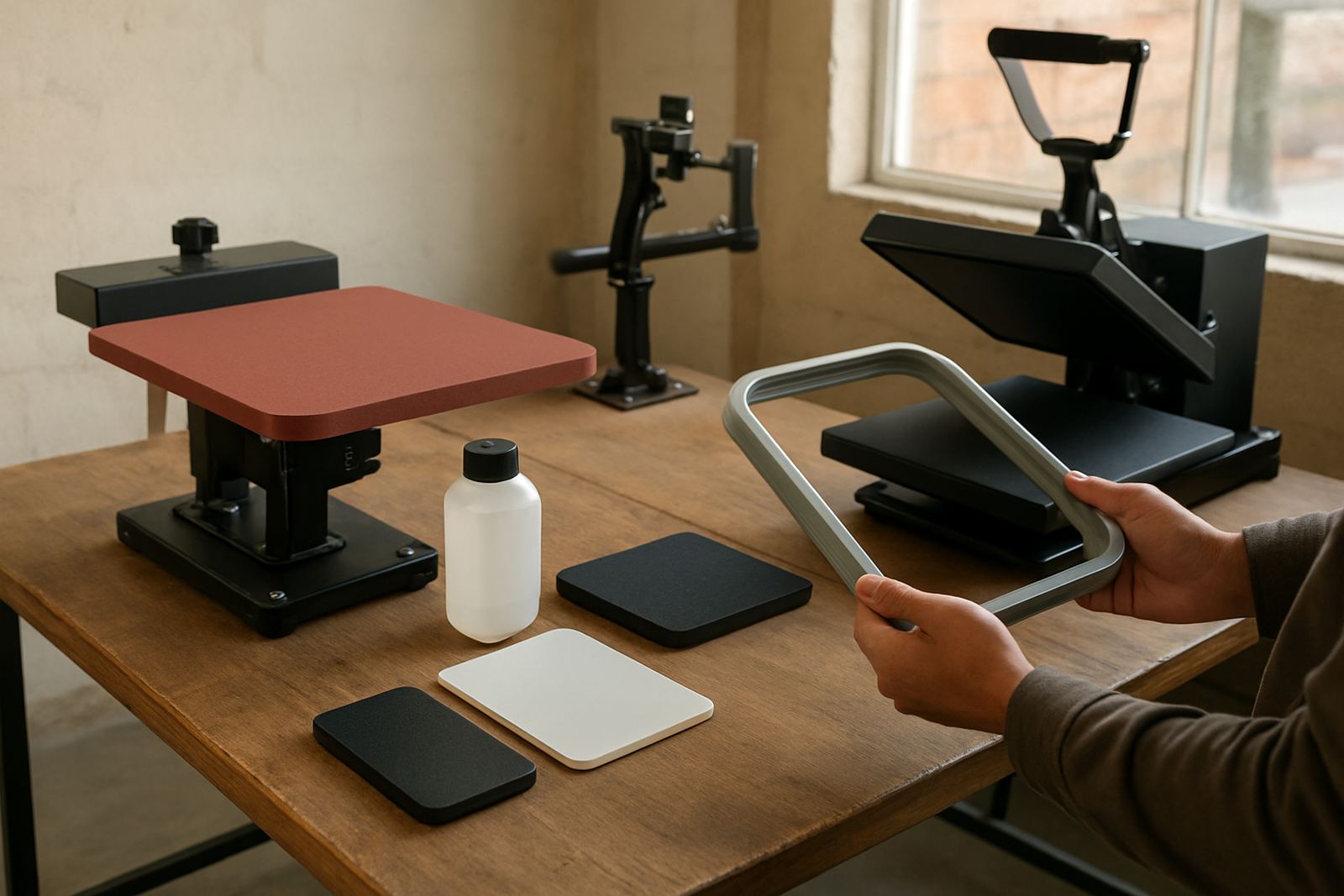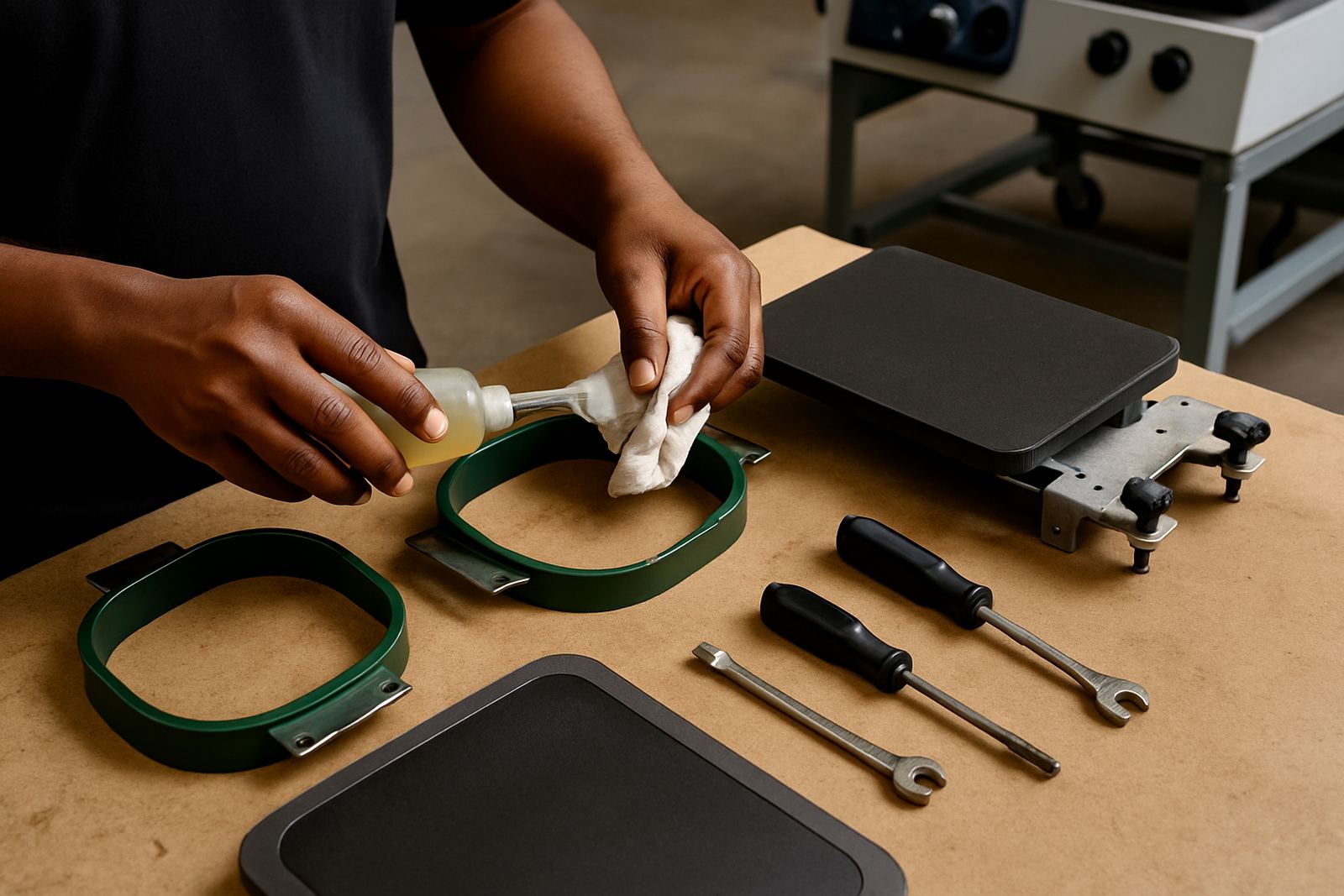
Start Each Shift With A Quick Condition Check
Before the first print run, look over every platen, hoop and tool for wear, dust, loose parts and any build-up from previous jobs. A two minute check can save a full shirt run from misalignment, skipped corners or marks on fabric. In Crown Mines and across Johannesburg, workshop dust and fibre lint build up fast, so light cleaning should be part of the morning routine.
Check that clamps hold firmly, corners sit flat and no fastener has worked loose after transport or overnight storage. If a platen has picked up adhesive spray, pretreat overspray or lint, clean it before the next setup. Small residue can affect registration and the final print position, especially on darker garments and stretch fabrics.
- Wipe surfaces with a clean, dry microfibre cloth before use
- Check for loose screws, bent edges or cracked fittings
- Confirm that the platen sits level on the press arm
- Test hoops for firm tension and even closure
Keep Platens Flat, Clean And Dry
Platens should be stored flat and away from standing water, heavy pressure and direct sun. In humid coastal areas such as Durban, moisture can soften residue and encourage rust on metal parts. In drier inland areas, dust and heat can leave a powdery layer that affects garment placement, so storage matters just as much as cleaning.
After use, allow the platen to cool before wiping it down. If pretreatment solution has splashed onto the surface, remove it soon after the job is done so it does not harden. Do not soak the platen or leave it sitting on a damp floor. If you need to stack them, separate the units with a clean cloth or foam sheet so edges do not rub and chip.
- Store upright or flat on a dry, level rack
- Avoid stacking heavy items on top of platens
- Keep away from open windows where dust can settle
- Dry the surface fully before packing away for courier collection or site work
Treat Hoops And Frames Gently
Hoops do the hard work of holding fabric steady, so tension and shape need regular attention. If a hoop closes unevenly or feels slack, check the frame for dirt, warped edges or worn contact points. A hoop that is forced shut can pinch fabric and leave lines, while a hoop that is too loose can shift during print setup.
When fitting garments, place the fabric smoothly and avoid stretching it beyond its natural shape. This is especially important on knitwear, polyester blends and lightweight promotional tees. If you are running repeat jobs, mark which hoop size is used for each layout so your team can set up quicker and reduce mistakes.
- Inspect clips, hinges and locking points for wear
- Clean fabric dust from the inside edge after each session
- Do not use damaged hoops for production work
- Match the hoop size to the print area, not just the garment size
Handle Pretreatment Tools With Care
Pretreatment equipment needs steady use and clean handling. Store liquid in sealed containers, away from direct heat and out of reach of children or shop visitors. Shake or mix only as directed for the specific application process in your workshop. If a nozzle, spray head or measuring cup is clogged, clean it immediately rather than forcing the flow, because build-up can throw the whole workflow off.
Use a dedicated area for pretreatment work so overspray does not drift onto cured garments, screens or packing tables. Mark the floor or bench area if your team works with more than one fabric type. A tidy pretreat station helps keep the workflow predictable and reduces waste, which is important when a shop is trying to keep costs steady during busy seasons.
- Close containers properly after every use
- Keep measuring tools separate from ink, glue and cleaning fluid
- Clear spills straight away to avoid slipping hazards
- Check hoses and fittings for cracks before starting a batch
Plan For Power Cuts And Sudden Schedule Changes
Load-shedding, brief outages and voltage changes can interrupt production and leave equipment sitting half-used. Before a cut, finish the current setup or park the job safely so no garment is left under pressure. After power returns, check alignment again because a press that lost heat or timing may need a fresh setup. This is a simple habit, but it saves a lot of rework later.
If your shop runs shared equipment across shifts, make a short handover note for the next operator. Include which platen was last used, whether the hoop needs cleaning and if any part was sent for support or courier replacement. That way the team does not waste time guessing. A clear handover is especially useful for busy shops in Sandton, Midrand and Pretoria East where jobs move fast.
When To Ask For Help Or Reconfigure The Setup
If a platen keeps shifting, a hoop no longer holds tension, or your pretreat results have changed without warning, it is time to step back and review the workflow. Sometimes the issue is not the part itself but the way the station is set up, the garment mix, or the order of the print steps. A quick workflow review can prevent repeat faults and reduce spoilage.
For new shops, seasonal changes, or a move into higher volume work, it helps to review the whole production line from garment intake to final packing. We assist with installation, training, sample testing, remote troubleshooting and onsite support visits for print shops across Johannesburg, Randburg, East Rand, Centurion, Pretoria East and Durban. If your team is unsure about the right setup for a new fabric type, use the enquiry form on our contact page and ask for practical guidance.
- Call for help when faults repeat after cleaning and rechecking
- Ask for a sample test before starting a new garment range
- Review workflow after seasonal demand changes or shop expansion
- Book operator training when staff change or equipment use drops off