
Shaped For Fitted Garments That Need Better Placement
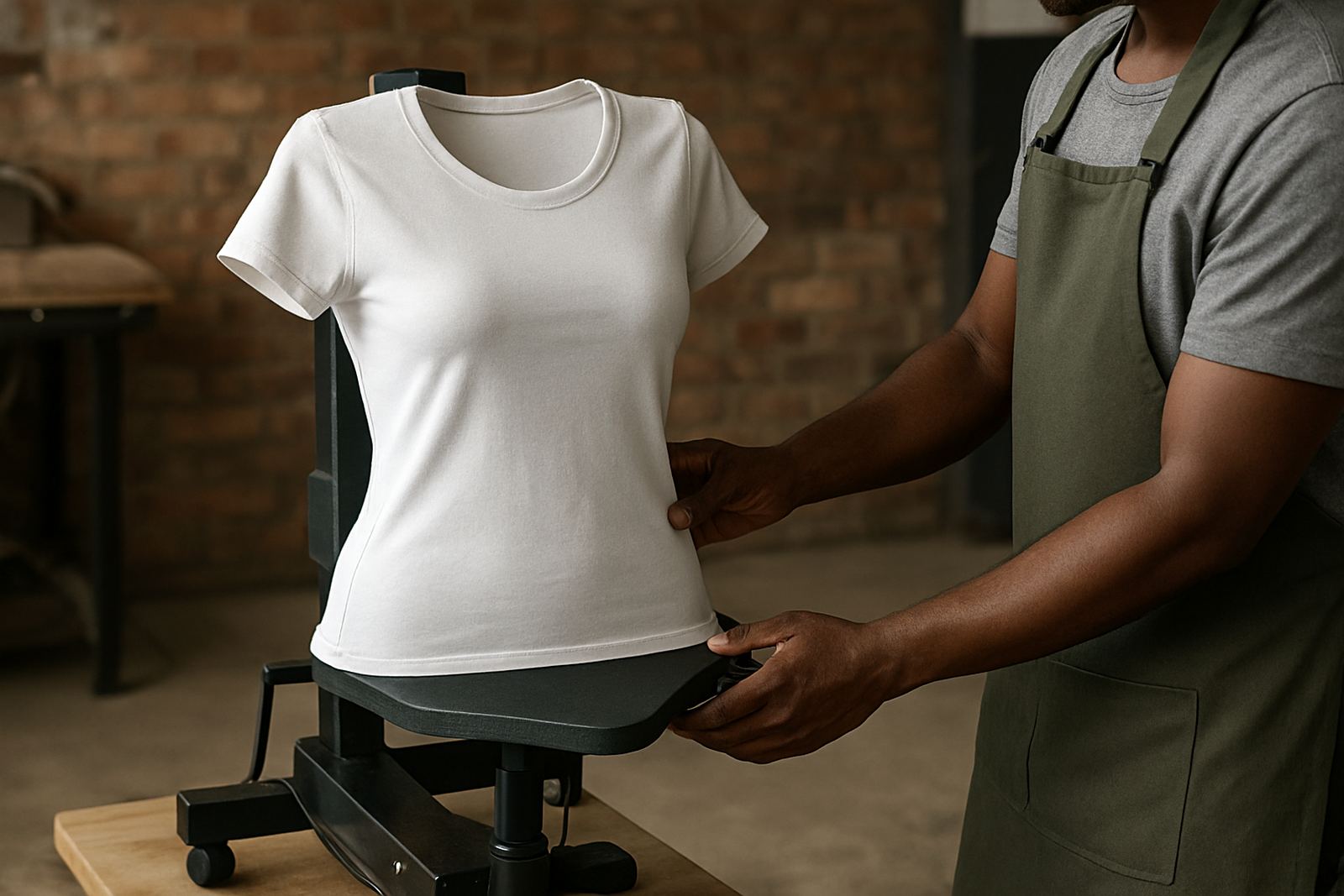
This platen is made for fitted T-shirts, ladies v-necks, scoop necks, racer backs and other shaped garments that sit differently on the body. The narrower, more contoured support gives you a cleaner print surface across the chest and upper torso, which helps reduce distortions on side seams and curved panels.
In busy shops in Johannesburg, Pretoria, Durban and the East Rand, operators often switch between standard unisex garments and more fitted cuts in the same shift. A dedicated ladies platen saves time because you are not folding, tucking and re-positioning the garment over and over. It gives the operator a more repeatable setup, and that matters when you are doing short runs for fashion labels, events or custom online orders.
- Better support for fitted ladies wear
- Cleaner alignment on curved garment shapes
- Useful for short runs and repeat repeat jobs
- Helps reduce fabric drag and shifting during loading
Sizes And Options Available For Different Press Setups
DTGrip supplies the Ladies Fit Platen in sizes suited to common DTG production work, with options that can fit a range of print beds and garment sizes. The aim is to match the platen to your press and the print area you use most often, rather than forcing every garment onto one general-purpose board.
Typical options include smaller chest-size platens for fitted ladies tops, medium sizes for general fashion production, and special formats for deeper necklines or more tapered garments. If you are producing garments for corporate wear in Sandton or student merch around Braamfontein, a mixed platen set can help you move from size to size without slowing the line. When ordering, it helps to know the exact press model, the platen mounting style and the print dimensions you need. A little planning here avoids a back and forth later on.
- Common working sizes for fitted tops and ladies cuts
- Multiple platen widths for different print zones
- Compatible with standard DTG style mounting systems
- Can be matched to one-shop or multi-press production floors
Where This Platen Works Best In Production
This platen suits printers who handle fashion labels, promotional apparel, bridal party orders and custom clothing with shaped garments. It is especially useful where the print needs to sit neatly on a fitted chest area without pulling the shirt off line. That makes it a practical choice for shops doing retail-ready work, not just bulk basics.
It also helps where garment consistency is important. If you are printing for boutiques in Randburg, lifestyle brands in Midrand, or couriering orders nationwide from Crown Mines, consistency saves reprints and wasted blanks. The platen is also handy when the garment has a shorter body length or narrower cut, because the operator can load with more confidence and less shifting. On humid coastal jobs in Durban, that firmer hold can make a noticeable differnce when fabric starts to move during setup.
- Fashion brands and boutique clothing orders
- Promotional garments with fitted cuts
- Custom apparel with smaller print zones
- Small batch and repeat production work
Installation And Machine Requirements
The Ladies Fit Platen is a mechanical attachment, so it does not need gas and it does not draw power on its own. It mounts to the printer or press carriage using the correct platen fitting and must sit level before production starts. What matters most is secure installation, correct height and enough clearance for loading the garment without rubbing the print area.
For new shop planning or production scaling, the biggest check is whether your machine frame, platen arm and loading space can handle the new shape. If the platen sits too high or too low, print height can shift and your ink placement may become uneven. A workshop technician can help confirm fit, especially if you are running more than one press or moving between different garment types through the week.
- No gas requirement
- No electrical supply needed for the platen itself
- Needs correct mechanical mounting and level setup
- Check clearance, carriage travel and operator loading space
Care, Servicing And Daily Handling
Good platen care is simple and should be part of the normal shop routine. Keep the surface clean from pretreatment mist, lint and adhesive residue, and wipe it down after busy shifts. If the platen is used for pretreat workflow in the same room, avoid letting overspray build up around the edges, because that can affect garment seating and eventually wear the surface.
In a South African print shop, heat, dust and load-shedding can all disrupt a smooth production day, so it is worth checking the platen fit at the start of each shift. Look for loose fasteners, worn edges or anything that changes the load position. If the platen starts to mark garments or the alignment feels off, stop and inspect it before the next run. Small fixes done early are cheaper than reprints later, and they keep the shop moving when the courier deadline is close.
- Wipe clean after each production run
- Check fasteners and mounting points weekly
- Keep pretreatment and ink build-up off the surface
- Inspect for wear when print placement starts drifting
What To Check Before You Order
Before placing an order, check the platen size against your most common ladies garments and your print area. Measure the garment widths you use most often, then match the platen to the press model and mount type you already have. If you are unsure, send through your current setup details on the enquiry form so the team can advise on the best option for your workflow.
It also helps to confirm whether you need one platen for general use or more than one for mixed production. Some shops in Centurion or the East Rand run a single ladies platen for occasional orders, while larger production floors keep several sizes ready for different garments. If you are planning seasonal reconfiguration, sample testing or operator training, it is worth ordering with your busiest season in mind. That way your team is not scrambling when the orders come in fast.
- Press model and platen mount type
- Most common garment sizes and neck shapes
- Required print area and chest placement
- Whether you need one platen or a set for mixed work
Key facts
| Product type | Ladies fit platen for DTG garment printing |
|---|---|
| Use case | Fitted ladies T-shirts, tops and shaped garments |
| Mounting | Mechanical platen attachment for compatible press setups |
| Power and gas | None required for the platen itself |
| Material | Durable production-grade platen construction |
| Support | Installation help, workflow review, sample testing and onsite support available |