

Home / Products / Cap Hoop

Products

Cap Hoop

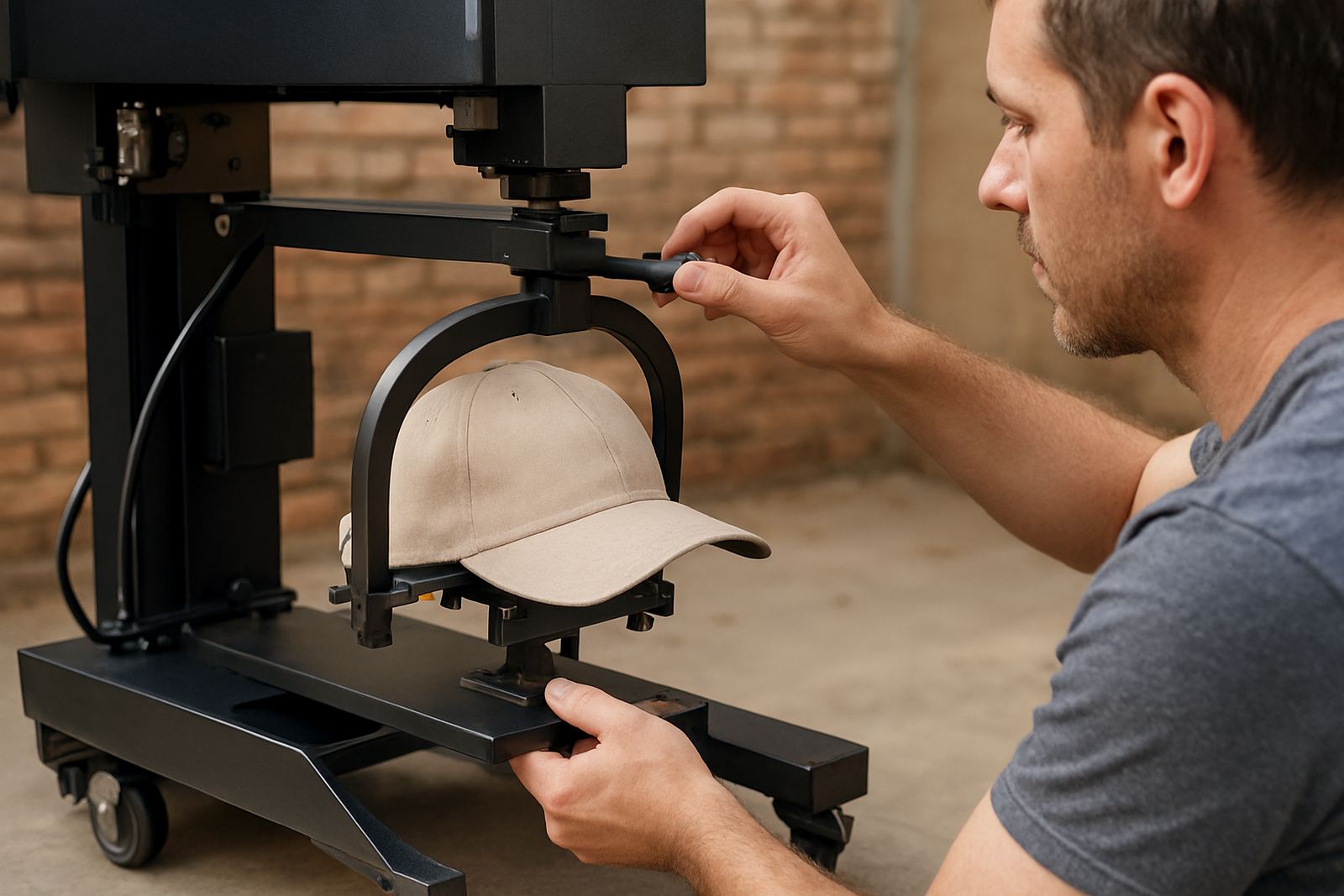
The Cap Hoop is made for printing on cap panels and other curved garment areas where flat platens do not hold the fabric correctly. It helps keep the print zone stable so the garment sits cleaner under the printer and the result is more consistent from job to job.

Cap Hoop

What the Cap Hoop is used for

The Cap Hoop is a shaped holding solution for direct-to-garment work on caps and similar curved items. It supports the panel area so the print face stays flat enough for clean artwork placement while the rest of the garment is held clear of the platen. For print shops in Johannesburg, Pretoria or Durban that handle branded caps for promotions, sports clubs and retail ranges, this saves time when switching between standard tees and curved products.

It is suited to front panels, mid panels and selected curved textile sections where a normal flat platen would cause lifting or movement. The idea is simple: better hold, better alignment and less rework. In busy production spaces, that can make a real difference when you have back-to-back orders and load-shedding windows to work around.

  • Used for cap panels and similar curved print areas
  • Helps keep artwork centred and repeatable
  • Useful for short runs, sampled jobs and production batches

Sizes, fitting options and compatibility

The Cap Hoop is normally selected by the garment shape and the print area you want to cover. Some shops need a tighter hold for smaller cap fronts, while others need a wider opening for larger panels or heavier headwear. The right fit depends on the cap construction, seam position and how much clearance your printer needs around the platen edge.

For local garment decorators, it is worth checking the actual cap profile before ordering. A curved visor or a thick front panel can change how the item sits once tension is applied. If you print in a coastal area like Durban, or in humid inland conditions during summer, fabric behaviour can shift a bit as well so a quick sample test is useful before a full run.

  • Compatible with cap panels and selected curved fabric sections
  • Available in different holding sizes for varied panel widths
  • Can be matched to your existing print workflow and platen setup

Where it suits best in production

The Cap Hoop suits print shops that take on promotional headwear, school and club caps, event merchandise and small retail runs. It is also helpful where the same shop handles mixed apparel, because a cap can move through the workflow without forcing the team to improvise a hold-down method. That keeps the job more controlled and reduces wasted blanks.

In Crown Mines, Sandton and Midrand, we often see shops using cap accessories alongside general DTG work so they can offer a wider range without slowing the line. If your team does seasonal work for corporates or sports events, a cap hoop can help during peak weeks when speed matters and mistakes are expensive.

  • Promotional cap printing
  • Sports clubs and school merchandise
  • Retail sample runs and short production batches
  • Mixed garment shops needing one more workable setup

Installation and setup on the floor

Installation is straightforward, but the setup still needs to be checked properly. The hoop must sit square, lock firmly and allow the cap panel to lie flat enough for print placement. Once fitted, the operator should test the garment position, check garment height and confirm that the print head clearance is correct before starting a production run.

No special gas supply is needed for the Cap Hoop. Power is also not required for the hoop itself, although your printer and pretreatment workflow still need stable electrical supply. In South African workshops, especially where inverters or backup power are used during load-shedding, it helps to confirm that your wider print station can keep its settings consistent after switching sources. A loose fitting or an uneven platen can throw off alignment more than people expect.

  • Simple mechanical fitting with no gas connection
  • No direct power requirement for the hoop itself
  • Should be checked for square positioning before each new job type

Care, cleaning and servicing

Cap hoops work best when kept clean and checked often. Dust, overspray and pretreatment residue can build up at contact points, especially in shops that print every day. Wipe the hoop down regularly and inspect any wear areas so you do not end up forcing a garment into a worn or uneven hold. If the fit changes, the print result usually changes too.

Servicing is mostly about routine inspection rather than heavy maintenance. Look for signs of stress, weak locking points or parts that no longer hold tension properly. In a busy workshop, assign one person to check the cap accessories during weekly stock and maintenance rounds. It saves a lot of trouble later on, and it keeps the team from chasing alignment issues that come from the setup rather than the file.

  • Clean after pretreatment and print overspray
  • Check tension and locking points regularly
  • Store flat and dry to avoid distortion

What to check before you place an order

Before ordering, measure the cap panel carefully and note the type of headwear you print most often. A fitted sports cap will not behave the same as a structured promotional cap, and that difference affects the support you need. It is also important to check whether your printer clearance, platen position and operator workflow suit the size you are choosing.

If you are scaling up production in Randburg, Centurion or the East Rand, it is worth reviewing the full workflow first so the new hoop matches the rest of the line. Check your sample garment, confirm your typical artwork size and decide whether you need one size only or a few options for different cap styles. A quick sample test is often the best way to avoid re-ordering later.

  • Measure the cap panel and note the garment style
  • Confirm printer clearance and platen position
  • Decide if you need one size or multiple options
  • Test with a sample before large orders

Support for shops that print every day

DTGrip works with print shops across Johannesburg and nationwide through next-day courier to help match the right accessory to the right job. If you are setting up a new station, changing over for a seasonal range or trying to improve repeatability, the team can help with hoop setup, workflow review and sample testing. For shops in Pretoria East, Sandton, Midrand and Durban, that kind of support can be the difference between an item that prints cleanly and one that needs a second pass.

Our base in Crown Mines, Johannesburg keeps us close to the working side of the trade. We know the pace of garment decoration here: short deadlines, mixed orders and customers who want consistency across every run. The Cap Hoop is made for that kind of work, and when set up properly it becomes one less point of friction in the shop.

Key facts

Product typeHoop solution for cap panels and similarly curved items
Typical useDTG printing on caps, curved fronts and shaped garment areas
CompatibilitySuitable for selected structured and semi-structured headwear
Power requirementNone for the hoop itself
Gas requirementNone
SupportInstallation guidance, sample testing and workflow help available

What our DTG Printing customers say

Verified Google reviews

Questions we get asked

Can the Cap Hoop be used on all cap styles?

It works best on cap panels and curved areas where the garment can be held securely. The exact fit depends on the cap structure, seam lines and the print area you need.

Does the Cap Hoop need electricity or gas?

No. The hoop itself does not need power or gas. Your printer and pretreatment process still need the usual workshop setup.

What should I check before ordering?

Check the cap panel size, the style of headwear, your printer clearance and whether you need one size or more than one option for different jobs.

Planning something? Send the team a message.

Contact form