Why tote bags need special handling
Tote bags are one of those jobs that can slow a shop down if the setup is not right. The print area is flat in theory, but the seams pull the fabric up, the handles get in the way, and heavier canvas can shift once the platen heats up. On a busy floor in Johannesburg or a smaller shop in Durban, that means more checking, more reprints, and more wastage if the bag is not held firm.
For promotional runs, retail bags, school bags, and event giveaways, the pressure is on to keep the logo straight and the print placed consistently. A good tote bag setup keeps the body of the bag supported while leaving the handle area clear. It also helps when you are doing mixed sizes, because one bad alignment can throw off a whole batch. That is where purpose-built platens and a clear workflow save time.
In most shops, tote bag work sits somewhere between quick promo printing and careful fashion finishing. It needs a practical approach, not guesswork. If the bag is thin poly-cotton, heavy canvas, or a coated promotional carry bag, the operator still needs to position it cleanly and get the same result on the next piece.
Typical tote bag setup in a South African print shop
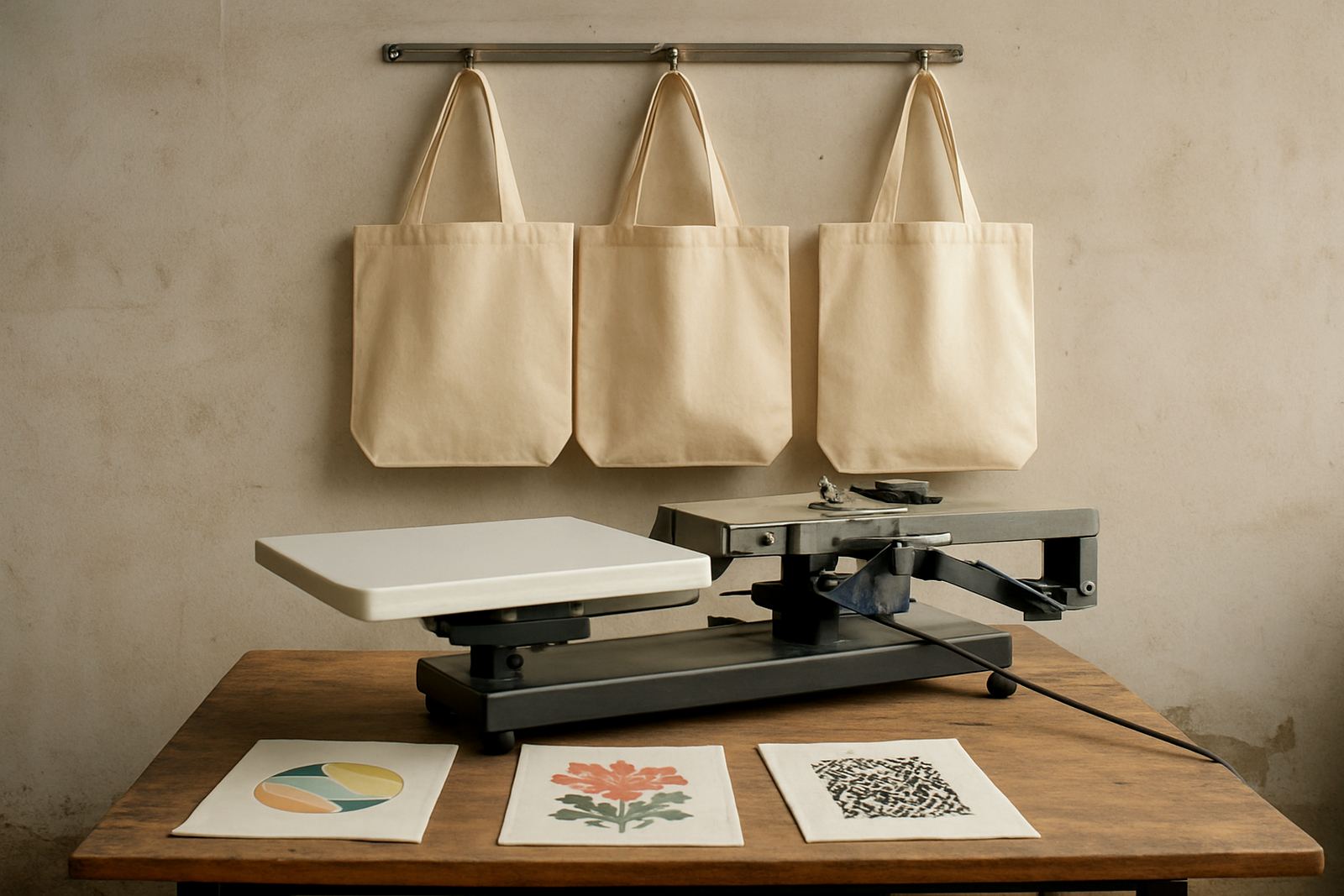
For tote bags, the usual equipment set is straightforward but must be matched properly to the job. A platen that supports the bag body without folding the seams over is the starting point. From there, a secure hoop or clamping method helps on certain fabrics, while pretreatment and drying control matter when the artwork requires a bright, clean print.
In practice, a tote bag line often uses a combination of the following:
- Flat platen sized for carry bags and narrow gussets
- Hoops or holders for controlled positioning on fabric panels
- Pretreat kits for darker or more demanding prints
- Alignment aids for repeat placement across a run
- Drying and curing process checks for even finish
For shops in Crown Mines, Midrand, Randburg or Pretoria East, courier delivery the next day helps when a platen needs to be changed fast before a rush order. That matters when a customer brings in 100 bags on Tuesday and wants them ready before weekend activation. A small delay can upset the whole schedule, so the setup has to be practical, not fiddly.
Layout advice for clean seam and handle clearance
The biggest mistake on tote bags is forcing the artwork too close to the seam or handle join. The print may look fine on the platen, but once the bag is lifted and filled, the design can sit crooked or crack at the edge. A good rule is to allow enough open space around the logo so the stitching does not pinch the print zone. That applies especially to heavier canvas and lined bags.
Before production starts, check the actual bag dimensions rather than relying on the sample alone. Tote bags from different suppliers can vary by a few centimetres, and that can change where the print lands. Measure the usable face, note the handle drop, and test the top edge where the seam begins to pull. If the batch comes from a client in Sandton or East Rand, ask for one or two sample bags before committing to the full run.
Use a simple layout plan for every tote job:
- Mark the safe print zone before the first piece is loaded
- Test one bag for seam pull and handle clearance
- Check left and right alignment against the same edge every time
- Confirm the print height before the run starts, not after ten bags
Common mistakes on tote bag jobs
Most tote bag problems are not caused by the printer itself. They come from poor setup, the wrong platen, or rushing the first sample. One common error is using a standard flat board that is too wide, which leaves the seams floating and the bag moving during print. Another is skipping pretreat on darker fabric and then wondering why the image looks dull or uneven.
Heat is another issue. In a workshop with load-shedding back-up or fluctuating temperature, curing and drying times can shift. If the operator is printing in a humid Durban bay or a hot metal building in Johannesburg, the workflow may need a small adjustment. Canvas also behaves differently from lighter poly-cotton, so one setting does not suit every bag. That is why training matters, because a good machine still needs the right hands on it.
Watch out for these errors:
- Artwork placed too close to the handles or seam line
- Wrong platen size for narrow or gusseted bags
- Skipping sample testing on new bag stock
- Poor pretreat coverage on dark bags
- Rushing curing before the print has fully settled
Budget ranges for tote bag production setups
Budget depends on whether you are adding one tote bag platen, improving alignment, or setting up a fuller workflow with pretreat support and training. For a small shop doing local promotional work, a basic tote bag setup can start from about R2,500 to R7,500 for entry-level support items and a simple platen solution. That gives you a better starting point than trying to modify general equipment for bag work.
For shops that need more consistency across daily runs, a mid-range setup usually sits between R8,000 and R22,000 depending on platen type, hooping needs, and workflow accessories. This is often the sweet spot for print shops in Centurion, Randburg, and Pretoria East handling mixed orders for schools, corporates and event suppliers. If you are scaling production or want training plus onsite help, a larger project can run from R25,000 upward, especially when multiple stations need reconfiguration.
It is worth budgeting for the full job, not only the tool. Include sample testing, operator time, and any layout changes needed in the workshop. A tote bag workflow that saves even ten minutes per batch can pay for itself quickly when the orders keep coming in.
How DTGrip supports tote bag work from Crown Mines
DTGrip works with print shops across Johannesburg and beyond, with next-day courier to many towns and onsite support when the job calls for it. Our team in Crown Mines helps with platen installation, print alignment help, pretreat workflow, sample testing and seasonal reconfiguration. That means you can set up tote bag work in a way that suits your fabric mix, machine layout, and daily order volume.
If your shop needs to handle bulk promo bags one week and retail carry bags the next, the setup must be flexible. We help assess whether the platen needs adjusting, whether the operator needs a better alignment routine, or whether the pretreat method should be changed for darker fabric. Shops often ask for workflow review before a busy season, which is smart because tote bag work tends to spike around conferences, exhibitions, school events and year-end gifting. A small planning session can prevent waste later on.
For new shop planning and production scaling, we look at the whole line: loading, positioning, drying, cure timing, and how the operator moves from one bag to the next. That practical view is what keeps tote bag printing steady, even when the pressure is on and the clock is tight.