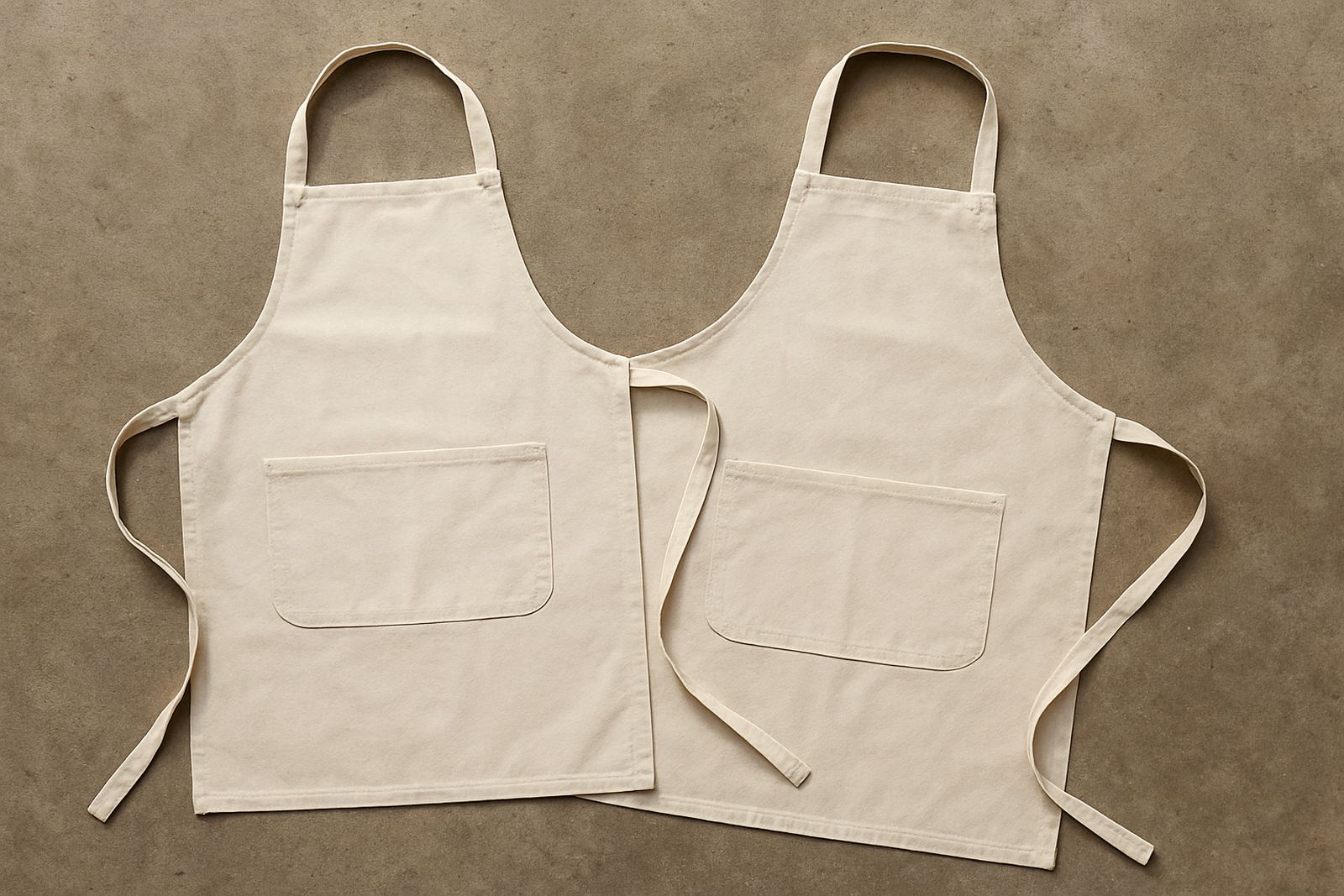
When apron jobs need a firmer setup
Aprons are not like standard T shirts. The bib area is narrower, seams sit closer to the print zone, and ties can get in the way if the front is not held flat. In hospitality, kitchen, coffee shop and promotional work, that means every millimetre counts. A shifted print on an apron is noticed quickly because the garment is worn at chest height and often reviewed up close by the client.
We work with print shops in Crown Mines, Sandton, Randburg, Midrand, Pretoria East, Centurion, the East Rand and Durban that need a repeatable way to print on aprons without wasting blanks. For small runs the problem is usually set-up time. For larger runs it is operator fatigue, poor alignment and inconsistent pretreatment. If your team handles mixed orders with shirts, hoodies and aprons in the same shift, the apron station needs to be simple, fast and predictable.
Hotels, restaurants and school kitchens often want names, logos or front chest marks in the same position across many sizes. That calls for a platen or support system that keeps the apron centreline true and allows quick loading. A good setup also helps when load-shedding interrupts production because you do not want to spend time re-setting after every pause.
Typical platen and hoop combinations for apron work
For apron printing, the right combination depends on the cloth weight and the style of apron. Cotton aprons, polycotton bib aprons, heavy canvas aprons and waist aprons all behave differently under heat and pressure. DTGrip supports shops with print platens, hoops and pretreatment kits that help hold the garment in place and reduce movement during printing.
- Narrow front platens for bib aprons where the print sits high on the chest
- Longer support platens for waist aprons and full-length hospitality styles
- Hoops for stable garment tension on lighter apron fabrics
- Pretreatment kits for dark aprons and fabric types that need an even base
- Alignment aids for shops doing repeat logo placement across multiple sizes
A narrow platen is often the safest starting point when the apron front is small and the neck loop sits close to the print area. On heavier canvas, a flatter support surface helps keep the fabric from shifting. For darker aprons, pretreatment matters because uneven spray or patchy coverage shows up at the print stage and can leave a dull finish around the image. If the apron has thick seams or pocket stitching, the job may need a changed load position so the print head has a clean pass.
Planning the print position before the order arrives
Apron work is easier when the placement plan is settled before production starts. Some clients want a logo centred on the bib, while others want it offset to avoid pockets or embroidery. Kitchen and bar aprons often need a slightly higher print position because the lower section gets folded or tied, and waist aprons may need a left or right chest mark depending on how staff wear them.
We usually advise print shops to standardise a few things before quoting the job. That reduces confusion later and makes reorders quicker. If a client is likely to return every month, agree on one size grid, one artwork placement and one substrate type. If they want a seasonal change for a restaurant group or event team, plan a reconfiguration point so the team can switch without losing time.
- Measure the printable area on each apron style before quoting
- Check where ties, pockets and seams interfere with the image
- Set a centreline mark for fast operator loading
- Keep sample prints for the most common apron styles
- Allow extra time for dark garments and tighter fabric weaves
For Johannesburg shops handling a mix of walk-in jobs and trade accounts, this planning step saves a lot of rework. It also helps when you are training a new operator because the same placement logic can be reused across several aprons, not just one sample piece.
Common mistakes that waste apron stock
Most apron problems come from rushing the setup. The biggest one is printing too low on the garment. Once the apron is tied and worn, the artwork can disappear into folds or sit under the stomach area where it is hard to see. Another common issue is underestimating how much a seam will lift the fabric. If the seam crosses the platen edge, the print can distort or the ink can settle unevenly.
Dark aprons need careful pretreatment. If the spray is uneven or the garment is too damp, the finish may look blotchy and the colour can lose brightness after curing. Shops also lose time when they use a platen that is too wide for a narrow apron because the fabric drapes and shifts. On the other hand, a platen that is too small can leave the print zone unsupported and make the operator chase the garment into position.
- Printing below the visible chest area
- Ignoring pocket placement on bib and waist aprons
- Using one setting for light and dark fabrics
- Not testing heat on coated or blended fabrics
- Skipping a sample run on a new apron style
If your apron orders are mostly for catering and hospitality, the client will usually want consistent branding from one batch to the next. That means a small setup error on day one can become a bigger issue on repeat orders.
Budget ranges for apron production support
Budgets vary by the number of garment types you handle and how often you print aprons. A small shop that only does occasional kitchen aprons may only need a basic platen and simple pretreat workflow. A more active print room with regular hospitality accounts may need several platen sizes, a better alignment routine and operator training to keep turnaround times steady.
As a working guide, South African shops often look at the following ranges when planning apron support equipment and workflow improvements:
- Basic apron platen or support accessory: R850 to R2,500
- Specialised hoop or positioning aid: R1,200 to R3,800
- Pretreatment kit for regular dark garment work: R2,200 to R6,500
- Training, setup and workflow review: R1,500 to R7,500
- Onsite support visit in Gauteng, depending on scope: from about R1,800
These figures are a guide only, but they help when a print shop in Midrand or the East Rand is planning stock for a new hospitality contract. If the aprons are part of a larger branded clothing run, it may make sense to review the whole workflow rather than buying one item at a time. That can be the difference between a slow production line and one that runs cleanly through a busy week.
Support for repeat apron orders across Gauteng and beyond
DTGrip works with print shops that need practical support, not theory. From Crown Mines in Johannesburg we assist businesses with platen installation, hoop setup, pretreat workflow, operator training, print alignment help, sample testing, seasonal reconfiguration, remote troubleshooting, onsite support visit, new shop planning and production scaling. Next-day courier is available to print shops nationwide, which is useful when a client has a deadline and the apron order is already booked.
For apron work especially, the aim is to reduce setup time and keep the print consistent from one run to the next. That matters whether the order is for ten bar aprons or a few hundred kitchen aprons for a hotel group. If your team is based in Sandton, Randburg, Pretoria East, Centurion, Durban or anywhere in between, the same practical approach applies: choose the right support size, keep the placement repeatable and train the operator to load the garment the same way every time.
Clients reach us through the enquiry form on our contact page, and we use that first conversation to work out what the apron stock looks like, where the print should sit, and what kind of production pressure the shop is under. A clean apron setup saves ink, reduces waste, and keeps the order moving even when the week is busy.