
When Babywear Jobs Need a Different Setup
Babywear is not just a smaller version of a T-shirt order. Onesies, baby vests, rompers and tiny fashion items need narrower print zones, safer handling and a platen that supports the garment without stretching seams or popping snaps. In busy shops around Crown Mines, Sandton and Pretoria East, this becomes important when you are moving between adult garments and infant runs in the same shift.
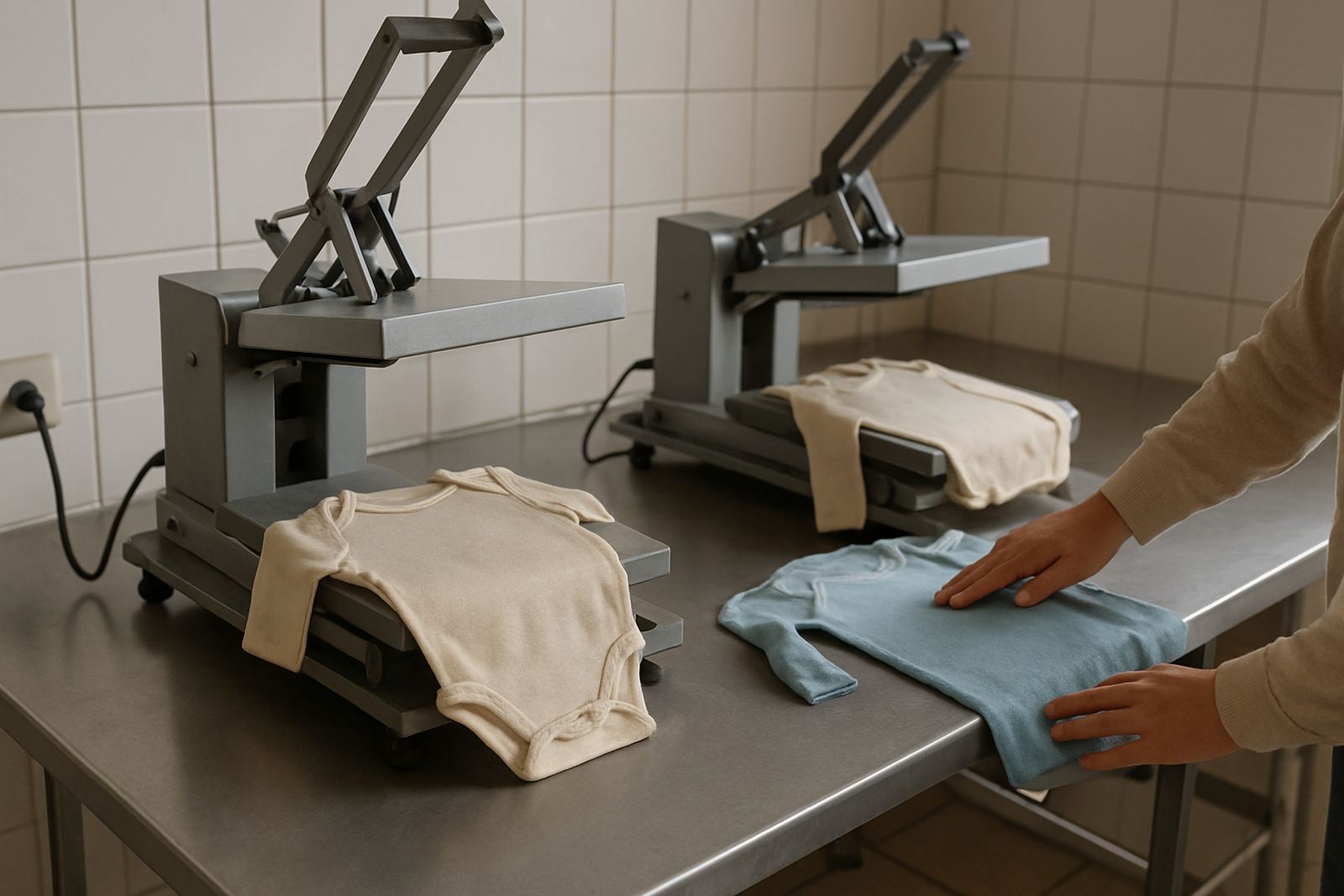
Most babywear work calls for a compact platen, a smooth loading surface and clear alignment marks. That helps when printing small chest logos, back neck branding or limited front graphics on soft cotton blends. It also reduces the chance of press marks and uneven ink laydown, which is a common problem when the garment is too loose on a large board.
For shops doing school wear, gifting items or small retail runs, babywear can be a good add-on line. The key is to keep the setup practical so the operator can change over quickly between sizes and still keep the print consistent.
Typical Platen and Hoop Choices for Onesies
For infant garments, DTGrip usually recommends smaller platens that suit the garment shape rather than forcing the garment onto a standard board. A narrower platen gives better support under the print area and helps keep the fabric flat around seams, cuffs and fasteners. Where the artwork sits inside a small panel, hoops can also help stabilise soft fabric before printing or pretreatment.
- Small chest platen for one-piece infant garments and tiny front prints
- Narrow sleeve or side platen for limited placement work
- Support hoops for soft cotton and stretch cotton blends
- Pretreatment kit for controlled spray or coat application on small areas
- Alignment aids for repeat jobs across multiple sizes
At this size, even 5 mm off centre is visible. That is why smaller tooling and repeatable positioning matter more than speed tricks. If a shop is handling babywear often, it is worth keeping one platen set aside only for infant work so operators are not constantly reconfiguring the machine.
Planning the Workflow Before the First Order
Before taking on babywear printing, map the whole job from pretreat to packing. Smaller garments dry differently, cool down quicker and can shift on the platen if the loading method is not consistent. In Johannesburg workshops, we often see teams lose time because they only plan the print, not the loading and curing steps around it.
A practical babywear workflow should include a clean prep table, a dedicated loading area and a short check list for each job. If you are printing for a boutique, maternity store or promotional pack, sample testing is worth doing before full production. It helps confirm how the ink sits on the fabric and whether the pretreat amount is right for the garment weight.
- Confirm garment size and fastening type before platen selection
- Test artwork size on a sample before print run approval
- Check heat sensitivity of labels, snaps and trims
- Keep a separate cool-down area to avoid print offset
- Mark the platen position for repeat orders
That little bit of planning saves reprints, especially when load-shedding disrupts timing and the press schedule gets squeezed.
Common Mistakes Shops Make with Infant Garments
One of the biggest mistakes is using the wrong platen size. If the platen is too large, the baby garment can sag and the print zone becomes uneven. Another issue is over-applying pretreat, which can leave a visible box around the design or create a stiff patch on a soft onesie. Neither is ideal when the item is meant for a baby.
Operators also sometimes press too hard. That can flatten seams, distort a small neckline or leave marks where the board edge sits under the garment. On lightweight cotton, too much pressure can push moisture around and affect the final result. In coastal areas like Durban, humidity can make this worse if garments are not stored properly before printing.
A small mistake in alignment also shows up faster on babywear than on adult garments because the artwork area is so limited. If the print drifts by a few millimetres, it can look rushed. We recommend a short operator training session for any team member who will handle infant jobs. That way the loading method, heat settings and finishing steps stay the same from shift to shift.
Budget Ranges for Babywear Printing Setups
Babywear setups do not have to be expensive, but they should be chosen for repeat use. A basic compact platen solution may start from about R2 500 to R5 500, depending on size and mounting needs. If you need a more complete setup with hoops, alignment aids and pretreatment support, budget around R6 000 to R12 000. For shops scaling into regular infant production, a fuller workflow package can sit from R15 000 upward.
Those figures are useful for planning around shop size and order volume. If you only print babywear once or twice a month, a smaller setup may be enough. If you are supplying boutiques, gift packs or seasonal promotions, it is worth choosing gear that can handle repeated use without constant adjustment. Cheap tools often cost more later in rejected prints and operator downtime.
In and around Midrand, Randburg and East Rand, many print shops start with one dedicated infant platen and build from there as demand grows. That keeps the spend controlled and lets the team learn the workflow before committing to a larger production line.
What DTGrip Supports for Babywear Jobs
DTGrip works with print shops that need practical help on the floor, not theory. From Crown Mines in Johannesburg, we supply platens and hoop options with next-day courier to print shops nationwide, and we can assist with print alignment help, workflow review and sample testing where needed. For babywear, the focus is usually on getting the garment seated properly, the pretreat routine sorted and the press settings matched to the fabric.
Our team, including Thabo Mokoena, Ayesha Naidoo, Sipho Dlamini, Lerato Molefe, Johan Smit and Zanele Khumalo, supports shops that want to improve repeatability without slowing production. We also help with seasonal reconfiguration, which matters when babywear orders spike around gifting seasons, market periods and year-end retail runs. If your shop is planning a small infant range or expanding into custom baby apparel, a short setup review can prevent a lot of wasted stock.
Whether you are in Sandton, Centurion or Durban, the main goal is the same: fit the garment to the tool, not the other way round. That is how babywear jobs stay neat, consistent and ready for the customer.