When Seasonal Change Starts Affecting Output
Most South African print shops feel the change before they see it in the books. Winter orders often move toward fleece, long sleeves, workwear and school items, while summer brings lighter cotton tees, promotional runs and event stock. If your platen sizes, hooping method and pretreat workflow stay fixed through all of that, you start seeing ghosting, misalignment, wasted sprays and slower turnarounds.
Our seasonal reconfiguration service is for shops that need to switch their setup without losing production time. We review what you are printing now, what is coming next, and which platen sizes, hoop depths and pretreat steps need to change. The result is a cleaner setup that suits your current garment mix, not last season’s workload. It saves a lot of backtracking later, especially when the team is already under pressure.
What We Reconfigure In Your Shop
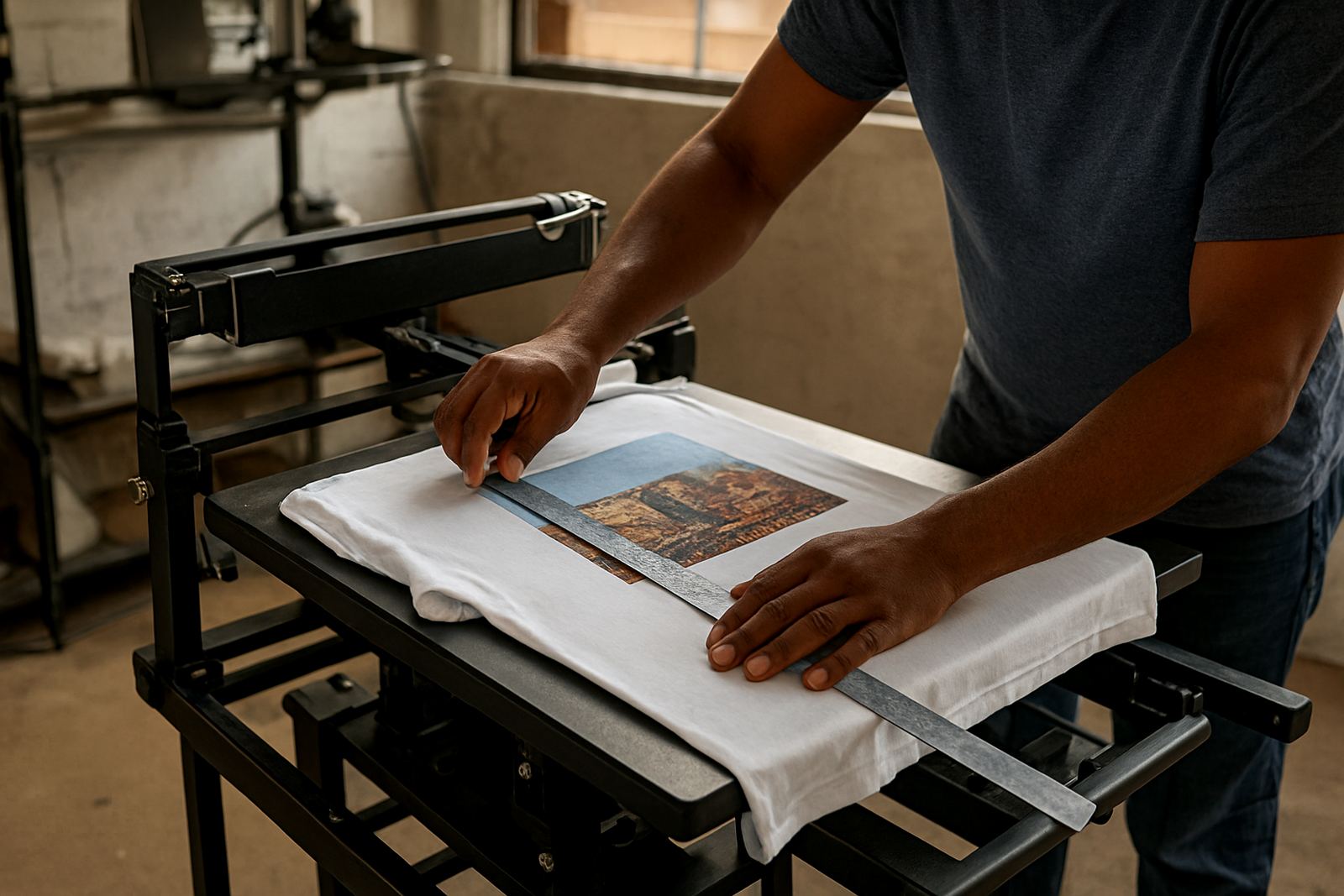
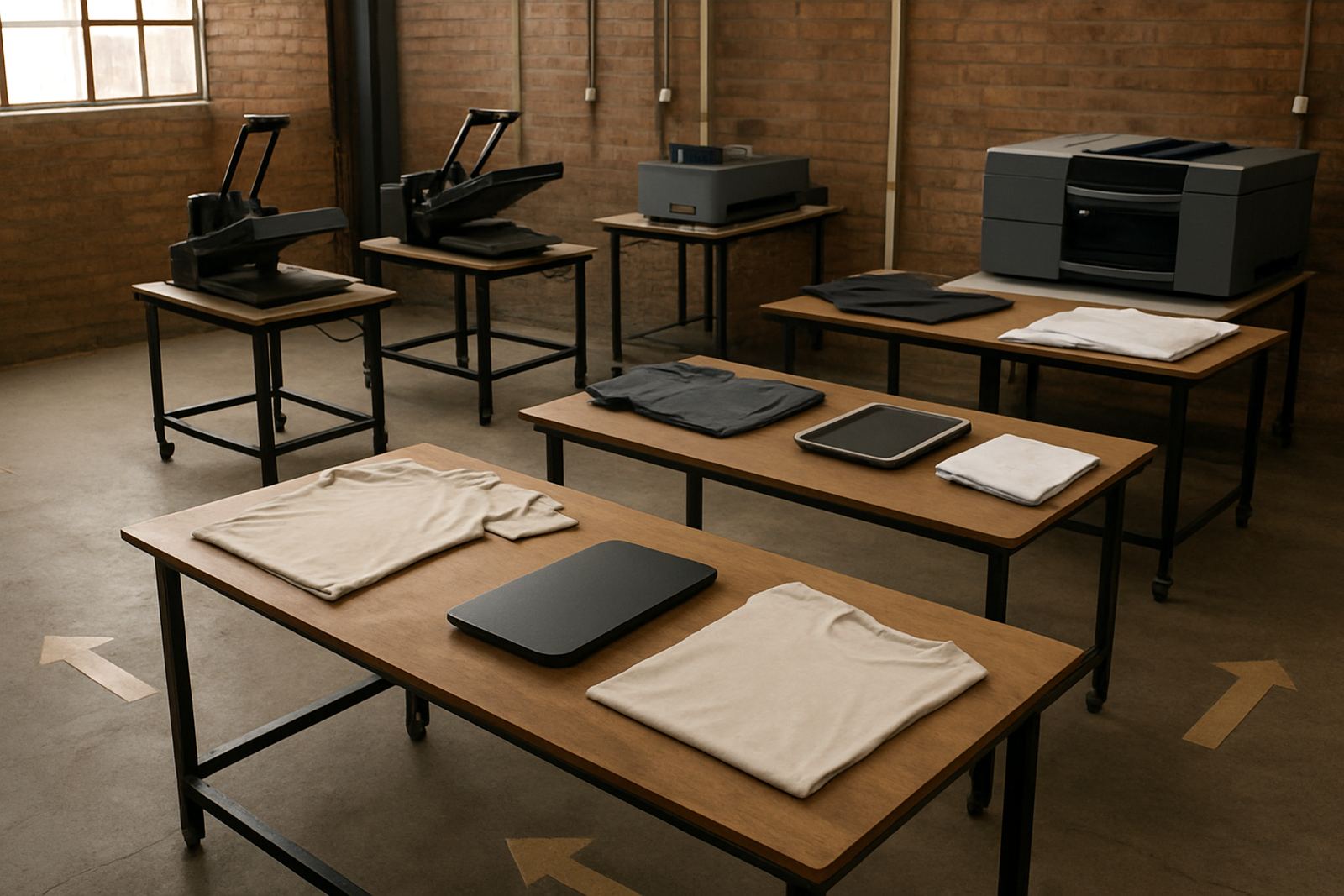
We adjust the full print path so your team can move from one garment type to another with less guesswork. That includes platen selection, hoop fit, garment positioning, pretreat timing, heat handling and operator sequence. If you are running multiple press stations, we can separate the setup by job type so each station is used for the right garment sizes and fabric weights.
- Platen size matching for youth, adult, oversized and sleeve work
- Hoop setup for caps, narrow panels and curved areas
- Pretreat workflow changes for light cotton, dark cotton and blended fabrics
- Layout checks for left chest, full front and back prints
- Heat cure spacing and handling adjustments for thicker garments
- Operator station changes to reduce cross-contamination and spray drift
For shops in Johannesburg, Pretoria East, Centurion, Midrand, Randburg, Sandton, the East Rand and Durban, we also factor in room size, power stability and local humidity. Coastal moisture can change how pretreat sits on fabric, while load-shedding can interrupt the timing between spray and press. Those small details matter more than people think.
How The Reconfiguration Process Works
We keep the process practical and clear. First, we look at your current garment mix and the jobs you expect over the next few months. Then we check your platens, hoops, spray method, press spacing and the order in which garments move through the room. If needed, we test sample pieces so the new settings are based on real fabric behaviour, not assumptions.
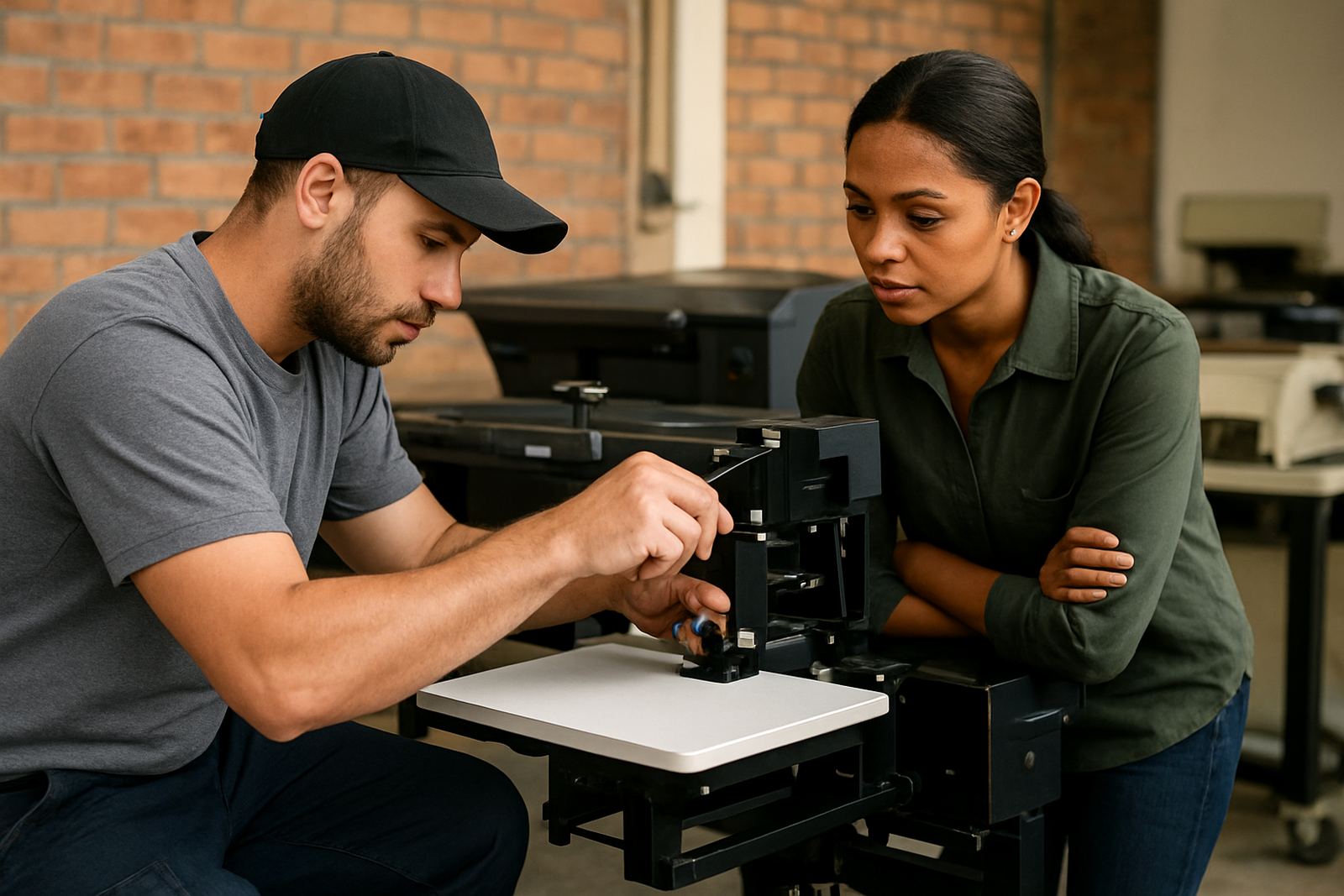
Once the setup plan is agreed, we carry out the changes and show your team how each station should be used. Where a shop has more than one operator, we set out who handles prep, who handles loading, and where the checks happen before pressing. That avoids the usual bottleneck at the press and keeps the room moving.
- Site review or remote review of current setup
- Garment category assessment for the coming season
- Platen, hoop and pretreat changes
- Sample test and print alignment check
- Operator handover and workflow notes
Turnaround For Local And Nationwide Shops
For Crown Mines and nearby Johannesburg areas, turnaround can be arranged quickly depending on workload and the number of stations being changed. If the request is straightforward, we can often complete the review and setup in a single visit. More complex changes, like a full shift from light tee production to thicker winter garments, may need sample testing and a second pass after the first run.
For print shops outside Gauteng, we support the process with remote troubleshooting, sample review and couriered parts where required. Next-day courier to most major centres helps keep downtime low, though remote areas may need an extra day. We plan around your production calendar, which is important when orders are tied to launch dates, school events or year-end corporate runs.
We also work around municipal trading hours, warehouse access rules and building security where applicable. If your site is in a busy industrial area, we will book the visit so the team can get in, adjust the line, and get back out without wasting half the morning.
Pricing Approach And What Affects The Quote
Seasonal reconfiguration is quoted according to the size of the shop, the number of workstations, the amount of testing needed and whether the work is done on site or partly remote. A small setup with one press and limited garment types will cost less than a multi-station room with mixed platen sizes, several hoop types and staff training included.
We keep the pricing approach simple. You pay for the actual time, the parts or accessories needed, and any extra testing or training that the job requires. If the same setup can be reused for the next season with only minor adjustments, we will say so. There is no point replacing what is still doing the job. That honesty matters when margins are tight.
- Single-station shops: lower setup cost, shorter visit
- Multi-station shops: priced by scope and test volume
- Training add-on: charged only when operator retraining is needed
- Courier items: quoted separately where replacement parts are required
Maintenance Intervals And Keeping The New Setup Stable
Once your shop has been reconfigured, we recommend checking the setup at the start of every new season and again whenever your garment mix changes sharply. For many print shops, that means a review every three to four months, with a quicker check after a major order change or staff rotation. If your print room handles both light and heavy garments, shorter intervals are worth it.
Maintenance is not only about cleaning. It includes platen surface condition, hoop grip, spray pattern, alignment marks, press pressure and whether the team is still using the right sequence. A good setup can drift over time, especially when different operators handle the same jobs. A ten minute check at the right time can stop a full day of rework later.
In humid coastal conditions, pretreat behaviour can change quicker than expected, and in colder inland months some fabrics need a slightly different handling order. We will show your team what to watch for, so the adjustment becomes part of the routine instead of a crisis response.
Why Shops Call DTGrip Before The Busy Season Starts
DTGrip works with garment printers from Crown Mines to Durban, with support shaped around the realities of South African production. Our team understands that a shop does not just need equipment, it needs a setup that matches the work on the floor. That is why seasonal reconfiguration focuses on output, operator comfort and the consistency of the final print.
Thabo Mokoena oversees the business, with Ayesha Naidoo managing operations, Sipho Dlamini handling technical support, Lerato Molefe on sales, Johan Smit in the workshop and Zanele Khumalo coordinating training. When a shop calls in for help, the right person is looped in fast, so you are not waiting around for the wrong department to catch up. If your next season is coming up fast, it is better to adjust now than to chase problems after the orders have already landed.
Key facts
| Service type | Seasonal platen and workflow reconfiguration for garment print shops |
|---|---|
| Typical platen sizes | Youth, adult, oversized, sleeve and specialist work formats |
| Common garment change | T-shirts, hoodies, workwear, caps, schoolwear and promotional items |
| Turnaround | Same day in Johannesburg where scope allows, next-day courier support nationwide |
| Review interval | Every 3 to 4 months, or whenever garment mix changes sharply |
| Support method | Onsite support, remote troubleshooting, sample testing and operator handover |