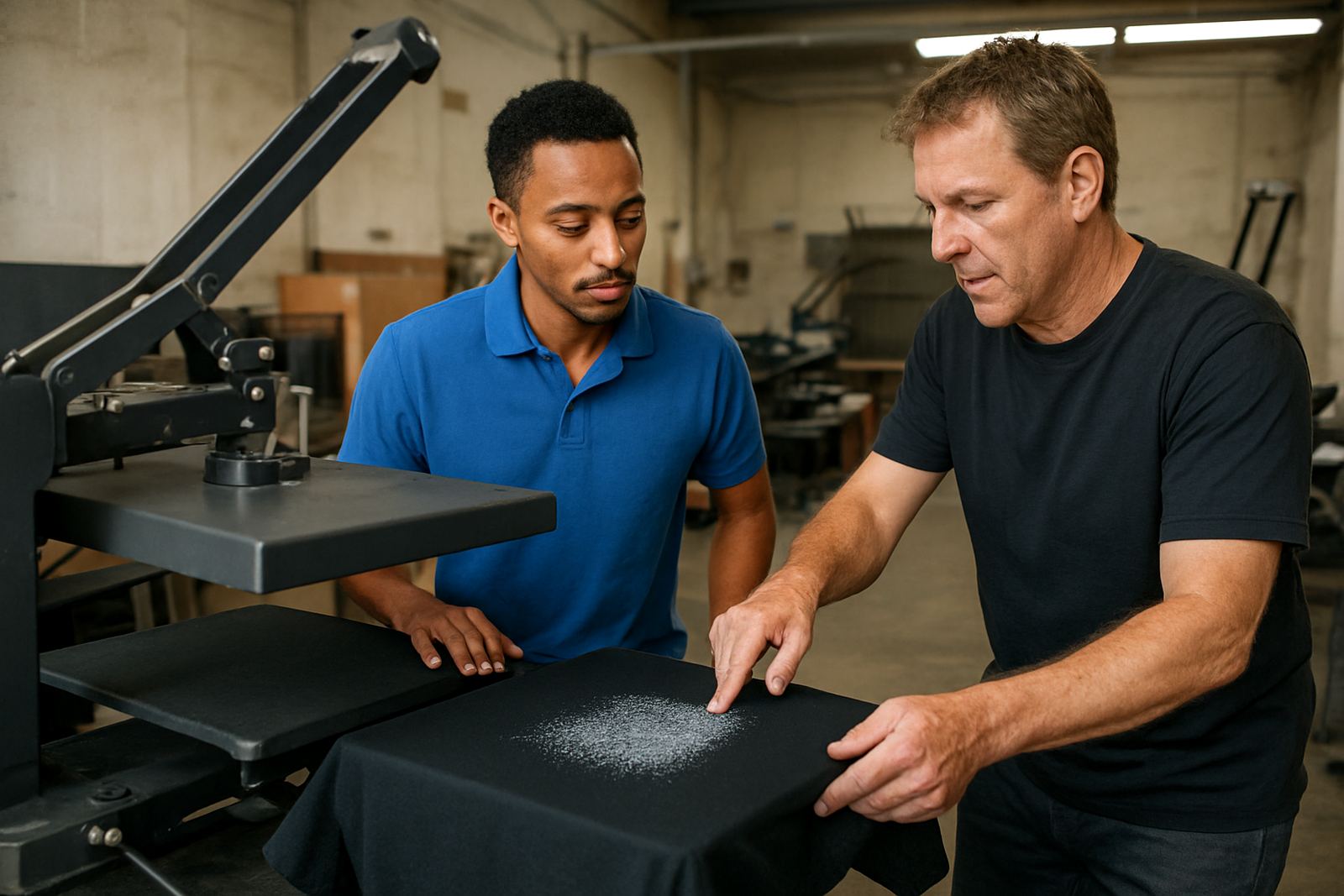
What the Pretreat Workflow Covers
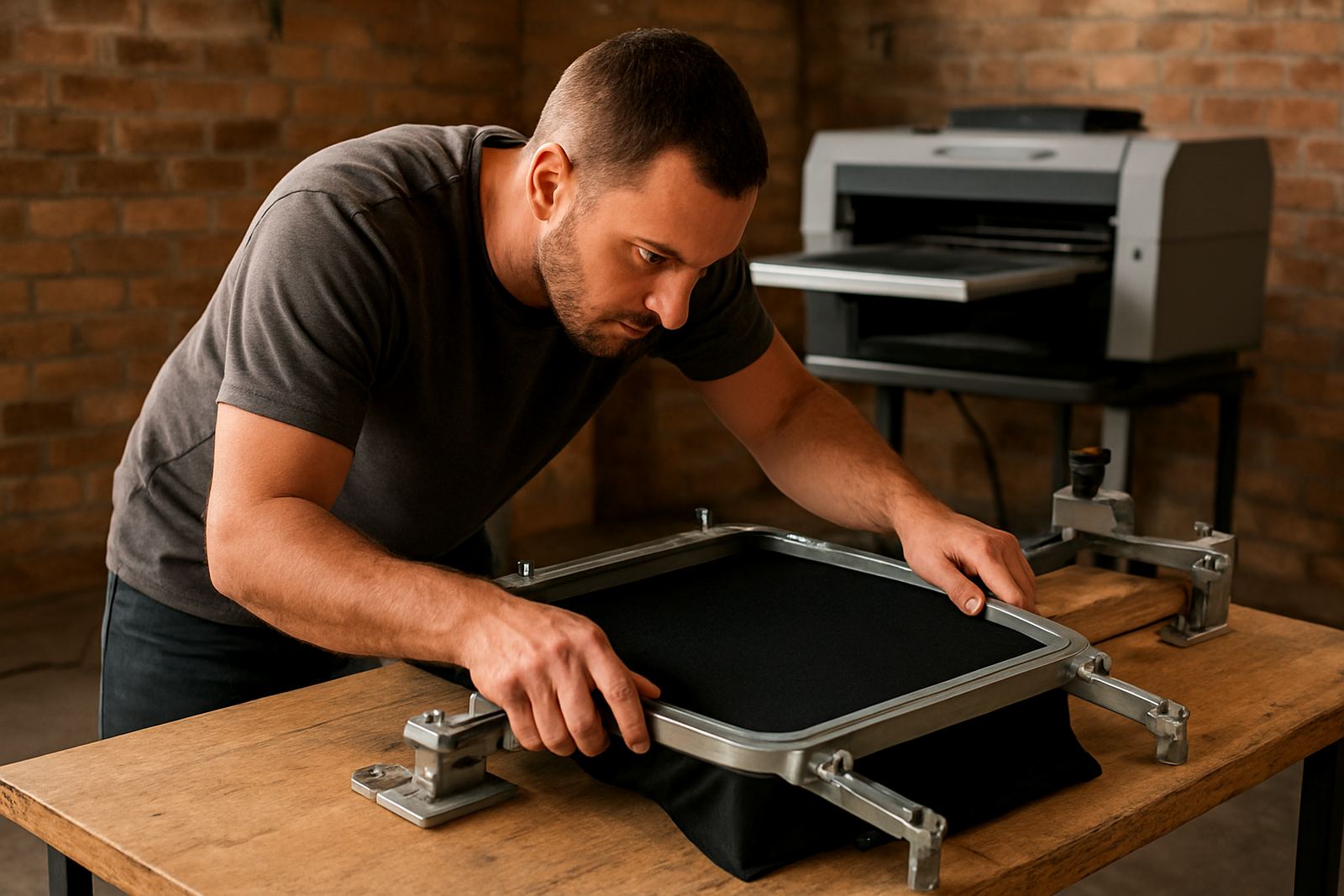
This service focuses on the parts of pretreatment that affect day-to-day production: spray pattern, liquid volume, garment placement, drying time and how the operator handles each fabric type. We work with cotton tees, polycotton blends, fleece, hoodies, tote bags and other common garments used in fashion, promotions and custom apparel. The aim is simple, a cleaner press-ready finish with less guesswork between shifts.
We check how your team applies pretreat, whether by manual spray, handheld applicator or a larger setup, and we help you tighten the routine so the same garment gives the same result from job to job. That matters in busy shops where one operator is handling 20 or 200 pieces, and where load-shedding or a humid Durban morning can change the drying rhythm.
- Coverage checks for front, back and chest print areas
- Drying routine setup for heat press or flash drying
- Garment-specific guidance for light, dark and synthetic fabrics
- Batch handling advice for short runs and repeat orders
How We Set Up the Workflow
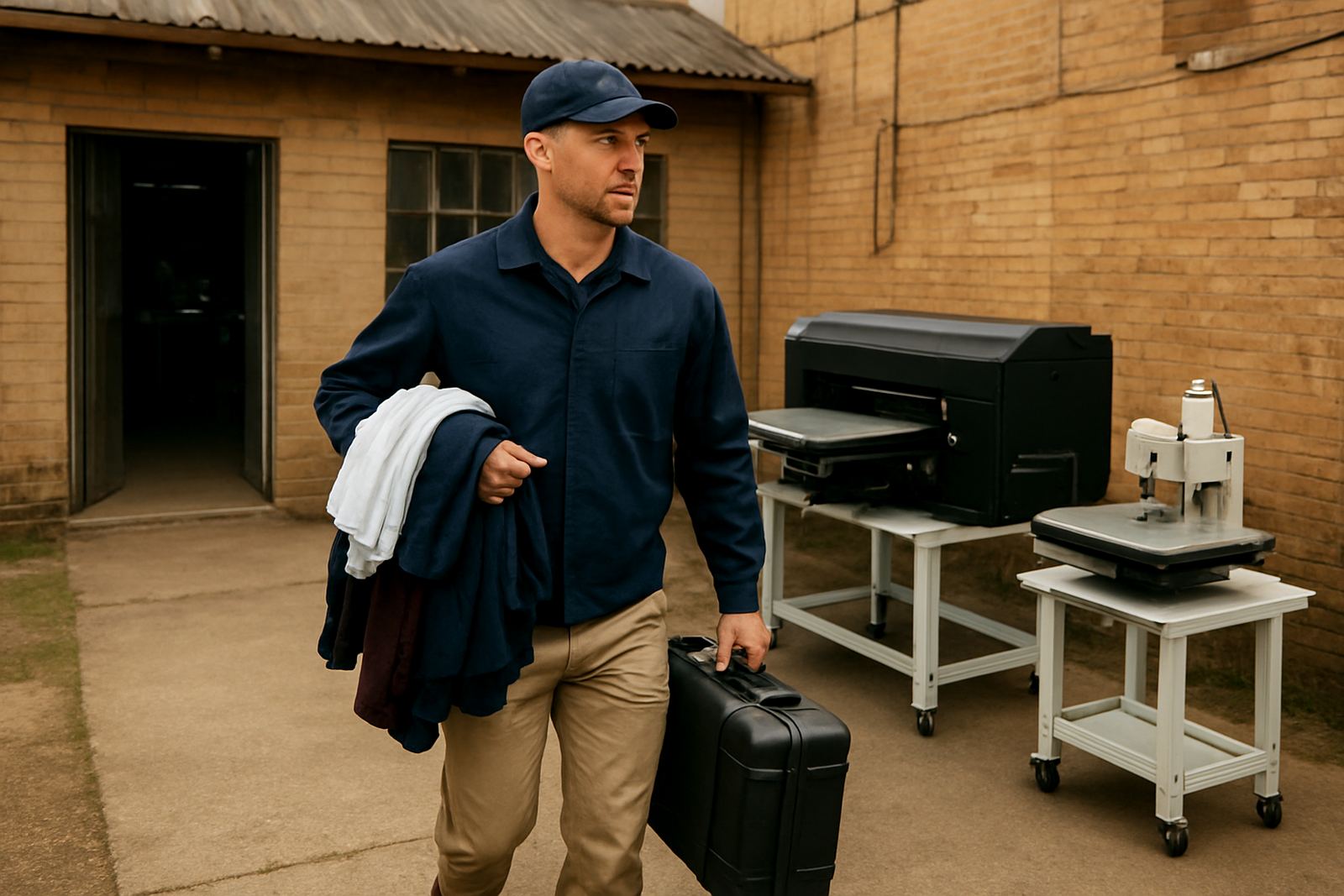
We start with a quick review of your current process. That can be done onsite in Johannesburg, Randburg, Sandton, Midrand, Pretoria East, Centurion, the East Rand or Durban, or remotely if you want to send photos and short video clips first. We look at the pretreat area, storage conditions, drying method and the way operators move garments from treatment to print station.
After that, we map a practical routine for your shop floor. This usually includes bottle or applicator checks, spacing for treated garments, press temperature, dwell time and a simple mark-up system so the team knows which pieces are ready to print. If your shop runs different shifts, we can also set up a handover method so the afternoon crew picks up where the morning crew left off without mixing treated and untreated stock.
- Initial process review and issue spotting
- Settings guidance for garment type and ink coverage
- Operator handling steps from pretreat to print
- Clear handover routine for multi-shift production
What Is Included in the Service
The pretreat workflow service is not just a verbal check-in. We give your team a working method they can follow on the floor, with enough detail to reduce waste and keep output consistent. For some shops that means sorting out over-application and slow drying, while for others it means fixing patchy coverage on dark garments or stopping marks on light cotton. Small changes make a real difference when you are producing for a client with a tight deadline.
We can also cover sample testing on new fabric types, seasonal reconfiguration for winter hoodies or summer tees, and workflow review after a production spike. If your shop is scaling up, we help you decide where pretreat should sit in the production line so it does not block printing or finishing. The result is a process that is easier to train, easier to repeat and less likely to drift when staff change.
- Workflow review and practical correction notes
- Sample testing on selected garments
- Drying routine guidance for press or flash methods
- Seasonal layout changes for higher volume periods
Turnaround and Support Options
For most shops, the first review can be arranged within 1 to 3 working days, depending on whether you need remote troubleshooting or an onsite visit. Urgent cases in Johannesburg and nearby areas can often be handled faster if the production line is at a standstill. Couriered parts and accessories generally go out for next-day delivery to major centres, which helps when you need a quick adjustment before a batch run.
Remote support is useful for shops in towns outside Gauteng or for teams working after hours. We can review setup photos, garment samples and short process videos, then give clear steps the team can action the same day. If a physical visit is needed, we plan it around your shop hours so production is disturbed as little as possible. Crown Mines is our base, so we are well placed for Johannesburg, but we also support print shops in Durban and other regional centres.
Pricing Approach and Maintenance Intervals
Pricing depends on the size of the shop, whether the work is remote or onsite, and how many garment types need to be tested. A single workflow review for a small startup is priced differently from a larger production floor with multiple operators and mixed fabric runs. We keep the approach practical, with scope set before the job starts so you know what is covered and what may need a follow-up visit.
For maintenance, most shops benefit from a workflow check every 3 to 6 months, especially if they print regularly, change garment suppliers or move into peak season. Shops in coastal humidity or areas with frequent temperature swings may need shorter intervals because drying behaviour can shift. If you are using a new pretreat batch, switching to different garments or training new staff, it is worth doing a fresh review sooner rather than later.
- Pricing based on shop size and support method
- Clear scope before work starts
- 3 to 6 month review intervals for active shops
- Earlier check recommended after staff or fabric changes
Why Local Shops Ask for Workflow Help
In garment decoration, pretreat problems often show up as faint prints, harsh hand feel, uneven curing or wasted blanks. Those faults cost time and margin, especially when your team is working around power cuts, rushed courier deadlines or a customer who wants a full order by Friday. A tidy pretreat workflow gives your operators a repeatable method, so they spend less time correcting mistakes and more time printing.
We work with fashion labels, promo printers and custom apparel shops that need reliable output across a mixed range of orders. The point is not to overcomplicate the process. It is to make sure the pretreat step supports your print quality instead of becoming the part that slows everything down. Once the team understands the routine, output improves and the shop floor is easier to manage.
How to Start the Review
Use the enquiry form on our contact page and tell us what garments you print, what pretreat method you use and where the workflow is breaking down. Include a few photos if possible, plus the fabric types and the size of the order run. That helps us decide whether you need sample testing, remote troubleshooting or an onsite support visit.
If you are setting up a new room in Crown Mines, Sandton, Randburg, Midrand, Pretoria East, Centurion, the East Rand or Durban, we can also help with new shop planning and production scaling. It is often easier to design a clear pretreat path at the start than to patch one later when the shop is already busy. A good workflow saves time every day, not just on the first week.
Key facts
| Service area | Johannesburg base with support across Gauteng and nationwide |
|---|---|
| Common garment types | Cotton tees, polycotton blends, hoodies, fleece and tote bags |
| Turnaround | Initial review typically within 1 to 3 working days |
| Support modes | Onsite support, remote troubleshooting and couriered guidance |
| Maintenance interval | Recommended every 3 to 6 months for active production shops |
| Typical workflow checks | Coverage, drying time, garment handling, batch control and operator handover |